Koi care in India: ponds, viruses and time away
Updated By PetymFacts checked against official sources on
Quick answer
Koi are not a separate species: they are a coloured form of the common carp, developed in Japan in the early 19th century. They live best in ponds or very large tanks. While you travel, a sitter should check the pond daily, feed one measured portion, make sure the pump and air are running and look at every fish's skin and gills.
Never add new koi before or during a trip: koi herpesvirus and koi sleepy disease have both been found in koi in India.
- Origin
- Japan (Niigata Prefecture), from the common carpGenetics Selection Evolution (2007)study
- Coat
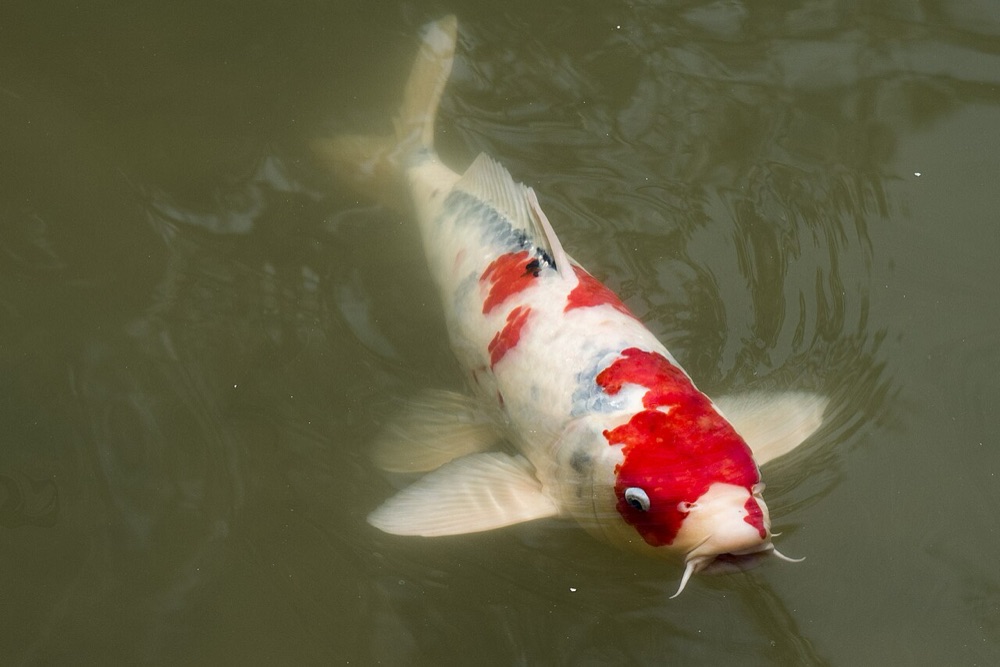
- Fins and colour: a carp's body, bred in Japan for patterned colours such as red, white and black. The common carp they come from reaches up to 122 cm; no source we found gives a separate size for koi.US Geological Survey, Nonindigenous Aquatic Species
- Energy
- Moderate
- Indian heat
- Copes with careCentre for Environment, Fisheries and Aquaculture Science (Cefas), GOV.UK
- Flats
- Needs spaceMerck Veterinary Manual
Koi at a glance
| What | The rule | Source |
|---|---|---|
| What it is | A coloured variant of the common carp, Cyprinus carpio, developed in Japan in the early 19th century. | Genetics Selection Evolution (2007)study |
| Where it was developed | Breeders in Niigata Prefecture, Japan, documented its development. | Genetics Selection Evolution (2007)study |
| Size | The common carp reaches up to 122 cm; koi are one of its ornamental strains. | US Geological Survey, Nonindigenous Aquatic Species |
| Food | Pelleted foods are made for koi and goldfish in outdoor ponds; feed less in cold weather. | Merck Veterinary Manual |
| Temperament | Aggression among pond fish such as koi and comet goldfish is fairly rare. | Merck Veterinary Manual |
| Biggest disease risk | Koi herpesvirus: no treatment, and death rates can be close to 100%. | Merck Veterinary Manual |
Where does the Koi come from?
Koi are not a separate species. A 2007 study in Genetics Selection Evolution describes the Japanese ornamental carp, or koi, as a coloured variant of the common carp, Cyprinus carpio, developed in Japan in the early 19th century, as documented by breeders in Niigata Prefecture. The US Geological Survey lists koi alongside leather, mirror and Israeli carp as strains bred in aquaculture or kept as ornamentals.
The common carp itself has a long history with people. The same study says its wild ancestor probably lived in the Caspian and Aral Sea basins before spreading west to Europe and east to Asia, and that the Romans probably domesticated European carp early in the 1st century.
How did the Koi come to India?
No source we found records when koi first came to India, but they are farmed, sold and kept here, and Indian scientists have tracked their diseases. A 2012 risk assessment in the Indian Journal of Virology tested 254 Indian fish samples for koi herpesvirus, found none positive, and warned that unrestricted koi imports posed a risk to aquaculture.
Since then two serious koi viruses have been confirmed in India. Carp edema virus, or koi sleepy disease, was reported on a Kerala koi farm in June 2015, only in newly introduced fish, with signs that it was widespread. In 2022 the first koi herpesvirus in Indian koi was reported from aquarium shops, rearing tanks and grow-out ponds in Chennai, with heavy losses.
What care does a Koi need?
The three things that shape a good day for this breed.
Exercise
Tank and swimming space: koi are pond fish. Merck says the number of fish for the area should be lower in cold-water systems such as ponds, and floating plants help shade a pond and keep it cool. Merck Veterinary Manual
Grooming
Water care: a pond needs pumps, filtration and air, because plants make oxygen by day but use it at night. Test the water and keep netting over the pond against birds and cats. SPCA New Zealand
Training
Handling and feeding routine: feed pellets made for pond fish at set times, less in cold weather. Net and move koi as little as possible, and quarantine every new fish. Merck Veterinary Manual
What should a Koi eat?
The Merck Veterinary Manual says several pelleted foods are made specifically for koi and goldfish in outdoor ponds, and that the amount should be reduced in colder weather because the fish are less active and need less. It adds that a smaller pack bought often stays fresher than a large one kept for months, which matters in humid Indian weather.
Overfeeding fouls a pond as surely as a tank. Leave each day's portion measured out for a sitter, and do not let visitors throw bread or snacks into the pond.
Meals a day: warm months, regular small meals, as much as is eaten quickly; cold months (north indian winter), fewer, smaller meals as appetite drops.
Which illnesses is the Koi prone to, and how are they treated?
The conditions veterinary studies and breed surveys most often report in the Koi. Knowing the early signs means a vet sees it sooner.
See your vet first. This is general information from veterinary sources, not a diagnosis. Only a vet who has examined your pet can say what is wrong and prescribe treatment, and this page never gives a dose. Do not give your pet human medicine. If your pet seems very unwell, go to a 24-hour vet: find one in your city.
Koi herpesvirus (KHV)
Emergency: go to a vet nowA herpesvirus of common carp, including koi. Cefas says disease occurs in water between 16 and 29 °C, often triggered by stress; Merck says death rates can be close to 100% and survivors can carry the virus. It does not affect people. Centre for Environment, Fisheries and Aquaculture Science (Cefas), GOV.UK
Signs to watch for
- Pale, patchy or rotting gills
- Sunken eyes
- Rough, dry skin with extra mucus
- Bleeding on the skin and fin bases
- Fish listless, crowding at the inflow or in shallows
How a vet treats it
An aquatic or exotics vet arranges laboratory tests on samples. Cefas says there is no treatment, so the vet's role is diagnosis, protecting other fish and advising on the pond.
Prevention
Quarantine all new fish, avoid fish of unknown origin and keep good biosecurity.
Koi sleepy disease (carp edema virus)
See a vet soonA viral gill disease reported in Indian koi on a Kerala farm in 2015, affecting only newly introduced fish, with signs it was widespread. Journal of General Virology (2016)study
Signs to watch for
- Damaged gills
- Illness soon after new fish arrive
How a vet treats it
A vet confirms it with laboratory tests on gill tissue and advises on managing the pond.
Prevention
Quarantine new koi before they join the pond.
Aeromonas infection
See a vet soonA bacterial infection that Merck says koi and goldfish are especially prone to. Merck Veterinary Manual
Signs to watch for
- Red spots or ulcers
- Ragged fins
- A swollen belly
- Bulging eyes
How a vet treats it
Merck says antibiotics can work but laboratory testing is needed to choose the right one, so a vet takes samples first.
Carp pox
Ask at a routine checkA skin condition of koi that Merck describes as smooth, raised patches, sometimes milky in appearance. Merck Veterinary Manual
Signs to watch for
- Smooth, raised, milky skin patches
How a vet treats it
Merck says the patches usually do not cause problems but can become infected, that surgery does not help, and that affected koi should be removed; a vet advises on the fish.
Why does koi herpesvirus matter so much in India?
Because it has arrived, there is no treatment, and Indian water temperatures suit it for much of the year.
Cefas, the UK government's fish health laboratory, says koi herpesvirus (KHV) affects common carp, including koi, and causes disease when water is between 16 and 29 °C. It says there is no treatment, and Merck says the death rate can be close to 100%, with surviving fish able to carry the virus. KHV does not affect people.
A 2012 review in the Indian Journal of Virology tested 254 Indian fish samples and found none positive, but warned that unrestricted koi imports were a risk. In 2022 the Journal of Fish Diseases reported the first KHV in koi in India, in aquarium shops, rearing tanks and ponds in Chennai, with ulcers, bleeding, rotting fins, discoloured gills and very heavy losses. A different virus, carp edema virus, also called koi sleepy disease, was found on a Kerala koi farm in 2015, only in newly introduced fish.
For an owner, the lesson is quarantine. Merck calls quarantine of new fish the best way to keep KHV out of an existing pond, and Cefas advises against buying fish of unknown origin. Never add fish just before a trip, and tell the sitter that no fish, plant or water from elsewhere goes in.
What does a pond sitter check each day?
- Count the koi and look at each for sores, bleeding at the fin bases, or sunken eyes. Centre for Environment, Fisheries and Aquaculture Science (Cefas), GOV.UK
- Watch for fish crowding at the inflow or in the shallows, or hanging listless: Cefas lists these behaviours with KHV. Centre for Environment, Fisheries and Aquaculture Science (Cefas), GOV.UK
- Check the pump, filter and air are running; plants help oxygen by day but use it at night. SPCA New Zealand
- Feed one measured portion of the owner's koi pellets, and less in cold weather. Merck Veterinary Manual
- Check netting or fencing against birds and cats is in place. SPCA New Zealand
- Use only the owner's net and bucket; do not bring equipment from another pond. University of Florida IFAS Extension
Which koi problems need an urgent call?
If Pale or patchy gills, sunken eyes, rough dry skin or bleeding on the skin and fins.
Possible KHV, which Cefas says has no treatment. Call the owner at once and do not move fish or water. Centre for Environment, Fisheries and Aquaculture Science (Cefas), GOV.UK
If Koi falling ill soon after new fish were added to the pond.
Call the owner the same day. On a Kerala farm, koi sleepy disease struck only newly introduced koi. Journal of General Virology (2016)study
If Smooth, raised, milky patches on the skin.
Merck describes carp pox in koi. It is usually not dangerous but can become infected. Photograph it for the owner. Merck Veterinary Manual
If Red sores or ulcers, ragged fins or a swollen belly.
Merck says koi are especially prone to Aeromonas infection, which needs a vet's lab tests to treat. Merck Veterinary Manual
If Fish gasping at the surface in the early morning.
Start extra aeration if the owner left it, and call. Pond plants use oxygen at night. SPCA New Zealand
Can koi live in a flat in India?
Only in a very large tank, and most koi are pond fish. The common carp they come from can reach 122 cm, according to the US Geological Survey, and Merck says the number of fish for the space should be lower in cold-water systems such as ponds. If you keep koi on a terrace or in a society garden, check your society's rules first and make sure the structure can take the weight of water.
In Indian summers, Merck notes that floating plants shade a pond and help keep the water cool. In the monsoon, ask the sitter to check the pond level and overflow after heavy rain.
Which Petym service suits koi?
If An established pond or large tank and a trip of up to two weeks
A daily drop-in visit to feed, count and check the pump and air. Drop-in visits
If A big pond with several pumps, or frequent power cuts
Overnight pet sitting, so someone can restart equipment and aerate at night. Overnight sitting
If Koi under a fish vet's treatment
Special-needs care, with the plan followed and logged. Special-needs care
Breeds with similar care needs to the Koi
Going away soon? Plan your pet’s care first.
Petym's bookings open for dogs and cats first. For every other pet, the free going-away checklist covers food, water, heat and what to leave written down before you travel.
Questions owners ask
Are koi and goldfish the same fish?
- No. Koi are a coloured form of the common carp, Cyprinus carpio, developed in Japan in the early 19th century. Goldfish come from the crucian carp, domesticated in China. Both suit ponds, and both are especially prone to Aeromonas infection, Merck says.
Is koi herpesvirus in India?
- Yes. A 2012 review found no positive Indian samples, but in 2022 the Journal of Fish Diseases reported KHV in koi in Chennai aquarium shops, rearing tanks and ponds, with heavy losses. Cefas says there is no treatment, so quarantine new fish.
Can koi herpesvirus infect people?
- No. Cefas, the UK government's fish health laboratory, says KHV does not affect humans. It affects common carp, including koi, and causes disease in water between 16 and 29 °C.
What is koi sleepy disease?
- It is the common name for carp edema virus. A 2016 study reported it on a Kerala koi farm in 2015, in newly introduced koi only, with damaged gills, and found signs it was widespread. Ask a fish vet quickly if newly added koi fall ill.
How much should I feed koi while I am away?
- Leave the exact daily portion measured out. Merck says pelleted foods are made for koi in outdoor ponds and that koi need less food in colder weather because they are less active. Overfeeding fouls a pond as quickly as a tank.
Can I add new koi just before a holiday?
- No. Merck calls quarantine of new fish the best way to keep koi herpesvirus out, and Indian outbreaks of carp edema virus hit newly introduced koi. Add fish only when you can watch them for weeks.
Keep reading
- Fish sitting while you're awayFeeding, power cuts and heat for any tank.
- Goldfish care in IndiaThe other classic pond fish.
- Oscar fish care in India
- Pets in housing societies
- Monsoon pet care
- What to leave for your pet sitter
- Drop-in visits or overnight sitting
Services that help
Free tools for this
Words on this page, explained
Keep exploring
Sources
Each source was opened and read on the date shown. How Petym checks its sources
- US Geological Survey, Nonindigenous Aquatic Species: Common carp (Cyprinus carpio): species profile (opens in a new tab)
- Centre for Environment, Fisheries and Aquaculture Science (Cefas), GOV.UK: Koi herpesvirus (KHV) (updated 25 June 2026) (opens in a new tab)
- Merck Veterinary Manual: Providing a home for fish (pet owner version, last updated April 2026) (opens in a new tab)
- SPCA New Zealand: Caring for goldfish (opens in a new tab)
- Merck Veterinary Manual: Disorders and diseases of fish (pet owner version, last updated April 2026) (opens in a new tab)
- University of Florida IFAS Extension: Ichthyophthirius multifiliis (white spot) infections in fish (CIR920/FA006) (opens in a new tab)
Show all 10 sourcesShow fewer
- Genetics Selection Evolution (2007): Genetic diversity and population structure inferred from the partially duplicated genome of domesticated carp (David and others) (opens in a new tab)
- Indian Journal of Virology (2012): Koi herpes virus: a review and risk assessment of Indian aquaculture (abstract read) (opens in a new tab)
- Journal of General Virology (2016): Emergence of carp edema virus in cultured ornamental koi carp in India (abstract read) (opens in a new tab)
- Journal of Fish Diseases (2022): First report on the occurrence of cyprinid herpesvirus 3 in koi carp in India (abstract read) (opens in a new tab)