Platy fish care in India: first tanks, fry and time away
Updated By PetymFacts checked against official sources on
Quick answer
The platy is a small wild species from Mexico and Belize, kept in many colour forms. Females reach about 6 cm and males about 4 cm. Platies are peaceful livebearers, but they suffer quickly in a new, uncycled tank. While you travel, a sitter should visit daily, feed one measured meal, count the adults and check the filter is running.
Do not set up a new tank or add new platies in the week before a trip.
- Origin
- Atlantic slope of Middle America, from Veracruz in Mexico to BelizeUS Geological Survey, Nonindigenous Aquatic Species
- Adult length
- 4 to 6 cm (USGS: females about 6 cm and males about 4 cm total length)US Geological Survey, Nonindigenous Aquatic Species
- Coat
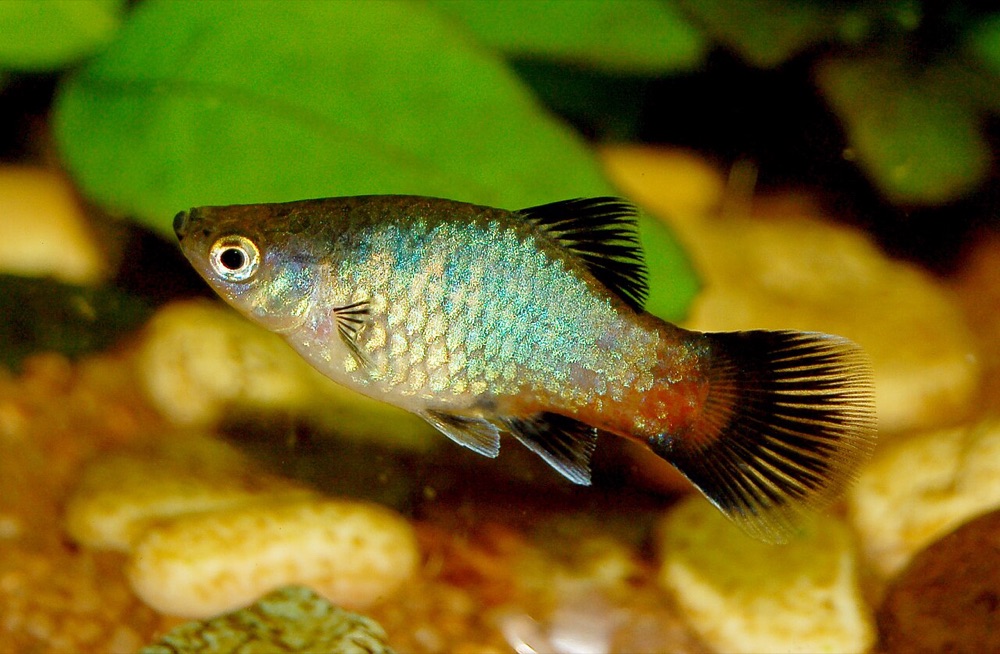
- Fins and colour: a short, deep-bodied fish with a rounded tail, bred in many colour patterns such as red, blue, wagtail (dark fins on a coloured body) and mixed forms, some from crosses with related species.
- Energy
- Moderate
- Indian heat
- Copes with care
- Flats
- Suits a flat
Platy at a glance
| What | The rule | Source |
|---|---|---|
| What it is | Xiphophorus maculatus, the southern platyfish, a wild species of Mexico and Belize. | US Geological Survey, Nonindigenous Aquatic Species |
| Size | Females about 6 cm, males about 4 cm. | US Geological Survey, Nonindigenous Aquatic Species |
| Colours | A long-standing ornamental fish with many colour patterns; breeders have crossed it with related species. | US Geological Survey, Nonindigenous Aquatic Species |
| Never release | Introduced platies and other livebearers are implicated in the decline of native damselflies in Hawaii. | US Geological Survey, Nonindigenous Aquatic Species |
| Company | Peaceful; research each tank mate's needs and compatibility first. | RSPCA (England and Wales) |
| In India | Sold in major city aquarium markets, and found wild in a Kerala hill stream. | Biological Invasions (2008)study |
Where does the Platy fish come from?
The platy, Xiphophorus maculatus, is a wild species. The US Geological Survey gives its native range as the Atlantic slope of Middle America from Ciudad Veracruz in Mexico to Belize, including the Yucatan Peninsula. It calls the platy a long-standing ornamental fish with a wide range of colour patterns, and notes that aquaculturists have crossed it with related species to create new forms and colours.
Platies have escaped or been released from fish farms and aquariums in several places, and the USGS says platies and other introduced livebearers are implicated in the decline of native damselflies on Oahu, Hawaii, probably through predation.
How did the Platy fish come to India?
No source we found records when platies first came to India. They are part of the trade today: a national study of ornamental fish in aquarium markets in Delhi, Mumbai, Kolkata, Kochi and Chennai from 2019 to 2022 sampled southern platyfish, which, unlike goldfish and guppies in the same markets, carried none of the gill and skin flukes the study looked for.
Platies also live wild in India. A 2008 study on the Chalakudy River in Kerala's Western Ghats collected them from a small stream running through a tea plantation at 1,050 m, one of five exotic fish recorded in a river its authors describe as part of a global biodiversity hotspot.
What care does a Platy fish need?
The three things that shape a good day for this breed.
Exercise
Tank and swimming space: a filtered, cycled tank with open water and some plants for fry. Platies are small, but numbers rise as they breed, so start with a tank that has room to spare. RSPCA (England and Wales)
Grooming
Water care: in the first six weeks, test ammonia and nitrite every two to three days; after that every one to two weeks, with a 10 to 25% water change each week. RSPCA Australia Knowledgebase
Training
Handling and feeding routine: add new platies one or two at a time, feed at set times and watch that every fish gets food. RSPCA Australia Knowledgebase
What should a Platy fish eat?
Platies eat a mixed diet. Feed a good quality tropical flake or small pellet, and the Merck Veterinary Manual suggests commercial dried foods are a good choice, with live foods used carefully because they can carry parasites. The RSPCA advises two or three small meals a day, only what is eaten in two to five minutes, and says overfeeding harms the water more than underfeeding harms the fish.
Keep food sealed and buy small packs: Merck says smaller quantities bought often are better than a large container used for months, which matters in Indian humidity.
Meals a day: fry, small, frequent meals of fine food; adult, 2 to 3 small meals a day.
Which illnesses is the Platy fish prone to, and how are they treated?
The conditions veterinary studies and breed surveys most often report in the Platy fish. Knowing the early signs means a vet sees it sooner.
See your vet first. This is general information from veterinary sources, not a diagnosis. Only a vet who has examined your pet can say what is wrong and prescribe treatment, and this page never gives a dose. Do not give your pet human medicine. If your pet seems very unwell, go to a 24-hour vet: find one in your city.
New tank syndrome (ammonia and nitrite poisoning)
See a vet soonIn a tank whose filter bacteria have not yet developed, fish waste builds up as ammonia and then nitrite. Merck says excess ammonia is very harmful to fish. Merck Veterinary Manual
Signs to watch for
- Gasping at the surface
- Lethargy and fish lying still
- Deaths soon after fish are added
How a vet treats it
The fix is the water, not a medicine. Merck says frequent, sometimes daily, water tests help manage it; partial water changes bring levels down. A fish vet can test the water and check sick fish.
Prevention
Cycle the tank without fish first, add one or two fish at a time and test often for the first six weeks.
White spot (ich)
Emergency: go to a vet nowA parasite of skin and gills. UF/IFAS warns that fish carrying it without signs can fall ill after the stress of being moved. University of Florida IFAS Extension
Signs to watch for
- White spots on body and fins
- Flashing against decor
- Pale, swollen gills
How a vet treats it
An aquatic or exotics vet confirms it under a microscope and plans repeated treatments, as UF/IFAS describes, because a single treatment does not break the life cycle.
Prevention
Quarantine new platies for at least 30 days.
Mycobacteriosis
See a vet soonA chronic bacterial infection of aquarium fish that Merck says can also infect people, causing a skin infection. Merck Veterinary Manual
Signs to watch for
- Slow weight loss
- Skin sores
- Pale colour
- A bent spine
How a vet treats it
A vet confirms it with laboratory tests. Merck says the bacteria generally resist antibiotics in fish and infected fish are usually put down humanely.
Prevention
Merck advises that people with immune system disorders avoid contact with an affected tank.
Why do platies die in new tanks?
Because a new filter has not yet grown the bacteria that make fish waste safe.
Platies are often among the first fish in a new tank, and that is when they are most at risk. The Merck Veterinary Manual says excess ammonia is very harmful to fish and that nitrite rises as the filter bacteria grow, which can be managed with frequent, sometimes daily, water tests. RSPCA Australia advises testing every two to three days for the first six weeks and adding only one or two fish at a time.
For a trip, this means timing. A tank that is under six weeks old needs a sitter who can test the water, not just feed. If you have just bought platies, ask the sitter to visit daily and test as often as you do, or delay the trip. Never clean the filter sponge under the tap before you leave: chlorine kills the bacteria the tank depends on.
How does a platy compare with a guppy or molly?
Three livebearers often sold together, with different adult sizes.
| Adult size | Native to | |
|---|---|---|
| Platy US Geological Survey, Nonindigenous Aquatic Species | Females about 6 cm, males about 4 cm | Atlantic slope of Mexico to Belize |
| Guppy US Geological Survey, Nonindigenous Aquatic Species | Females to 6 cm, males to 2.5 cm | Northern South America and the southern Lesser Antilles |
| Sailfin molly US Geological Survey, Nonindigenous Aquatic Species | Up to 15 cm | Coastal North America to Veracruz |
All three give birth to live young, so a mixed tank can fill with fry. Plan for adult sizes, not the size in the shop.
What does a sitter do on a platy visit?
Look
Count the adults against the owner's photos and look in the plants. Note any fry and leave them where they are.
Water
Is it clear and odour-free? If the owner left test kits for a young tank, test ammonia and nitrite and log the result. RSPCA Australia Knowledgebase
Equipment
Filter outflow moving, air stone on, thermometer in range, lid in place. RSPCA (England and Wales)
Feed
One measured portion; anything not eaten in two to five minutes comes out. RSPCA (England and Wales)
Leave
Light on its timer, battery pump ready, log and photo sent.
Which platy problems should a sitter report?
If Several platies gasping at the surface, or lying still, in a tank under six weeks old.
Likely a water quality problem. Start aeration, test ammonia and nitrite if kits were left, and call the owner now. Merck Veterinary Manual
If Water suddenly cloudy or smelling bad.
Do not feed. Call the owner; a partial water change with treated water at the same temperature may be needed. RSPCA Australia Knowledgebase
If White spots on body and fins.
Possible white spot (ich). UF/IFAS calls an outbreak a true emergency, so call the owner at once. University of Florida IFAS Extension
If A fish thin over weeks with sores or a bent back.
Merck lists these signs for mycobacteriosis, which can infect people through the skin. Report it and keep cut hands out of the water. Merck Veterinary Manual
Should spare platies ever go into a pond or stream?
No. A study of Kerala's Chalakudy River, in the Western Ghats biodiversity hotspot, collected platies from a stream running through a tea plantation at 1,050 m, alongside other exotic species the authors saw as a risk to native fish. The US Geological Survey says platies and other introduced livebearers are implicated in the decline of native damselflies in Hawaii.
If your platies breed more than you can house, give the young to an aquarium shop or another keeper. Tell your sitter the same: no fish leaves the flat.
Which Petym service suits platies?
If An established, cycled tank and a trip of up to two weeks
A daily drop-in visit to count, feed and check the filter. Drop-in visits
If A tank under six weeks old
Daily visits with water tests, or delay the trip until the tank is cycled. Drop-in visits
If A dog or cat at home too, or long power cuts
Overnight pet sitting, so the tank and every pet are seen through the day. Overnight sitting
Breeds with similar care needs to the Platy fish
Going away soon? Plan your pet’s care first.
Petym's bookings open for dogs and cats first. For every other pet, the free going-away checklist covers food, water, heat and what to leave written down before you travel.


Questions owners ask
Are platy fish good for beginners?
- Platies are small and peaceful, but no fish suits an uncycled tank. The Merck Veterinary Manual says excess ammonia is very harmful, and RSPCA Australia advises adding only one or two fish at a time and testing every two to three days for the first six weeks.
How big do platy fish grow?
- The US Geological Survey gives about 6 cm for females and about 4 cm for males. That is a little bigger than a male guppy and much smaller than a sailfin molly, which can reach 15 cm.
Can I go on holiday with a new platy tank?
- It is better not to. A tank under six weeks old is still growing its filter bacteria, and RSPCA Australia advises testing every two to three days. If you must travel, arrange daily visits from someone who can test the water and do a partial change.
Why are there tiny fish in my platy tank?
- Platies are livebearers, so females give birth to free-swimming young. Adults may eat them. Dense plants help fry hide; tell your sitter to note fry but leave them where they are unless you have asked otherwise.
Can platies live with guppies and mollies?
- They can share a tank, but the RSPCA asks owners to research each fish's needs and compatibility, and warns that crowded fish compete for food, which causes stress. Mollies grow much larger, so the tank must suit the biggest adult.
Can I put extra platies in a garden pond or lake?
- No. Platies have been found living wild in a stream in Kerala's Western Ghats, and the US Geological Survey links introduced livebearers to the decline of native insects in Hawaii. Give extras to an aquarium shop instead.
Keep reading
- Fish sitting while you're awayFeeding, power cuts and heat for any tank.
- Aquarium fish care in IndiaHow to cycle a tank before adding fish.
- Guppy care in India
- Molly fish care in India
- Neon tetra care in India
- What to leave for your pet sitter
- Drop-in visits or overnight sitting
Services that help
Free tools for this
Words on this page, explained
Keep exploring
Sources
Each source was opened and read on the date shown. How Petym checks its sources
- US Geological Survey, Nonindigenous Aquatic Species: Southern platyfish (Xiphophorus maculatus): species profile (revised 17 September 2012) (opens in a new tab)
- RSPCA (England and Wales): Fish company: keeping fish together (opens in a new tab)
- RSPCA Australia Knowledgebase: Why is water quality important when setting up a fish aquarium? (opens in a new tab)
- Merck Veterinary Manual: Providing a home for fish (pet owner version, last updated April 2026) (opens in a new tab)
- RSPCA (England and Wales): Fish diet (opens in a new tab)
- Merck Veterinary Manual: Disorders and diseases of fish (pet owner version, last updated April 2026) (opens in a new tab)
Show all 12 sourcesShow fewer
- University of Florida IFAS Extension: Ichthyophthirius multifiliis (white spot) infections in fish (CIR920/FA006) (opens in a new tab)
- US Geological Survey, Nonindigenous Aquatic Species: Guppy (Poecilia reticulata): species profile (revised 26 April 2013) (opens in a new tab)
- US Geological Survey, Nonindigenous Aquatic Species: Sailfin molly (Poecilia latipinna): species profile (revised 29 September 2011) (opens in a new tab)
- RSPCA (England and Wales): Fish environment: tanks, filters, temperature and water (opens in a new tab)
- Parasite (2025): Monogeneans on exotic Indian freshwater fish. 7. Results of a national study on ornamental fishes from 2019 to 2022 (Tripathi and others) (opens in a new tab)
- Biological Invasions (2008): Exotic fish species in a global biodiversity hotspot: observations from River Chalakudy, Kerala (abstract read) (opens in a new tab)