Betta fish care in India: warm water, fins and time away
Updated By PetymFacts checked against official sources on
Quick answer
A betta, or Siamese fighting fish, is a tropical species that needs heated, gently filtered water at 24 to 26 °C, a lid and a tank of 20 litres or more, never a cup. While you travel, a sitter should visit daily, give one small meal, read the thermometer, check the fins and never put two males together.
Bettas also gulp air from the surface, so the gap under the lid must stay open.
- Origin
- Thailand and nearby Southeast Asia (northern Malay Peninsula, Cambodia, southern Vietnam)US Geological Survey, Nonindigenous Aquatic Species
- Adult length
- 6 cm (USGS gives a maximum length of 6 cm for the species)US Geological Survey, Nonindigenous Aquatic Species
- Lifespan
- 3 to 5 yearsRSPCA Queensland
- Coat
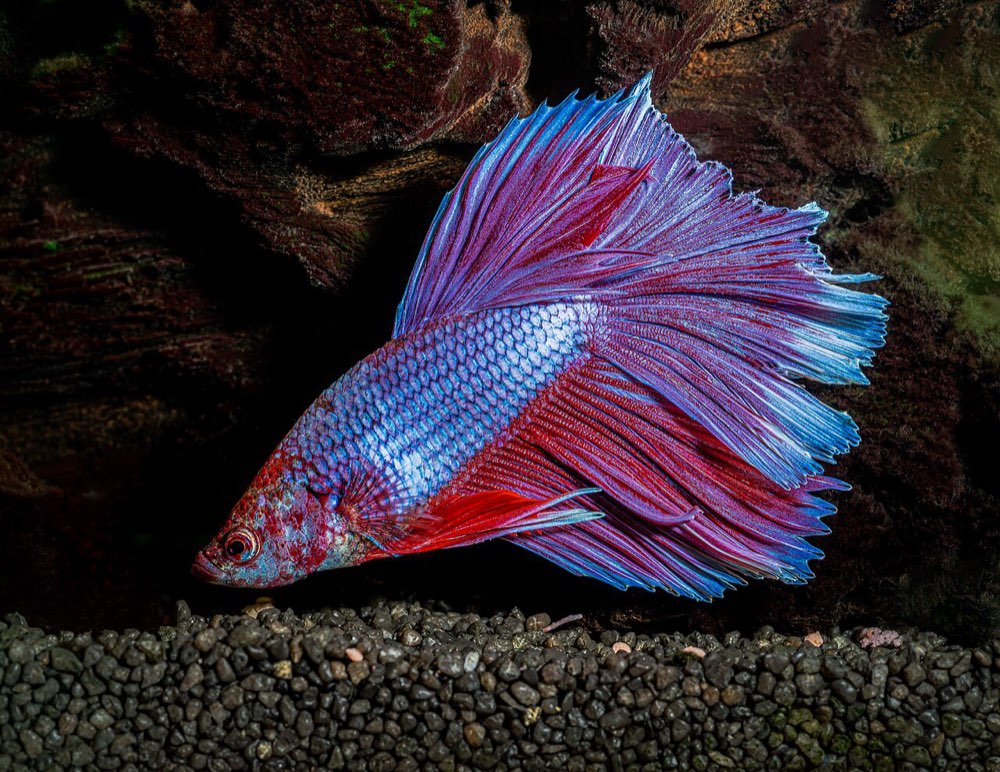
- Fins and colour: show males carry long, flowing fins in red, blue, purple and mixed colours, held erect when healthy; females have shorter fins. Long-finned males tear their fins easily.RSPCA Australia Knowledgebase
- Energy
- LowRSPCA Australia Knowledgebase
- Indian heat
- Copes with careRSPCA Australia Knowledgebase
- Flats
- Suits a flatRSPCA Australia Knowledgebase
Betta at a glance
| What | The rule | Source |
|---|---|---|
| What it is | Betta splendens, a wild species from Thailand and nearby Southeast Asia, bred for fighting for centuries and for show since the early 20th century. | Science Advances (2022)study |
| Size | Up to about 6 cm long, not counting the long fins of show types. | US Geological Survey, Nonindigenous Aquatic Species |
| Lifespan | 3 to 5 years on average. | RSPCA Queensland |
| Water | 24 to 26 °C from a heater, pH 6.5 to 7.5, low filter flow. | RSPCA Australia Knowledgebase |
| Tank | 20 litres or more is ideal; 10 litres is the absolute minimum. A lid is essential: bettas are excellent jumpers. | RSPCA Australia Knowledgebase |
| Company | Never two males together. Snails or large shrimp can suit a beginner's betta tank. | RSPCA Australia Knowledgebase |
Where does the Betta fish come from?
The betta is a true species, Betta splendens, native to Southeast Asia: the US Geological Survey lists the northern Malay Peninsula, central and eastern Thailand, Cambodia and southern Vietnam. A 2022 genome study in Science Advances says Siamese fighting fish have been bred for fighting in Southeast Asia for centuries, with reports from Thailand as early as the 14th century.
From the early 20th century bettas were also bred for looks, which gave the long fins and bright colours sold today. The same study found that domesticated bettas come mainly from Betta splendens, carry some genes from related wild species, and that genes for body colour and fin shape have been under strong recent selection.
How did the Betta fish come to India?
No source we found records when bettas first reached India. A national study of ornamental fish sold in aquarium markets in Delhi, Mumbai, Kolkata, Kochi and Chennai between 2019 and 2022 included bettas and found them carrying a gill fluke, Heteronchocleidus. The same study notes that imported ornamental fish must spend 15 days in quarantine and that releasing them into the wild is an offence.
Bettas have escaped into Indian waters. A 2024 study in Diseases of Aquatic Organisms described the first outbreak of velvet disease in freshwater fish of the Andaman Islands, which caused mass deaths in non-native bettas and guppies as well as a native killifish.
What care does a Betta fish need?
The three things that shape a good day for this breed.
Exercise
Tank and swimming space: 20 litres or more is ideal and 10 litres the absolute minimum, with real or artificial plants for cover and smooth decor that will not tear fins. A lid with an air gap stops jumping. RSPCA Australia Knowledgebase
Grooming
Water care: a heater holding 24 to 26 °C, a filter with low, adjustable flow, ammonia below 0.1 ppm and nitrite below 0.2 ppm, and a 10 to 25% water change each week. RSPCA Australia Knowledgebase
Training
Handling and feeding routine: feed once a day at the same time and net the fish only when you must. Keep the light on for no more than 10 hours, and never show a male a mirror. RSPCA Australia Knowledgebase
What should a Betta fish eat?
RSPCA Australia advises high quality pellets or granules made for bettas, with occasional frozen black worms, brine shrimp or daphnia, and says not to feed mammal fats such as beef heart or offal. Feed only what the fish eats in under two minutes and remove the rest.
The Merck Veterinary Manual warns that live foods can carry parasites or disease into a tank, so buy them from a reliable aquarium shop. Never feed kitchen food.
Meals a day: adult, 1 small meal a day; young betta from the shop, 1 small meal a day, as the shop or vet advises.
Which illnesses is the Betta fish prone to, and how are they treated?
The conditions veterinary studies and breed surveys most often report in the Betta fish. Knowing the early signs means a vet sees it sooner.
See your vet first. This is general information from veterinary sources, not a diagnosis. Only a vet who has examined your pet can say what is wrong and prescribe treatment, and this page never gives a dose. Do not give your pet human medicine. If your pet seems very unwell, go to a 24-hour vet: find one in your city.
Fin damage and fin rot
See a vet soonLong-finned males tear their fins on rough decor, RSPCA Australia says. Torn fins in warm, dirty water can be invaded by bacteria; Merck describes columnaris in warm-water fish, with slimy or cotton-like lesions, and ragged fins with Aeromonas infection. RSPCA Australia Knowledgebase
Signs to watch for
- Split or ragged fin edges
- White, slimy or cotton-like patches
- Clamped fins
How a vet treats it
An aquatic or exotics vet examines the fish and may take samples. Merck says early columnaris may respond to a bath the vet chooses and later cases generally need antibiotics; for Aeromonas, lab tests guide the choice of antibiotic.
Prevention
Smooth decor, low flow and clean water.
Velvet (Piscinoodinium)
See a vet soonA parasite that coats the skin and gills. A 2024 study recorded an outbreak that killed bettas and guppies of all ages in the Andaman Islands, with clubbed, damaged gills. Merck Veterinary Manual
Signs to watch for
- Fine yellowish spots or a velvety film
- Loss of appetite and lethargy
- Scratching against objects
How a vet treats it
A vet confirms the parasite under the microscope. Merck says a vet may recommend a treatment for ornamental fish and a recheck after 7 to 10 days.
Intestinal parasites (Spironucleus and Hexamita)
See a vet soonProtozoan parasites that Merck says attack the intestines of cichlids, bettas, gouramis and other aquarium fish; crowding, shipping and handling can trigger outbreaks. Merck Veterinary Manual
Signs to watch for
- Lethargy
- Weight loss
- White, stringy droppings
How a vet treats it
A vet identifies the parasite from a droppings or tissue sample and decides on treatment.
Prevention
Avoid crowding and handle the fish as little as possible.
Stress from poor water or the wrong temperature
Ask at a routine checkRSPCA Australia lists the signs of a stressed or ill betta and links betta welfare to a heated tank, low flow and clean water. RSPCA Australia Knowledgebase
Signs to watch for
- Sinking or bobbing at the surface
- Lumps, bumps or wounds
- Staying in a corner or hiding
- A trail of faeces
How a vet treats it
Test the water and check the heater first, then talk to an experienced aquarist or a fish vet, who decides on any treatment.
Does a betta need a heater in India?
Often yes, and in summer it can need the opposite. A betta wants steady water between 24 and 26 °C.
RSPCA Australia asks for a submersible heater holding 24 to 26 °C. In Chennai or Mumbai the room may sit near that range for much of the year, but a north Indian winter night in Delhi or Lucknow can cool a small tank well below it, and a sunny room in May can push it above. A small tank swings faster than a big one, which is one reason a cup or vase fails.
Ask the sitter to read the thermometer at every visit and send a photo. If the water is warm on a summer afternoon, they close the curtains and float a sealed ice bag rather than pouring in cold water. If the heater light behaves differently from what you showed them, they call you instead of adjusting the dial.
Bettas need occasional air from the surface even when the water holds plenty of oxygen, RSPCA Australia says. That is why the lid must leave a gap above the water, and why a betta can manage a short power cut better than many fish. A long cut on a cold night is a heater problem, not an oxygen one.
What should you leave for a betta sitter?
A betta's care is simple but exact. Leave it written down.
- Betta pellets or granules, one day's portion per compartment. RSPCA Australia advises one meal a day, eaten in under two minutes. RSPCA Australia Knowledgebase
- The heater setting and the normal thermometer reading, written on the tank.
- A note never to move the betta into another fish's tank, even briefly. Two males fight until one dies. RSPCA Australia Knowledgebase
- No mirror games. A mirror makes a male flare constantly, which causes stress and exhaustion. RSPCA Australia Knowledgebase
- The light timer set to no more than 10 hours a day, with at least eight hours of darkness. RSPCA Australia Knowledgebase
- Conditioned water ready for the weekly 10 to 25% change, at the same temperature as the tank. RSPCA Australia Knowledgebase
- Your contact, and a vet who sees fish if your city has one.
Which betta problems should a sitter spot?
RSPCA Australia lists the signs of a stressed or ill betta. A sitter compares the fish with the owner's photo and description.
If Clamped fins, sinking to the bottom or bobbing at the surface, staying in one corner or hiding all the time.
These are RSPCA Australia's signs of stress or illness. Check the thermometer first, then call the owner. RSPCA Australia Knowledgebase
If Torn or ragged fins on a long-finned male.
Long fins tear easily on rough decor. Note it and send a photo; if the edges look white, slimy or cotton-like, call the owner the same day. RSPCA Australia Knowledgebase
If A fine yellowish or gold dust over the body, scratching and poor appetite.
Possible velvet, a parasite Merck describes; it caused mass deaths in bettas and guppies in the Andaman Islands. Call the owner for a fish vet's advice. Diseases of Aquatic Organisms (2024)study
If White, stringy droppings, weight loss and lethargy.
Merck links these signs to intestinal parasites in bettas. Do not add any medicine; report it. Merck Veterinary Manual
If The betta is missing from the tank.
Check the floor and behind the tank: bettas are excellent jumpers. Then check the lid gap. RSPCA Australia Knowledgebase
Is a betta happy in a cup or bowl?
You may have read
Bettas live in puddles, so a cup is enough.
Myth
What the sources say
RSPCA Australia says small tanks and bowls give a betta too little space for its needs and are too small for a proper heater. RSPCA Australia Knowledgebase
You may have read
A mirror is good exercise for a betta.
Myth
What the sources say
It makes a male flare constantly, causing stress and exhaustion. RSPCA Australia Knowledgebase
You may have read
Bettas cannot live with any other animal.
Myth
What the sources say
Snails or large shrimp can suit, and an experienced keeper can add calm community fish to a tank of 40 litres or more. RSPCA Australia Knowledgebase
You may have read
A betta needs feeding several times a day.
Myth
What the sources say
RSPCA Australia advises one meal a day, only what is eaten in under two minutes. RSPCA Australia Knowledgebase
How long can a betta be left alone?
City utility advice for power cuts says most aquarium fish can go several days without eating, but the heater, the lid and the water cannot be left. The RSPCA asks for a responsible person to check fish and equipment daily while you are away and says tropical fish need feeding daily. For a betta that means one visit a day, a small measured meal and a look at the thermometer.
Long-finned show bettas have fins that tear on rough decorations, so tell the sitter not to rearrange the tank or add anything sharp. If you keep a female betta group or a community tank, write down every fish so the sitter can count them.
Which Petym service suits a betta?
If A single betta in an established, heated tank
One drop-in visit a day for the meal, the thermometer and a fin check. Drop-in visits
If Your betta lives alongside a dog or cat that also needs care
Overnight pet sitting covers every animal in the home, and the tank gets many looks a day. Overnight sitting
If A betta on a fish vet's treatment plan
Special-needs care, with each step logged as the plan says. Special-needs care
Breeds with similar care needs to the Betta fish
Going away soon? Plan your pet’s care first.
Petym's bookings open for dogs and cats first. For every other pet, the free going-away checklist covers food, water, heat and what to leave written down before you travel.


Questions owners ask
How long can a betta fish go without food?
- Most aquarium fish can go several days without eating, utility outage advice says, but the RSPCA says tropical fish need feeding daily and asks for a daily check of fish and equipment. One small measured meal a day from a sitter is safer than a holiday feeding block, which fouls the water.
Can a betta live in a bowl without a filter?
- Not well. RSPCA Australia advises 20 litres or more, 10 at the absolute minimum, with a low-flow filter and a heater. Bowls are too small for a proper heater and let the temperature swing, which is a real problem in Indian summers and north Indian winters.
What temperature does a betta need?
- RSPCA Australia gives 24 to 26 °C, held by a submersible heater. Read the thermometer daily. In summer keep the tank shaded so it does not overheat, and in a north Indian winter make sure the heater is working.
Can two bettas live together?
- Never two males: RSPCA Australia says one will end up dying. Females are often calmer together but can still be aggressive, and males and females should share a tank only for breeding under an experienced keeper.
Why is my betta lying at the bottom?
- Sinking, clamped fins, hiding or staying in one corner are signs RSPCA Australia links to stress or illness. Check the temperature and water quality first, then talk to an experienced aquarist or a fish vet before adding any treatment.
How long do betta fish live?
- RSPCA Queensland gives an average of 3 to 5 years. Good water, a steady temperature and a single small meal a day give a betta the best chance of reaching that.
Keep reading
- Fish sitting while you're awayFeeding, power cuts and heat for any tank.
- Aquarium fish care in IndiaGoldfish and betta setup side by side.
- Guppy care in India
- Neon tetra care in IndiaA calm shoaling fish for a larger betta community tank.
- What to leave for your pet sitter
- Winter pet care in north India
- Drop-in visits or overnight sitting
Services that help
Free tools for this
Words on this page, explained
Keep exploring
Sources
Each source was opened and read on the date shown. How Petym checks its sources
- US Geological Survey, Nonindigenous Aquatic Species: Siamese fighting fish (Betta splendens): species profile (revised 30 April 2018) (opens in a new tab)
- RSPCA Queensland: Siamese fighting fish (pet care blog) (opens in a new tab)
- RSPCA Australia Knowledgebase: How should I care for my Siamese fighting fish? (updated 1 May 2024) (opens in a new tab)
- Merck Veterinary Manual: Providing a home for fish (pet owner version, last updated April 2026) (opens in a new tab)
- Merck Veterinary Manual: Disorders and diseases of fish (pet owner version, last updated April 2026) (opens in a new tab)
- RSPCA (England and Wales): Fish diet (opens in a new tab)
Show all 10 sourcesShow fewer
- Riverside Public Utilities, City of Riverside (California): Tips for pets during outages: tips for aquariums (opens in a new tab)
- Science Advances (2022): Genomic consequences of domestication of the Siamese fighting fish (Kwon and others) (opens in a new tab)
- Parasite (2025): Monogeneans on exotic Indian freshwater fish. 7. Results of a national study on ornamental fishes from 2019 to 2022 (Tripathi and others) (opens in a new tab)
- Diseases of Aquatic Organisms (2024): Piscinoodinium sp. associated with epizootics and mortality in non-native and endemic freshwater fish of the Andaman Islands (abstract read) (opens in a new tab)