Molly fish care in India: types, warm water and time away
Updated By PetymFacts checked against official sources on
Quick answer
Aquarium mollies come from a few related wild species of the Americas and their hybrids; the black molly is a hybrid. They grow to about 11 to 15 cm, give birth to live young and handle warm Indian water well. While you travel, a sitter should visit daily, feed one meal, count the adults and look for spots or sores.
Do not let anyone add salt or new fish while you are away.
- Origin
- Central America and the Atlantic and Gulf coasts of North America (several Poecilia species)US Geological Survey, Nonindigenous Aquatic Species
- Adult length
- 11 to 15 cm (USGS: shortfin mollies to 11 cm, sailfin mollies to 15 cm)US Geological Survey, Nonindigenous Aquatic Species
- Coat
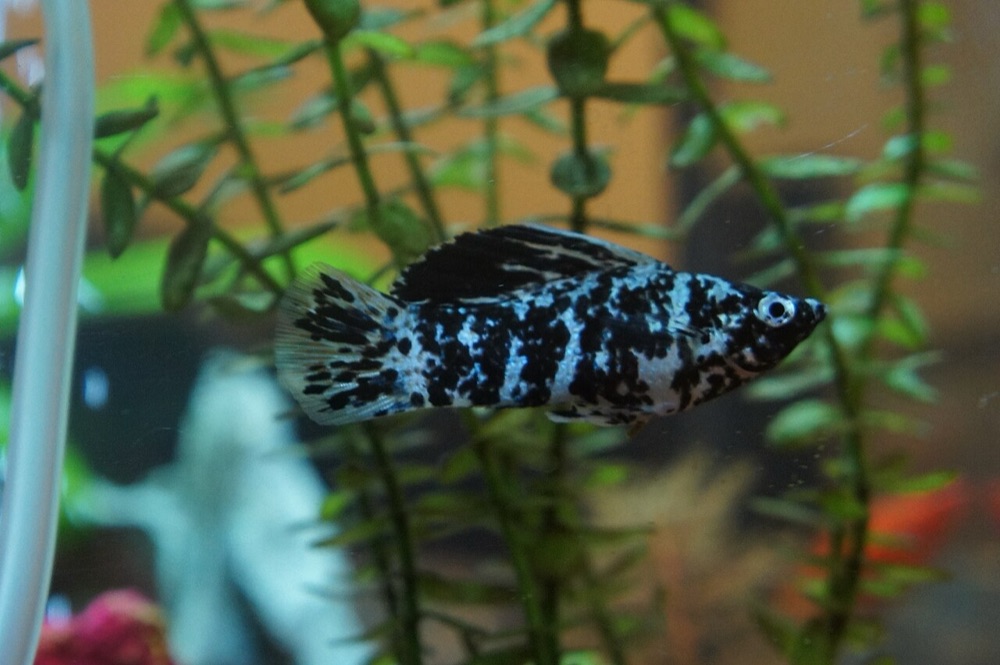
- Fins and colour: shortfin types have a modest dorsal fin; sailfin males raise a tall, sail-like dorsal fin. Colour forms include all-black, gold, white and dalmatian-spotted.
- Energy
- Moderate
- Indian heat
- Copes wellUS Geological Survey, Nonindigenous Aquatic Species
- Flats
- Suits a flatRSPCA (England and Wales)
Molly at a glance
| What | The rule | Source |
|---|---|---|
| What it is | Shortfin mollies belong to the Poecilia sphenops complex, hard to tell apart even for experts; sailfin mollies are Poecilia latipinna. | US Geological Survey, Nonindigenous Aquatic Species |
| Black molly | A hybrid, not a pure wild species. | US Geological Survey, Nonindigenous Aquatic Species |
| Size | Shortfin mollies up to about 11 cm; sailfin mollies up to about 15 cm. | US Geological Survey, Nonindigenous Aquatic Species |
| Wild home | Shallow, slow, often weedy water from marshes and ditches to estuaries, widely tolerant of temperature, salinity and low oxygen. | US Geological Survey, Nonindigenous Aquatic Species |
| Varieties | One of the tropical fish bred by people to produce new colour forms. | RSPCA (England and Wales) |
| In India | Sold in aquarium markets in Delhi, Mumbai, Kolkata, Kochi and Chennai. | Parasite (2025)study |
Where does the Molly fish come from?
The molly is not one breed but a group of wild livebearing species and their crosses. The US Geological Survey places the shortfin molly in the Poecilia sphenops complex of Central America, from Mexico to Guatemala and perhaps Nicaragua, and says these fish are hard to tell apart. The sailfin molly, Poecilia latipinna, comes from coastal waters from North Carolina to Veracruz in Mexico.
Breeders crossed and selected these fish for colour and fin shape. The USGS notes that the black molly is a hybrid and that commercial breeders have released many domestic forms, including sailfin hybrids. Sailfin mollies were also moved from Texas to Hawaii in 1905 to control mosquitoes, an attempt that failed.
How did the Molly fish come to India?
No source we found records when mollies first came to India. A national study of ornamental fish sold in aquarium markets in Delhi, Mumbai, Kolkata, Kochi and Chennai from 2019 to 2022 included both sailfin mollies and other mollies; neither carried the gill and skin flukes the study was looking for, unlike goldfish, guppies and bettas in the same markets.
The same study notes that imported ornamental fish must be quarantined for 15 days on arrival and that it is an offence to release them or let them escape into the wild.
What care does a Molly fish need?
The three things that shape a good day for this breed.
Exercise
Tank and swimming space: mollies grow to 11 to 15 cm, so choose a long tank with open swimming water and plants, sized for adults rather than the young fish you buy. US Geological Survey, Nonindigenous Aquatic Species
Grooming
Water care: a cycled, filtered tank with weekly partial water changes of 10 to 25% in treated water at the same temperature, and tests for ammonia and nitrite. RSPCA Australia Knowledgebase
Training
Handling and feeding routine: feed at the same times, remove leftovers, and net only when needed. Watch at feeding time for any fish that is chased away. RSPCA (England and Wales)
What should a Molly fish eat?
Feed a good quality food made for tropical fish, in the form that suits where the fish feed: the Merck Veterinary Manual says fish that feed lower down should not be given only flakes that float. The RSPCA advises two or three small meals a day, only what is eaten in two to five minutes, and says underfeeding is better than overfeeding.
Merck warns that live foods can carry parasites into the tank, and that a smaller pack bought more often keeps food fresher, which matters in humid Indian months.
Meals a day: fry, small, frequent meals of fine food; adult, 2 to 3 small meals a day.
Which illnesses is the Molly fish prone to, and how are they treated?
The conditions veterinary studies and breed surveys most often report in the Molly fish. Knowing the early signs means a vet sees it sooner.
See your vet first. This is general information from veterinary sources, not a diagnosis. Only a vet who has examined your pet can say what is wrong and prescribe treatment, and this page never gives a dose. Do not give your pet human medicine. If your pet seems very unwell, go to a 24-hour vet: find one in your city.
Columnaris
See a vet soonA bacterial disease caused by Flavobacterium columnare, which Merck says affects warm-water fish; it is sometimes called saddleback or cottonmouth disease. Merck Veterinary Manual
Signs to watch for
- Grey-white or cotton-like patches on the mouth, back or fins
- Slimy skin lesions
- Frayed fins
How a vet treats it
An aquatic or exotics vet confirms it from a sample. Merck says an early bath treatment chosen by the vet may help, and later cases generally need antibiotics.
White spot (ich)
Emergency: go to a vet nowIchthyophthirius multifiliis, a parasite whose life cycle speeds up in warm water. UF/IFAS says outbreaks often follow rapid temperature changes and that one treatment is never enough. University of Florida IFAS Extension
Signs to watch for
- Salt-grain spots on skin and fins
- Rubbing on decor
- Sluggish fish that eat less
How a vet treats it
A vet confirms it under a microscope, then sets a schedule of repeated treatments based on the water temperature, as UF/IFAS describes.
Prevention
A 30-day quarantine for new fish, and separate nets for each tank.
Aeromonas infection
See a vet soonA bacterial infection Merck describes in aquarium fish, causing sores, fin damage and sometimes fluid swelling known as dropsy. Merck Veterinary Manual
Signs to watch for
- Red spots or ulcers
- A swollen belly with raised scales
- Ragged fins
- Bulging eyes
How a vet treats it
Merck says antibiotics can work, but a laboratory test is needed to choose the right one, so a vet usually takes samples first.
Which kind of molly do you have?
Shops in India sell mollies by colour, not by species. The care is similar, but the adult size is not.
- Shortfin molly
- Mollies of the Poecilia sphenops complex from Central America. The US Geological Survey gives up to 11 cm and says they are hard to tell from related mollies and hybrids. US Geological Survey, Nonindigenous Aquatic Species
- Sailfin molly
- Poecilia latipinna, with a tall dorsal fin on males, from coastal North America to Veracruz in Mexico. Up to 15 cm. US Geological Survey, Nonindigenous Aquatic Species
- Black molly
- An all-black hybrid form, which the USGS notes can be mistaken for pure sailfin mollies. US Geological Survey, Nonindigenous Aquatic Species
- Dalmatian, gold and other colours
- Colour forms bred by people; the RSPCA names mollies among tropical fish bred to produce new varieties. RSPCA (England and Wales)
How do mollies manage Indian heat and humid months?
Well, as long as the tank does not run short of oxygen.
Wild sailfin mollies live in shallow marshes, ditches and estuaries and are widely tolerant of temperature, salinity and low oxygen, the US Geological Survey says. That makes them one of the easier tropical fish for a warm Indian flat. A larger molly still uses more oxygen than a guppy, and a planted tank in a closed room on a May afternoon can run low.
Ask the sitter to keep the air stone running in hot weeks and to read the thermometer at every visit. In the monsoon, the bigger risk is power cuts and insect sprays in shut rooms: keep the lid on and the battery pump ready. Because wild mollies cope with brackish water, some keepers add aquarium salt. A sitter should never add salt, medicine or conditioner beyond what you wrote down.
What does a sitter check on a molly visit?
Mollies are big enough to see clearly, which makes the visit quick if the owner leaves good notes.
- Count the adults against the owner's photos, including any fish hiding in plants. A dead fish fouls the water. RSPCA (England and Wales)
- Look for new fry; mollies are livebearers and adults may eat them. Note them, do not move them unless asked.
- Check the filter outflow, air stone and thermometer reading against the care sheet. RSPCA (England and Wales)
- Feed one measured portion and remove what is left after a few minutes. Underfeeding is safer than overfeeding. RSPCA (England and Wales)
- Look at each fish's skin, fins and mouth for white spots, cotton-like patches or sores. Merck Veterinary Manual
- Leave the lid on, the light on its timer and the battery pump next to the tank.
Which molly problems need a call?
If Grey-white, slimy or cotton-like patches on the mouth, back or fins.
Merck describes columnaris, a bacterial disease of warm-water fish. Call the owner the same day: early cases respond better. Merck Veterinary Manual
If White salt-grain spots on several mollies.
Possible white spot (ich), an emergency in UF/IFAS's words. Call the owner now and do not add anything yourself. University of Florida IFAS Extension
If A molly hanging at the surface, gasping, while others sit low.
Start aeration at once and check the temperature, filter and leftover food. University of Florida IFAS Extension
If A fish getting thinner over weeks, with sores or a bent body.
Merck links these signs to mycobacteriosis, which can infect people. Keep cut hands out of the water and report it. Merck Veterinary Manual
If Fish chasing and nipping one female constantly.
Note which fish and tell the owner; they may want a divider or to move a fish. Mollies compete for food when crowded. RSPCA (England and Wales)
Can mollies share a tank with other fish?
If your mollies share a community tank with guppies, platies or other peaceful tropical fish, plan it carefully. The RSPCA asks owners to research each species' needs and compatibility before mixing, and warns that many fish in one tank compete for food, which causes stress. Mollies grow larger than guppies and platies, so a tank that suits a few young mollies can be crowded within months.
For a sitter, a mixed tank means more fish to count and more mouths at feeding time. Write the number of each kind on the care sheet, and say which fish usually feeds last so the sitter does not add extra food to reach it.
Which Petym service suits mollies?
If A healthy community tank and a trip of up to two weeks
A daily drop-in visit to feed, count and check the equipment. Drop-in visits
If Other pets at home as well, or frequent long power cuts
Overnight pet sitting, so the tank is seen many times a day. Overnight sitting
If Mollies on a treatment plan from a fish vet
Special-needs care, with every step logged as written. Special-needs care
Breeds with similar care needs to the Molly fish
Going away soon? Plan your pet’s care first.
Petym's bookings open for dogs and cats first. For every other pet, the free going-away checklist covers food, water, heat and what to leave written down before you travel.


Questions owners ask
Is a black molly a real species?
- No. The US Geological Survey describes the black molly as a hybrid, which can be mistaken for the pure sailfin molly. Shop mollies are bred colour forms of related Poecilia species and their crosses, and the RSPCA names mollies among fish bred to produce new varieties.
How big do molly fish get?
- Larger than most people expect. The US Geological Survey gives up to 11 cm for shortfin mollies and up to 15 cm for sailfin mollies. Plan the tank for the adult size, not the size in the shop bag.
Do mollies need salt in the water?
- Wild sailfin mollies are widely tolerant of salinity, the US Geological Survey says, and live in places from marshes to estuaries. Whether to add salt to a home tank is a choice for you and your aquarium shop or vet. A sitter should never add it unasked.
Can I leave my mollies alone for a weekend?
- Hunger is rarely the issue, but the RSPCA asks for a responsible person to check fish and equipment every day you are away. A stopped filter or a power cut on a hot day is the real risk, so plan a daily visit.
Why is my molly gasping at the top of the tank?
- Gasping at the surface is a sign of low oxygen, the University of Florida's extension service says, and needs aeration at once. Then look for the cause: warm water, a stopped filter, too much food or too many fish.
Can mollies live with guppies?
- Usually, in a big enough community tank. The RSPCA asks owners to check compatibility and warns that crowded fish compete for food, which causes stress. Mollies grow larger than guppies, so allow space for adult mollies.
Keep reading
- Fish sitting while you're awayFeeding, power cuts and heat for any tank.
- Aquarium fish care in India
- Guppy care in IndiaA smaller livebearer from the same genus.
- Platy fish care in India
- What to leave for your pet sitter
- Summer pet care in India
- Friend or professional pet sitter
Services that help
Free tools for this
Words on this page, explained
Keep exploring
Sources
Each source was opened and read on the date shown. How Petym checks its sources
- US Geological Survey, Nonindigenous Aquatic Species: Sailfin molly (Poecilia latipinna): species profile (revised 29 September 2011) (opens in a new tab)
- RSPCA (England and Wales): Fish company: keeping fish together (opens in a new tab)
- US Geological Survey, Nonindigenous Aquatic Species: Shortfin molly (Poecilia mexicana): species profile (revised 15 April 2019) (opens in a new tab)
- RSPCA Australia Knowledgebase: Why is water quality important when setting up a fish aquarium? (opens in a new tab)
- Merck Veterinary Manual: Providing a home for fish (pet owner version, last updated April 2026) (opens in a new tab)
- RSPCA (England and Wales): Fish diet (opens in a new tab)
Show all 12 sourcesShow fewer
- Merck Veterinary Manual: Disorders and diseases of fish (pet owner version, last updated April 2026) (opens in a new tab)
- University of Florida IFAS Extension: Ichthyophthirius multifiliis (white spot) infections in fish (CIR920/FA006) (opens in a new tab)
- RSPCA (England and Wales): Fish environment: tanks, filters, temperature and water (opens in a new tab)
- RSPCA (England and Wales): Fish health and welfare (opens in a new tab)
- University of Florida IFAS Extension: FA27/FA002: Dissolved oxygen for fish production (Francis-Floyd and Pouder) (opens in a new tab)
- Parasite (2025): Monogeneans on exotic Indian freshwater fish. 7. Results of a national study on ornamental fishes from 2019 to 2022 (Tripathi and others) (opens in a new tab)