Winter white hamster care in India: coat, cold spells and lumps
Updated By PetymFacts checked against official sources on
Quick answer
The winter white, or Djungarian, hamster is a dwarf species from the Siberian and Kazakh steppe whose coat turns white in short winter days. In an Indian flat it may barely change colour, which is normal. It needs pellets without sugary extras, a 20 cm solid wheel, a steady 18 to 21 °C and an evening visit every day you are away.
Merck says Djungarians have five times the tumour rate of Syrians, so any new lump means a vet visit. A cold, still hamster may be in torpor or ill: warm the room gradually and call the vet.

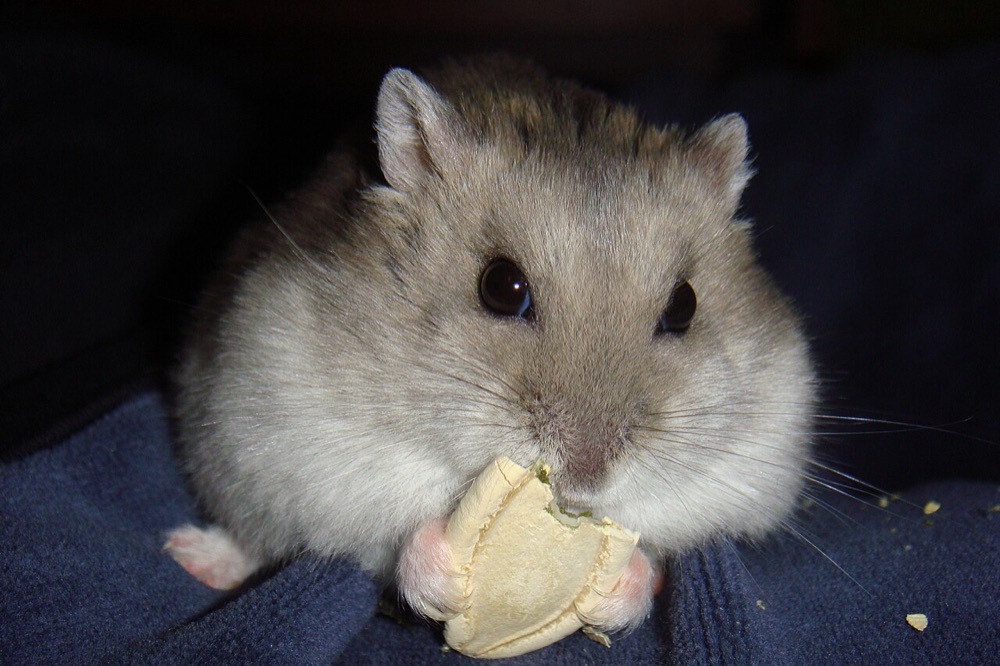
- Origin
- Steppes of East Kazakhstan and south-west SiberiaScandinavian Journal of Laboratory Animal Science (2015)study
- Adult weight
- 0.035 to 0.05 kg (Merck's 35 to 50 g is for Russian dwarf hamsters; the VetCompass study found a median of 45 g in UK pet Djungarians)Merck Veterinary Manual
- Lifespan
- 1.5 to 2 yearsMerck Veterinary Manual
- Coat
- In summer, dark greyish brown on the back and head with a black stripe down the spine and a whitish belly. In short winter days it turns more or less white except the stripe. Furry feet and a short tail.Scandinavian Journal of Laboratory Animal Science (2015)study
- Energy
- HighPDSA
- Indian heat
- Struggles in heatPDSA
- Flats
- Suits a flatPDSA
Winter white hamster at a glance
| What | The rule | Source |
|---|---|---|
| Size | A dwarf: Merck gives 35 to 50 g for Russian dwarfs; UK pet Djungarians weighed a median of 45 g. | Journal of Small Animal Practice (2022)study |
| Coat | Dark greyish brown with a black back stripe in summer; more or less white except the stripe in short days. | Scandinavian Journal of Laboratory Animal Science (2015)study |
| Lifespan | About 18 months to 2 years. | Merck Veterinary Manual |
| Tumour risk | High: Merck says Djungarians show five times the rate of tumours seen in Syrians. | Merck Veterinary Manual |
| Diabetes risk | PDSA says Russian dwarf hamsters are particularly prone to diabetes. | PDSA |
| Company | Can sometimes live in a pair or trio, but does not need company and pairs may fall out. | RSPCA |
Where does the Winter white hamster come from?
The winter white, also called the Djungarian or Siberian hamster, is a species (Phodopus sungorus), not a breed. It is native to the steppes of East Kazakhstan and south-west Siberia. Its summer coat is dark greyish brown with a black stripe along the back; in winter it turns more or less completely white except for that stripe, and the Scandinavian Journal of Laboratory Animal Science calls this colour change by far the best way to tell the species apart.
The change is driven by day length. A 2021 study in Frontiers in Physiology says that once daylight falls below about 13 hours a day, the hamsters start preparing for the Siberian winter: a white, well-insulating coat, a body weight about a fifth lower, and later daily torpor, a short drop in body temperature below 32 °C. In that study, torpor bouts lasted on average about three and a half hours and mostly happened in the light phase, which for a hamster is daytime.
Winter whites are popular pets and are also used in research on daily rhythms, torpor and seasonal change. In the UK VetCompass study, Djungarians were the second most common pet hamster after the Syrian, at 13.77% of hamsters seen by vets. They are easily confused with Campbell's dwarf hamsters, a separate species with which they have been crossed in captivity.
How did the Winter white hamster come to India?
No source we found records when winter whites first reached India or how many are kept. Hamsters are pet animals under the Pet Shop Rules, 2018, and a shop selling them must be registered with the State Animal Welfare Board. The name Russian dwarf is used loosely for both winter whites and Campbell's, so ask what you are buying.
For a species shaped by Siberian winters, Indian summers are the main danger: PDSA's steady 18 to 21 °C is far below a shut flat in May. Do not expect a winter white in India to turn white. WikiVet notes that indoors without changes in day length the coat change may be only minor, and a hamster that stays brown all year is normal.
What care does a Winter white hamster need?
The three things that shape a good day for this breed.
Exercise
Needs a large single-level enclosure, deep bedding and a solid wheel at least 20 cm across, PDSA's minimum for dwarf hamsters. PDSA
Grooming
Self-grooming, with a sand bath if offered. The coat lightens in short days as part of the seasonal change; any bald, scaly or sore patch is a reason to see the vet. Scandinavian Journal of Laboratory Animal Science (2015)study
Training
Gentle and slow, in the evening. Merck says dwarf hamsters are harder to handle and restrain than Syrians, so handle low over a table and never wake a sleeping or torpid hamster to play. Merck Veterinary Manual
What should a Winter white hamster eat?
PDSA says Russian dwarf hamsters are particularly prone to diabetes, and the winter white is the hamster the VetCompass study calls by that name. Feed a complete hamster pellet as the base: Merck's veterinary text says seed mixes let hamsters pick out the seeds and leave the pellets, and PDSA says muesli-style mixes lead to obesity and dental problems.
Add a small daily portion of washed vegetables and an occasional protein treat. Sweet fruit, mithai, biscuits and yoghurt or honey treats stay out. Grapes and rhubarb can be poisonous to rodents. A winter white's weight changes with the seasons in research animals, so ask your vet before cutting or adding food.
Meals a day: young hamster after weaning, pellets always available, with fresh food introduced slowly; adult, pellets topped up daily, plus a small daily portion of low-sugar vegetables.
Which illnesses is the Winter white hamster prone to, and how are they treated?
The conditions veterinary studies and breed surveys most often report in the Winter white hamster. Knowing the early signs means a vet sees it sooner.
See your vet first. This is general information from veterinary sources, not a diagnosis. Only a vet who has examined your pet can say what is wrong and prescribe treatment, and this page never gives a dose. Do not give your pet human medicine. If your pet seems very unwell, go to a 24-hour vet: find one in your city.
Lumps and tumours
See a vet soonMerck's veterinary text says Djungarian hamsters show a high rate of tumours, five times greater than Syrian hamsters. Merck Veterinary Manual
Signs to watch for
- Any new lump or swelling
- A swollen belly
- Weight loss
- Hair loss or inflamed skin
How a vet treats it
Have any lump checked as soon as possible. Merck says some tumours can be treated with surgery, medicine or both if caught early enough.
Skin nodules (pseudomycetoma)
See a vet soonMerck describes a bacterial infection producing firm, pus-filled nodules in the skin in several dwarf hamsters. Merck Veterinary Manual
Signs to watch for
- A firm lump in or under the skin
- Pus from a lump
How a vet treats it
Merck names excision, surgical removal by the vet, as the treatment.
Diabetes and other causes of heavy drinking
See a vet soonPDSA says Russian dwarf hamsters are particularly prone to diabetes. Drinking and urinating more can also mean kidney disease. PDSA
Signs to watch for
- Drinking more: the bottle empties faster
- Urinating more, so the cage is wetter
- Weight loss
How a vet treats it
Merck says a vet may use blood tests, urine tests or imaging to look for the cause and suggest treatment. Follow the vet's diet plan exactly.
Prevention
Pellets as the base, no sugary foods, and a healthy weight.
Cold and torpor
See a vet soonWinter whites use daily torpor in short days, with body temperature falling below 32 °C for hours. A pet hamster can also slip into torpor below about 20 °C, and the RSPCA says pet hamsters lack the fat reserves to go without food for long. Frontiers in Physiology (2021)study
Signs to watch for
- Cold, still and hard to wake
- Slow breathing
- Not eating
How a vet treats it
Warm the room gradually and call the vet. The vet decides whether it is torpor or illness.
Prevention
Keep the room steady and out of an air conditioner's blast.
Heatstroke
Emergency: go to a vet nowPDSA warns a hamster in a hot cage cannot escape the heat and can develop heatstroke. PDSA
Signs to watch for
- Fast, short breathing
- Drooling
- Weakness
- Collapse
How a vet treats it
Move the cage somewhere cooler and call the vet straight away.
Prevention
A steady 18 to 21 °C in the coolest room, out of the sun.
Will a winter white hamster turn white in India?
Probably not much, and that is fine. The colour change follows day length, and indoor life blurs it.
The winter white gets its name from a coat that turns more or less completely white in winter, except for the dark stripe down its back. A 2021 study in Frontiers in Physiology says the change begins once daylight falls below about 13 hours a day, as the hamster prepares for a Siberian winter: a white, warmer coat, a body weight about a fifth lower, and daily torpor.
A pet in an Indian flat also lives under room lights in the evening. WikiVet notes that a winter white kept indoors without changes in day length may show only a minor coat change. A winter white that stays grey all year in Pune or Kochi is healthy. A sudden patchy coat, bald areas or sore skin is different, and needs a vet.
Is a cold, still winter white in torpor or ill?
A sitter cannot tell for sure, and should not wait to find out. These are the cases and what to do.
If Cold to the touch, curled and very still during the day in a cool room, but breathing.
Possibly torpor, which winter whites use in short days, mostly in daytime, for a few hours. Warm the room gradually, do not handle it, and call the vet for advice: the vet decides whether it is torpor or illness. Frontiers in Physiology (2021)study
If Cold and limp in the evening, when it should be awake, in an air-conditioned room.
Warm the room gradually and call the vet. Below about 20 °C a hamster can slip into torpor, and pet hamsters lack the fat reserves to go without food for long. RSPCA
If Cold and still, and also thin, wet round the tail or not eating in recent days.
Treat as illness, not torpor. Call the vet now and the owner after. Merck Veterinary Manual
If Panting, drooling or collapsed on a hot day.
Heatstroke is the opposite risk. Move it somewhere cooler and call the vet straight away. PDSA
Why does a lump matter more in a winter white?
Merck's veterinary text says Djungarian hamsters show a high prevalence of tumours, five times greater than Syrian hamsters, and the RSPCA says tumours are fairly common in hamsters in general. Merck also describes a bacterial skin infection, pseudomycetoma, that forms firm, pus-filled nodules in several dwarf hamsters and is treated by surgical removal. Both start as a lump, and only a vet can tell them apart.
Merck's owner advice is to have any lump checked by a vet as soon as possible, because some tumours can be treated with surgery, medicine or both if caught early. For a sitter that means looking at the hamster carefully from outside the cage at every visit: the flanks, belly, face and around the tail. Write down the size and place of any lump the owner already knows about, so the sitter can tell whether it has changed.
A winter white through the Indian year
What changes for a sitter season by season.
| Main risk | What the sitter does | |
|---|---|---|
| Summer (March to June) PDSA | Heatstroke in a closed, sunny flat | Coolest inner room, curtains drawn, a thermometer reading at every visit, and the power-cut plan |
| Monsoon (June to September) RSPCA | Damp bedding and spoiled fresh food | Remove wet bedding and old vegetables at each visit; keep the bedding pack sealed |
| Diwali RSPCA (England and Wales) | Fireworks while the hamster is awake | Move the cage to an inner room before dusk, give extra bedding to burrow in, and do not handle it |
| Winter (north India) RSPCA | Cold nights and short days, and possible torpor | Keep the room steady, out of heater and AC blasts; call the vet for a hamster that will not wake |
What does a sitter check on a winter white visit?
- Every hamster in the cage seen moving, if it is a pair, with no bites on the rump or face. RSPCA
- The water level against the owner's mark: a bottle emptying much faster can mean diabetes or kidney trouble. Merck Veterinary Manual
- Pellets topped up and fresh vegetables given; nothing sweet, because Russian dwarfs are prone to diabetes. PDSA
- No new lump, and no change in a lump the owner has already shown you. Merck Veterinary Manual
- Dry fur round the tail, clear eyes and a normal walk. Merck Veterinary Manual
- Room temperature between 18 and 21 °C where possible, written in the log. PDSA
- Lid and door clips locked before leaving.
Which kind of care suits a winter white while you travel?
If A healthy adult in a cool room, for a trip of a few days to a week
An evening drop-in visit every day, in your home, with the cage left as it is. Drop-in visits RSPCA
If A heat wave is forecast, or the trip is two weeks or longer
A sitter who stays in your home keeps the room steady through power cuts. Overnight sitting PDSA
If Your hamster has a lump under watch, or diabetes the vet is managing
Special-needs care, with the vet's plan followed and logged as written. Special-needs care Merck Veterinary Manual
If You keep a pair that has squabbled recently
A sitter who stays, with a spare enclosure ready and your instructions on separating them. RSPCA
How does a Petym sitter look after a winter white?
Petym is not taking bookings yet; it opens city by city once its sitters pass the checks. When it does, the free meet and greet before the first booking is the time to show the sitter your hamster awake in the evening, its water mark, any lump you are watching, and where the thermometer is.
During a booking the sitter follows your plan as written, logs each visit and sends a photo every day. If something is wrong, the sitter calls you and takes the hamster to the nearest 24-hour vet on the city's list. Every Petym sitter has an identity check with PAN and pet first-aid training before the first booking.
Breeds with similar care needs to the Winter white hamster
Going away soon? Plan your pet’s care first.
Petym's bookings open for dogs and cats first. For every other pet, the free going-away checklist covers food, water, heat and what to leave written down before you travel.

Questions owners ask
Why hasn't my winter white hamster turned white?
- Because the change follows day length. A Frontiers in Physiology study says winter whites start preparing for winter when daylight falls below about 13 hours, and WikiVet notes that indoors without changes in day length the coat change may be only minor. A grey winter white in India is normal.
Is a winter white the same as a Djungarian hamster?
- Yes. Winter white, Djungarian and Siberian hamster are names for one species, Phodopus sungorus. It is often sold as a Russian dwarf, a name also used for Campbell's dwarf hamster, a separate species that looks alike. The UK VetCompass study used Russian dwarf for the Djungarian.
Do winter white hamsters get tumours?
- More than most. Merck's veterinary text says Djungarian hamsters show a rate of tumours five times greater than Syrian hamsters. Have any new lump checked by a vet as soon as possible; Merck says some tumours can be treated with surgery, medicine or both if caught early.
My winter white is cold and not moving. Is it dead?
- Not necessarily. Winter whites can enter daily torpor, with body temperature below 32 °C for a few hours, and any hamster can slip into torpor below about 20 °C. Warm the room gradually and call the vet straight away rather than assume the worst or the best.
How long do winter white hamsters live?
- Merck gives about 18 months to 2 years for Russian dwarf hamsters. In the UK VetCompass study, non-Syrian hamsters died at a median age of 1.68 years, and males outlived females across all species. Regular checks for lumps and changes in drinking help catch problems early.
What should a sitter feed a winter white hamster?
- Exactly what the owner leaves: hamster pellets as the base and a small daily portion of washed vegetables. PDSA says Russian dwarfs are particularly prone to diabetes, so no sweet fruit, mithai, biscuits or sugary treats. The sitter scatters food in the bedding and removes old fresh food.
Keep reading
- Hamster sitting while you're awayThe general plan for any hamster.
- Campbell's dwarf hamster careThe look-alike Russian dwarf.
- Syrian hamster care
- Hamster care guide for India
- Winter pet care in North India
- Diwali fireworks and pets
- Monsoon pet care
Services that help
Free tools for this
Words on this page, explained
Keep exploring
Sources
Each source was opened and read on the date shown. How Petym checks its sources
- Merck Veterinary Manual: Description and physical characteristics of hamsters (full review September 2026) (opens in a new tab)
- PDSA: Hamsters as pets (opens in a new tab)
- Ministry of Environment, Forest and Climate Change (Gazette copy on AWBI's site): Prevention of Cruelty to Animals (Pet Shop) Rules, 2018: G.S.R. 844(E), 6 September 2018 (opens in a new tab)
- WikiVet: Hamster breeds (WikiNormals) (opens in a new tab)
- Merck Veterinary Manual: Hamsters (Exotic and Laboratory Animals, veterinary professional version) (opens in a new tab)
- RSPCA: Hamster diet (opens in a new tab)
Show all 16 sourcesShow fewer
- Merck Veterinary Manual: Disorders and diseases of hamsters (full review September 2026) (opens in a new tab)
- RSPCA: Hamster environment (opens in a new tab)
- RSPCA: Hamster company (opens in a new tab)
- RSPCA: Hamster health (opens in a new tab)
- RSPCA (England and Wales): Fireworks and pets (opens in a new tab)
- RSPCA: Exploring pet sitting options (opens in a new tab)
- Scandinavian Journal of Laboratory Animal Science (2015): Blood cell morphology of Djungarian hamster (Phodopus sungorus) (PDF) (opens in a new tab)
- Frontiers in Physiology (2021): Body temperature and activity adaptation of short photoperiod-exposed Djungarian hamsters (Phodopus sungorus): timing, traits, and torpor (opens in a new tab)
- Journal of Small Animal Practice (2022): Demography, disorders and mortality of pet hamsters under primary veterinary care in the United Kingdom in 2016 (opens in a new tab)
- Genes and Genetic Systems (2016), abstract read: Interspecific hybrids of dwarf hamsters and Phasianidae birds as animal models for studying the genetic and developmental basis of hybrid incompatibility (opens in a new tab)