Chinese hamster care in India: one hamster, one cage, no sugar
Updated By PetymFacts checked against official sources on
Quick answer
The Chinese hamster is a slim, long-tailed species from northern China, Mongolia and southern Siberia, often sold as a dwarf but not one. The RSPCA says it should always live alone. It needs pellets without sugary extras, a large single-level enclosure, a solid wheel and a steady 18 to 21 °C, with an evening visit every day you are away.
Some lines carry inherited diabetes, so a sitter watches the water and the bedding for heavy drinking and urine, and calls the vet for that, for diarrhoea or for any wound.

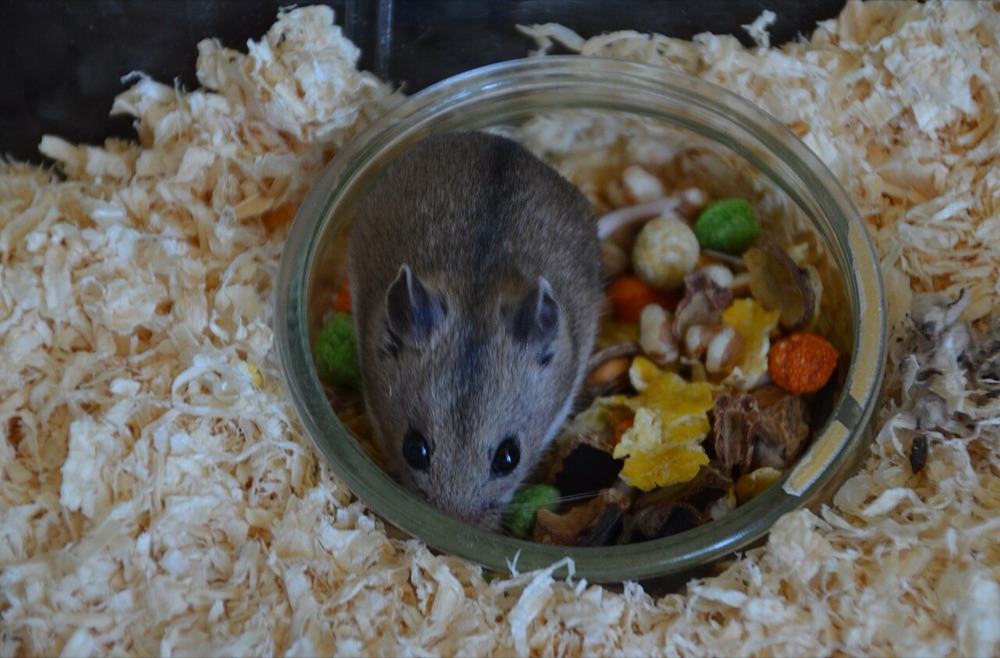
- Origin
- Northern Asia: southern Siberia, Mongolia and north-east ChinaThe Laboratory Rabbit, Guinea Pig, Hamster, and Other Rodents (Elsevier, 2012)study
- Adult weight
- 0.04 to 0.06 kg (Merck gives 40 to 60 g; a laboratory reference gives 39 to 46 g, and the VetCompass study found a median of 40 g in UK pets)Merck Veterinary Manual
- Lifespan
- 2 to 3 yearsMerck Veterinary Manual
- Coat
- Greyish brown to dark brown with a black stripe down the back. The body is long and slim and the tail relatively long for a hamster; a spotted (dominant spot) form is also kept.WikiVet
- Energy
- HighPDSA
- Indian heat
- Struggles in heatPDSA
- Flats
- Suits a flatPDSA
Chinese hamster at a glance
| What | The rule | Source |
|---|---|---|
| Size | About 9 cm long and 40 to 60 g, with a long, slim body and a relatively long tail. | Merck Veterinary Manual |
| Coat | Greyish black to dark brown, with a black stripe down the back. | The Laboratory Rabbit, Guinea Pig, Hamster, and Other Rodents (Elsevier, 2012)study |
| Lifespan | About 2 to 3 years. | Merck Veterinary Manual |
| Company | None. The RSPCA says Chinese hamsters should always live on their own; females are the most quarrelsome. | RSPCA |
| Diabetes | Some inbred lines develop inherited diabetes, which made the species a research model. | The Laboratory Rabbit, Guinea Pig, Hamster, and Other Rodents (Elsevier, 2012)study |
| Heat tolerance | Low in a cage. PDSA advises a steady 18 to 21 °C for hamsters. | PDSA |
Where does the Chinese hamster come from?
The Chinese hamster, also called the striped-back hamster, is a species of its own (Cricetulus griseus), in a different genus from the Phodopus dwarf hamsters it is often sold beside. A laboratory animal reference by William Feeney gives its range as northern Asia, from southern Siberia through Mongolia to north-eastern China, and describes it as a small rodent with a greyish black coat and a black stripe down the back.
It has a long research history. Feeney says it was first used as a laboratory animal in 1919, to type pneumococci from human patients. Early attempts to breed it in laboratories failed until a reversed lighting schedule allowed a colony to be set up. As it was domesticated in the mid twentieth century, researchers found that some inbred lines develop inherited diabetes, and in 1958 Tjio and Puck isolated Chinese hamster ovary (CHO) cells, which became a standard tool in laboratories.
Its temperament is the reason it lives alone. Feeney says Chinese hamsters, particularly mature females, are quarrelsome and frequently fight, with fights most frequent between females; WikiVet calls them very territorial and says they should usually be housed individually. The RSPCA agrees that Chinese hamsters are not naturally sociable and should always live on their own. In the VetCompass study they made up only 0.98% of UK pet hamsters.
How did the Chinese hamster come to India?
No source we found documents Chinese hamsters in the Indian pet trade, when they arrived or how many are kept. Chinese hamsters are often called Chinese dwarf hamsters, as the VetCompass study records them, so check what species you are being sold: the long tail and slim, mouse-like body set the Chinese hamster apart. Hamsters are named as pet animals in the Pet Shop Rules, 2018, which require a registered seller.
The monsoon matters for this species in particular. Merck's veterinary text says Tyzzer's disease in hamsters is usually brought on by stress such as overcrowding, high temperature and humidity, and Feeney lists it among the diseases of Chinese hamsters. Keep the cage dry, cool and clean through June to September, as well as out of the summer heat PDSA warns about.
What care does a Chinese hamster need?
The three things that shape a good day for this breed.
Exercise
Needs a large single-level enclosure, deep bedding and a solid wheel; PDSA gives at least 20 cm across for dwarf-sized hamsters. PDSA
Grooming
Self-grooming, with a sand bath if offered. The RSPCA says to check the front teeth regularly; Feeney lists gum disease (periodontitis) among the problems seen in the species, linked to its diabetes. RSPCA
Training
Always one hamster per cage. Handle low over a table in the evening, and keep a female away from any other hamster: Feeney says females are the most likely to fight. The Laboratory Rabbit, Guinea Pig, Hamster, and Other Rodents (Elsevier, 2012)study
What should a Chinese hamster eat?
Feeney says a standard laboratory rodent diet is adequate for the species, with no unique needs. For a pet, Merck's veterinary text recommends a complete pelleted diet made for hamsters and warns that seed mixes let hamsters pick out the seeds and ignore the pellets. PDSA adds a small daily portion of washed vegetables and the occasional protein treat.
Because some lines of Chinese hamster carry inherited diabetes, keep sugar out: no sweet fruit beyond a rare taste, and no mithai, biscuits or honey treats. Grapes and rhubarb can be poisonous to rodents. Your vet can advise on amounts for your hamster.
Meals a day: young hamster after weaning, pellets always available, with fresh food introduced slowly; adult, pellets topped up daily, plus a small daily portion of low-sugar vegetables.
Which illnesses is the Chinese hamster prone to, and how are they treated?
The conditions veterinary studies and breed surveys most often report in the Chinese hamster. Knowing the early signs means a vet sees it sooner.
See your vet first. This is general information from veterinary sources, not a diagnosis. Only a vet who has examined your pet can say what is wrong and prescribe treatment, and this page never gives a dose. Do not give your pet human medicine. If your pet seems very unwell, go to a 24-hour vet: find one in your city.
Diabetes
See a vet soonFeeney says some inbred lines of Chinese hamster develop inherited diabetes, the reason the species became a research model. It is not known how common it is in pet lines. The Laboratory Rabbit, Guinea Pig, Hamster, and Other Rodents (Elsevier, 2012)study
Signs to watch for
- Urinating more, so the cage is wetter
- Drinking more
- Eating more than usual
- Weight loss
How a vet treats it
Merck says a vet may use blood tests, urine tests or imaging to look for the cause of extra thirst and urination and suggest treatment. Follow the vet's plan exactly; never use a human diabetes medicine.
Prevention
A pellet diet without sugary extras, and a healthy weight.
Fight wounds
See a vet soonChinese hamsters, especially mature females, frequently fight, Feeney says, and the RSPCA says they should always live alone. Bite injuries were among the most common problems in the VetCompass study. The Laboratory Rabbit, Guinea Pig, Hamster, and Other Rodents (Elsevier, 2012)study
Signs to watch for
- Wounds on the rump or face
- A hot, painful swelling
- Hiding and not eating
How a vet treats it
A vet cleans and checks the wound. PDSA says a hot, red swelling is likely an abscess, which may need draining.
Prevention
One hamster per cage, always.
Tyzzer's disease
See a vet soonA gut disease that Merck says is usually brought on by stress such as overcrowding, high temperature and humidity. Feeney lists it among Chinese hamster diseases. Merck Veterinary Manual
Signs to watch for
- Lethargy
- Diarrhoea
- Rough coat
- Hunched posture
How a vet treats it
A vet examines the hamster and decides on treatment; diarrhoea in a hamster needs a vet promptly, and only the vet chooses any antibiotic.
Prevention
A cool, dry, clean cage, one hamster to a cage, especially in the monsoon.
Womb tumours in females
See a vet soonFeeney lists uterine adenocarcinomas among the conditions of Chinese hamsters, which may cause bleeding from the vagina. The RSPCA says tumours are fairly common in hamsters. The Laboratory Rabbit, Guinea Pig, Hamster, and Other Rodents (Elsevier, 2012)study
Signs to watch for
- Blood from the vagina
- A swollen belly
- Weight loss
How a vet treats it
Merck says some tumours can be treated with surgery, medicine or both if caught early enough.
Heatstroke
Emergency: go to a vet nowPDSA warns a hamster in a hot cage cannot escape the heat and can develop heatstroke. PDSA
Signs to watch for
- Fast, short breathing
- Drooling
- Weakness
- Collapse
How a vet treats it
Move the cage somewhere cooler and call the vet straight away.
Prevention
A steady 18 to 21 °C, out of sun and away from a hot kitchen wall.
Is a Chinese hamster a dwarf hamster?
It is sold as one, but it belongs to a different genus from the Campbell's, winter white and Roborovski dwarfs.
The Chinese hamster is a species, Cricetulus griseus, not a breed and not a Phodopus dwarf. It looks different too: WikiVet describes a long, thin body and a relatively long tail, where the Phodopus dwarfs have short tails and furry feet. The UK VetCompass study recorded it as the Chinese dwarf, a common shop name, and found it in under 1% of pet hamsters seen by vets.
The difference matters for care. Some dwarfs can share a cage; the Chinese hamster cannot. A laboratory reference by William Feeney says Chinese hamsters, particularly mature females, frequently fight, with fights most common between females, and WikiVet calls them very territorial. If a shop offers a pair of Chinese dwarfs to keep together, the RSPCA's advice is clear: they should always live on their own.
What are the Chinese hamster's other names?
The names on a shop label or a vet record, and what each one means.
- Chinese hamster
- The usual name for Cricetulus griseus, a species of northern Asia. The Laboratory Rabbit, Guinea Pig, Hamster, and Other Rodents (Elsevier, 2012)study
- Striped-back hamster
- Another name for the same species, after the black stripe down its back. The Laboratory Rabbit, Guinea Pig, Hamster, and Other Rodents (Elsevier, 2012)study
- Chinese dwarf hamster
- A shop and record name; the VetCompass study used it, though the species is not one of the Phodopus dwarfs. Journal of Small Animal Practice (2022)study
- Russian dwarf hamster
- A different animal: a name used for the winter white, and loosely for Campbell's. Journal of Small Animal Practice (2022)study
- CHO cells
- Chinese hamster ovary cells, isolated in 1958 and now a standard laboratory tool; nothing to do with pet care. The Laboratory Rabbit, Guinea Pig, Hamster, and Other Rodents (Elsevier, 2012)study
How do you keep a Chinese hamster living alone safely?
Do
- Give it its own large single-level enclosure with deep bedding and dark hides. PDSA
- Keep it in a quiet room, away from cats and dogs, with lights going off at the same time each night. RSPCA
- Handle it low over a table, in the evening, letting it walk onto your hand. RSPCA
- Tell the sitter it is a Chinese hamster, so no one mistakes it for a dwarf that can share. RSPCA
Don’t
- Don't put two Chinese hamsters together, even littermates. Fighting is frequent, especially between females. The Laboratory Rabbit, Guinea Pig, Hamster, and Other Rodents (Elsevier, 2012)study
- Don't let a sitter bring another hamster into the room or swap cage parts between hamsters.
- Don't use wire floors or fluffy bedding, which hurt feet and can tangle legs. RSPCA
- Don't give sugary treats to a species in which some lines carry inherited diabetes. The Laboratory Rabbit, Guinea Pig, Hamster, and Other Rodents (Elsevier, 2012)study
Why does the monsoon matter for a Chinese hamster?
Damp and heat together are a stress, and Merck links one gut disease of hamsters to exactly that.
Merck's veterinary text says Tyzzer's disease in hamsters is usually brought on by stress such as overcrowding and high temperature and humidity, and Feeney lists it among Chinese hamster diseases, with lethargy, diarrhoea, a rough coat and a hunched posture. From June to September in Mumbai, Kolkata or Kochi, a cage can be warm and damp for weeks at a time, and the RSPCA warns that infections can spread through contaminated food, water or bedding.
So the monsoon routine is about keeping things dry and fresh. Ask the sitter to remove any wet bedding and yesterday's vegetables at each visit, keep the spare bedding pack sealed, and move the cage away from any window that lets rain in. A Chinese hamster with diarrhoea or a hunched, rough-coated look needs a vet promptly, and only the vet decides on medicine.
What does a sitter do on a Chinese hamster visit?
Arrive in the evening
Look before opening the cage: is it awake, moving normally and breathing calmly? PDSA
Water and bedding
Check the bottle against the owner's mark and feel the bedding: more drinking and wetter bedding can be a sign of diabetes. The Laboratory Rabbit, Guinea Pig, Hamster, and Other Rodents (Elsevier, 2012)study
Food
Top up the pellets, give the owner's portion of vegetables, and remove old fresh food. RSPCA
Health look
Dry tail end, smooth coat, clear eyes, and in a female no blood from the vagina. The Laboratory Rabbit, Guinea Pig, Hamster, and Other Rodents (Elsevier, 2012)study
Every few days
Spot clean soiled bedding and put the nest and toys back where they were. RSPCA
Before leaving
Lock the lid, note the room temperature, log the visit and send the daily photo update.
When should a sitter call the vet about a Chinese hamster?
Call the vet first, then the owner. No medicine is given unless the vet prescribed it for this hamster.
If Drinking or urinating much more than the owner's note says, or eating more than usual.
Book the vet soon. Merck says a vet uses blood and urine tests to find the cause of extra thirst and urination. Merck Veterinary Manual
If Diarrhoea, a rough coat and a hunched posture, especially in hot, damp weather.
See the vet promptly; diarrhoea in a hamster can cause dehydration and sudden death. PDSA
If Bleeding from the vagina in a female.
Book the vet; Feeney lists womb tumours among Chinese hamster conditions. The Laboratory Rabbit, Guinea Pig, Hamster, and Other Rodents (Elsevier, 2012)study
If A wound or hot swelling.
Likely a bite or abscess. Call the vet; an abscess may need draining. PDSA
If Fast breathing, drooling or collapse in a hot room.
Move the cage somewhere cooler and call the vet straight away. PDSA
Which kind of care suits a Chinese hamster while you travel?
A healthy Chinese hamster does well with an evening drop-in visit every day in its own home, which the RSPCA prefers to moving a hamster. Choose overnight pet sitting for long trips, a heat wave or a hamster the vet is treating, and special-needs care if it needs medicine given and logged. If it must board at a sitter's home, it goes in its own cage, unchanged, to a room with no other hamsters.
Petym is not taking bookings yet and opens city by city once its sitters pass the checks. When it opens, a free meet and greet comes before the first booking; show the sitter the hamster in the evening and the water mark. The sitter follows your plan, logs each visit and sends a photo every day, and in an emergency calls you and takes the hamster to the nearest 24-hour vet on the city's list.
Breeds with similar care needs to the Chinese hamster
Going away soon? Plan your pet’s care first.
Petym's bookings open for dogs and cats first. For every other pet, the free going-away checklist covers food, water, heat and what to leave written down before you travel.

Questions owners ask
Can Chinese hamsters live together?
- No. The RSPCA says Chinese hamsters are not naturally sociable and should always live on their own. A laboratory reference says Chinese hamsters, particularly mature females, frequently fight. Keep one hamster per enclosure, even with littermates, and never add a new hamster while you are away.
Is a Chinese hamster a dwarf hamster?
- Not strictly. It is often sold as a Chinese dwarf, but it belongs to the genus Cricetulus, while the Campbell's, winter white and Roborovski dwarfs belong to Phodopus. It has a longer, slimmer body and a longer tail, and unlike some dwarfs it must always live alone.
How long do Chinese hamsters live?
- Merck gives about 2 to 3 years, and a laboratory reference gives an average of 2.5 to 3 years under laboratory conditions. Across non-Syrian pet hamsters in the UK VetCompass study the median age at death was 1.68 years, so plan for a short life.
Do Chinese hamsters get diabetes?
- Some do. A laboratory reference says some inbred lines develop inherited diabetes, the reason the species became a research model. How common it is in pet lines is not known. Keep sugar out of the diet, and see a vet if your hamster drinks or urinates more than usual.
How hot is too hot for a Chinese hamster?
- PDSA advises a steady 18 to 21 °C for hamsters and warns that a hamster in a hot cage cannot escape the heat. In India, keep the cage in the coolest inner room, out of sun, and plan for power cuts. Fast breathing, drooling or collapse means calling the vet.
Are Chinese hamsters easy to find in India?
- No source we found documents Chinese hamsters in the Indian pet trade. If a shop offers one, check the long tail and slim body, buy from a shop registered with the State Animal Welfare Board as the Pet Shop Rules, 2018 require, and never buy two to keep together.
Keep reading
- Hamster sitting while you're awayThe general plan for any hamster.
- Syrian hamster careThe other hamster that must live alone.
- Campbell's dwarf hamster care
- Hamster care guide for India
- Monsoon pet care
- Pets in housing societies
- Drop-in visits or overnight sitting
Services that help
Free tools for this
Words on this page, explained
Keep exploring
Sources
Each source was opened and read on the date shown. How Petym checks its sources
- Merck Veterinary Manual: Description and physical characteristics of hamsters (full review September 2026) (opens in a new tab)
- WikiVet: Hamster breeds (WikiNormals) (opens in a new tab)
- PDSA: Hamsters as pets (opens in a new tab)
- RSPCA: Hamster company (opens in a new tab)
- Ministry of Environment, Forest and Climate Change (Gazette copy on AWBI's site): Prevention of Cruelty to Animals (Pet Shop) Rules, 2018: G.S.R. 844(E), 6 September 2018 (opens in a new tab)
- Merck Veterinary Manual: Hamsters (Exotic and Laboratory Animals, veterinary professional version) (opens in a new tab)
Show all 13 sourcesShow fewer
- RSPCA: Hamster health (opens in a new tab)
- RSPCA: Hamster diet (opens in a new tab)
- Merck Veterinary Manual: Disorders and diseases of hamsters (full review September 2026) (opens in a new tab)
- RSPCA: Hamster environment (opens in a new tab)
- RSPCA: Hamster behaviour (opens in a new tab)
- The Laboratory Rabbit, Guinea Pig, Hamster, and Other Rodents (Elsevier, 2012): The Chinese or striped-back hamster (book chapter) (opens in a new tab)
- Journal of Small Animal Practice (2022): Demography, disorders and mortality of pet hamsters under primary veterinary care in the United Kingdom in 2016 (opens in a new tab)