Roborovski hamster care in India: a tiny, fast hamster while you are away
Updated By PetymFacts checked against official sources on
Quick answer
The Roborovski is the smallest pet hamster, about 20 to 30 g, a desert species that is fast, shy and hard to handle. It needs a large escape-proof enclosure, deep loose bedding, a solid wheel of at least 20 cm, pellets and a cool room at 18 to 21 °C. A sitter visits every evening and watches more than holds.
Roborovskis can sometimes live in a pair formed young, but pairs may fall out later. A sitter counts and checks every hamster at each visit and calls the vet for wounds, wet tail, limping or a bulging eye.

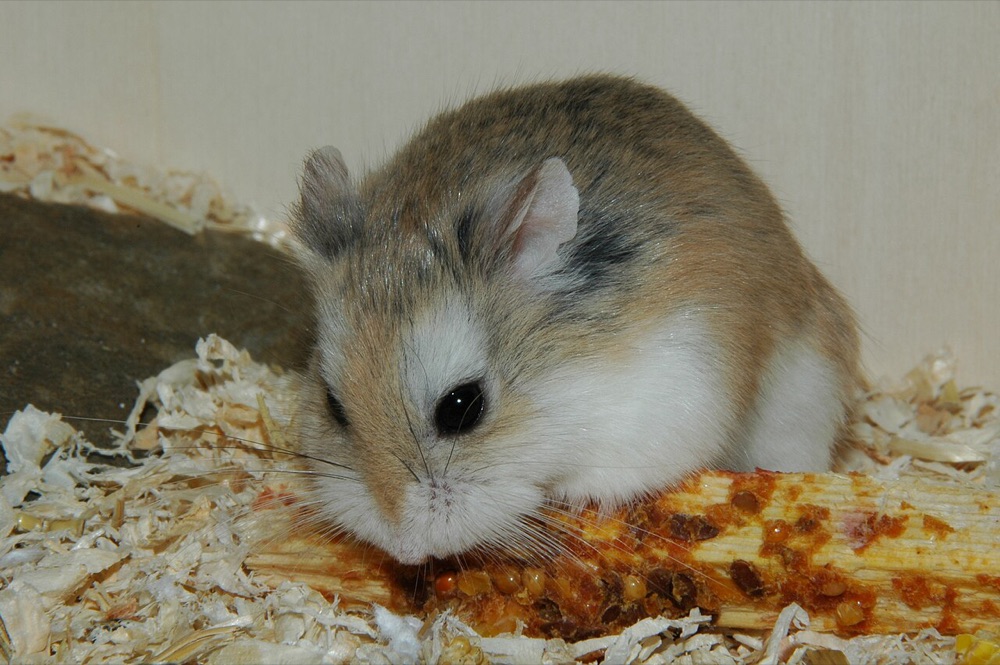
- Origin
- Sandy semi-deserts and steppe of Mongolia and northern China, with smaller populations in Kazakhstan and TuvaAnimal Diversity Web, University of Michigan Museum of Zoology
- Adult weight
- 0.02 to 0.03 kg (Merck gives 20 to 30 g; the VetCompass study found a median of 25 g in UK pet Roborovskis)Merck Veterinary Manual
- Lifespan
- 3 to 4 yearsMerck Veterinary Manual
- Coat
- Sandy brown on the head and back, a white belly and white patches above the eyes like eyebrows, with no dark stripe down the back.WikiVet
- Indian heat
- Struggles in heatPDSA
- Flats
- Suits a flatPDSA
Roborovski hamster at a glance
| What | The rule | Source |
|---|---|---|
| Size | The smallest hamster species: 20 to 30 g as an adult, with sandy fur, a white belly and white eyebrows. | Merck Veterinary Manual |
| Lifespan | Merck gives 3 to 4 years, longer than other pet hamsters; a laboratory study found a mean of 26 months. | Merck Veterinary Manual |
| Company | Can sometimes live in pairs or trios with the right care, but does not need company and pairs may fall out. | RSPCA |
| Handling | Harder than other hamsters: Merck says dwarfs are more difficult to handle and restrain. | Merck Veterinary Manual |
| Activity | Very active at night; in tests it moved more and faster than striped desert hamsters. | Animal Diversity Web, University of Michigan Museum of Zoology |
| Heat tolerance | Low in a cage: a species of cold, dry desert. PDSA advises a steady 18 to 21 °C. | PDSA |
Where does the Roborovski hamster come from?
The Roborovski is the smallest of all hamster species, a separate species (Phodopus roborovskii) rather than a breed, named by Satunin in 1903. In the wild it lives in Mongolia and northern China, with smaller populations in Kazakhstan and Russia's Tuva Republic, in sandy semi-deserts, steppe and grassland up to about 1,450 m. A study of its genetics in PLoS ONE found that it lives only where the sand is loose and plants are sparse, avoiding hard clay and thick vegetation, and that it tolerates cold and drought well.
Its burrows go deep, about 90 cm down, with separate rooms for the nest and the food store. Seeds make up 70 to 90% of the wild diet, with leaves, stems and insects such as beetles. Its feet are densely furred, which Animal Diversity Web says protects them from the heat of the sand. Roborovskis are nocturnal and shy: when two meet, one usually runs off to hide.
Roborovskis have been kept as pets since the 1990s. Animal Diversity Web notes they are more active and harder to handle than other hamsters and difficult to breed in captivity, and Merck's veterinary text says dwarf hamsters such as the Roborovski are more difficult to handle and restrain for examination and treatment. In the UK VetCompass study they were 6.35% of pet hamsters seen by vets.
How did the Roborovski hamster come to India?
The Roborovski is the one pet hamster with a wild link to India. A 2019 paper in the journal Mammalia reported the desert hamster from the north-western Tibetan plateau in Ladakh, as an addition to the mammal fauna of the Indian subcontinent. Those are wild animals in a cold, high desert, not escaped pets, and they have nothing in common with a Roborovski in a Mumbai or Chennai flat except their species.
No source we found records when pet Roborovskis first reached India. Hamsters are named as pet animals in the Pet Shop Rules, 2018, so buy from a shop registered with the State Animal Welfare Board, never from the wild. The species' wild range is cold and dry, and PDSA's advice of a steady 18 to 21 °C applies to it as to every pet hamster in Indian heat.
What care does a Roborovski hamster need?
The three things that shape a good day for this breed.
Exercise
Very active: in open-field tests Roborovskis moved more and faster than striped desert hamsters, Animal Diversity Web reports. Give a large enclosure, a solid wheel at least 20 cm across (PDSA's minimum for dwarfs) and deep, loose bedding to dig in. Animal Diversity Web, University of Michigan Museum of Zoology
Grooming
Self-cleaning. The RSPCA says hamsters groom themselves and may use a sand bath, which suits a species from loose sand. Check the front teeth and nails regularly. RSPCA
Training
Expect a pet to watch more than hold. Merck says dwarf hamsters are harder to handle and restrain, and a Roborovski is fast enough to vanish if dropped, so any handling happens low over a table or inside a playpen. Merck Veterinary Manual
What should a Roborovski hamster eat?
Wild Roborovskis eat mostly seeds, with leaves, stems and insects, and carry food in their cheek pouches to underground stores. A pet still needs a complete hamster pellet as the base: Merck's veterinary text says generic seed mixes should be avoided because hamsters pick out the seeds and ignore the pellets. PDSA adds a small daily portion of washed vegetables and the occasional protein treat.
Scatter food in the bedding so the hamster forages, as the RSPCA suggests, and keep sweet fruit and sugary snacks out: PDSA warns sugar can lead to obesity and diabetes in hamsters. Grapes and rhubarb can be poisonous to rodents. Ask your vet how much to feed a hamster this small.
Meals a day: young hamster after weaning, pellets always available, with fresh food introduced slowly; adult, pellets topped up daily and scattered, plus a small daily portion of fresh food.
Which illnesses is the Roborovski hamster prone to, and how are they treated?
The conditions veterinary studies and breed surveys most often report in the Roborovski hamster. Knowing the early signs means a vet sees it sooner.
See your vet first. This is general information from veterinary sources, not a diagnosis. Only a vet who has examined your pet can say what is wrong and prescribe treatment, and this page never gives a dose. Do not give your pet human medicine. If your pet seems very unwell, go to a 24-hour vet: find one in your city.
Injuries from falls, escapes and fights
See a vet soonIn the VetCompass study traumatic injury was the most common group of problems, and Syrians had lower odds of it than other species, so dwarfs such as the Roborovski were hurt more often. Bite injuries from other hamsters were also among the most common problems. Journal of Small Animal Practice (2022)study
Signs to watch for
- Limping or not wanting to move
- Bleeding or a wound
- A swelling that feels hot, often on the head
- Hiding and not eating
How a vet treats it
A vet examines the hamster for fractures or back injury. PDSA says a hot, red swelling is likely an abscess, which may need draining.
Prevention
A secure lid, handling only low down, and splitting pairs that start to fight.
Wet tail and diarrhoea
See a vet soonWet tail was the most common single disorder across all 16,605 hamsters in the VetCompass study and the leading recorded cause of death. Journal of Small Animal Practice (2022)study
Signs to watch for
- Wet or soiled fur round the tail
- Low energy
- Poor appetite
- Weight loss
How a vet treats it
Merck says treatment might include fluids and antibiotics, with the sick hamster kept apart from any cage mate. Only the vet chooses the antibiotic, because some are deadly to hamsters.
Overgrown teeth and nails
Ask at a routine checkOvergrown nails and overgrown incisors were each among the five most common problems in the VetCompass study. Journal of Small Animal Practice (2022)study
Signs to watch for
- Drooling or dropping food
- Weight loss
- Nails that curl or catch
How a vet treats it
A vet trims overgrown teeth; Merck says this should never be tried at home.
Prevention
Things to gnaw, and digging and running surfaces that wear the nails.
Eye bulging from the socket
Emergency: go to a vet nowMerck says an eyeball can bulge out of the socket because of injury, infection or rough restraint. A Roborovski that is grabbed in a hurry is at risk. Merck Veterinary Manual
Signs to watch for
- One eye pushed forward
- A swollen or bloody eye
How a vet treats it
Merck says it needs quick veterinary care for the best chance of saving the eye.
Prevention
Never squeeze or scruff a hamster to catch it.
Heatstroke
Emergency: go to a vet nowA species built for cold, dry desert, kept in a cage, cannot dig down away from heat. PDSA warns a hamster in a hot cage can develop heatstroke. PDSA
Signs to watch for
- Fast, short breathing
- Drooling
- Weakness
- Collapse
How a vet treats it
Move the cage somewhere cooler and call the vet straight away.
Prevention
A steady 18 to 21 °C, out of direct sun.
What makes a Roborovski different from other hamsters?
It is its own species, the smallest and quickest of the pet hamsters, and it came from loose desert sand.
The Roborovski is not a breed of hamster but a separate species, Phodopus roborovskii, a relative of the Campbell's and winter white dwarfs. A study in PLoS ONE found that wild Roborovskis live only where sand is loose and plants are sparse, and Animal Diversity Web describes burrows about 90 cm deep with separate rooms for the nest and the food store. That background explains what a pet needs: deep, loose bedding to dig in, room to run, and somewhere dark to hoard.
It also explains the behaviour sitters notice. Animal Diversity Web says Roborovskis are shy, that one usually runs to hide when another approaches, and that they are more active and harder to handle than other hamsters. Merck's veterinary text says dwarf hamsters such as the Roborovski are more difficult to handle and restrain even for a vet. A Roborovski is a pet to watch in the evening, not to carry round the flat, and a good sitter is happy with that.
How should a sitter handle a Roborovski?
As little as possible. Most visits need no handling at all.
Do
- Watch from outside the enclosure first: count every hamster and see each one move before opening the lid.
- Spot clean around the hamster, not under it, and put the nest and hoard back where they were. RSPCA
- If the hamster must be moved, guide it into a tube or small box rather than grabbing it. Merck Veterinary Manual
- Keep any handling low over a table or inside a playpen, so a jump does not become a fall. Merck Veterinary Manual
- Visit in the evening, when it is awake, and keep the room quiet. PDSA
Don’t
- Don't squeeze or scruff a Roborovski to stop it running. PDSA warns rough handling can push a hamster's eyes out of their sockets. PDSA
- Don't let it run free in a room: something this small and fast can vanish under furniture or into a gap in a flat. Merck Veterinary Manual
- Don't wake a sleeping hamster to check on it; a startled hamster is likely to bite. PDSA
- Don't add a new hamster to a cage while the owner is away. Pairs must be formed young, and only some dwarfs ever share. RSPCA
Can Roborovski hamsters live in pairs?
Sometimes, but welfare bodies differ, and a sitter must know what the owner has.
The RSPCA says dwarf hamsters such as the Roborovski can sometimes live in pairs or trios with the right care and conditions, but that even dwarfs do not need company to be happy, and many pairs and trios fall out later in life even if they got on at first. PDSA goes further and says pet dwarf hamsters should not be housed together because dominance issues and fights often happen. In the VetCompass study, bite injuries from other hamsters were among the most common problems vets saw.
For a sitter, a pair means two animals to check at every visit, not one. Tell your sitter how many hamsters live in the enclosure, how to tell them apart, and what normal play looks like. Signs that a pair has fallen out are wounds on the rump or face, one hamster kept from the food or the wheel, constant chasing or squeaking, and one hiding and losing weight. Leave a spare enclosure set up and write down whether the sitter should separate them at once if they fight, then call you.
Is a Roborovski the right hamster for your home?
If You want a hamster a young child can hold and carry
A Roborovski is a poor fit. It is fast, shy and harder to handle than any other pet hamster. Animal Diversity Web, University of Michigan Museum of Zoology
If You enjoy watching a busy animal dig, hoard and run in the evening
A Roborovski suits you, in a large enclosure with deep, loose bedding and a solid wheel at least 20 cm across. PDSA
If You want two hamsters together
Only a pair formed young, with a spare enclosure ready; even then the RSPCA warns pairs may fall out. RSPCA
If Your flat gets hot in summer and you have no cool room
Any hamster struggles. Plan a cool inner room and a power-cut plan first. Summer pet care in India PDSA
If You travel often
Plan an evening drop-in visit every day, and a sitter who stays for long trips. Drop-in visits RSPCA
How do you keep a desert hamster cool in an Indian flat?
The Roborovski's wild home is cold, dry desert, not humid heat. A cage gives it no deep burrow to escape into.
The PLoS ONE study describes the Roborovski as tolerant of cold and drought, living on the Mongolian Plateau with its continental climate. Its furry feet, Animal Diversity Web says, protect against the heat of sandy soil, but it escapes the hottest hours 90 cm underground. A pet in a tank by a sunny window in Hyderabad or Nagpur in May has none of that. PDSA's steady 18 to 21 °C is the target, and the coolest inner room is the place.
If your Roborovski lives in a glass tank, Petym's advice is to keep it well away from sun, use a mesh lid so air moves, and ask the sitter to check that the bedding at the bottom stays dry through the monsoon. A Roborovski that is panting, drooling, weak or lying flat on a hot day needs moving somewhere cooler and a call to the vet straight away.
What does a sitter do on a Roborovski visit?
Arrive after dusk
Keep the light low and wait a minute. Count the hamsters and watch each one move, eat or run. PDSA
Water
Tap the bottle spout; a tiny hamster drinks little, so check the level against the owner's mark. RSPCA
Food
Pellets scattered in the bedding for foraging, plus the owner's small portion of vegetables. Remove yesterday's fresh food. RSPCA
Look, don't lift
Check eyes, tail end and gait from outside the enclosure. Note any wound or limp. Merck Veterinary Manual
Every few days
Spot clean soiled bedding in the toilet corner only, leaving the burrows and hoard alone. RSPCA
Before leaving
Check the lid is locked, note the room temperature, log the visit and send the daily photo update.
Which kind of care suits a Roborovski while you travel?
Drop-in visits suit most Roborovskis: an evening visit each day in your home, where the hamster keeps its tunnels and hoard. The RSPCA advises keeping a hamster in its familiar enclosure with its usual food and not moving it unless necessary, which matters even more for a species that is hard to catch. Choose a sitter who stays for long trips, heat waves, a pair that has started to squabble, or an older hamster.
Petym is not taking bookings yet and will open city by city once its sitters pass the checks. At the free meet and greet, show the sitter how to count your hamsters, how the lid locks and where the spare enclosure is. During a booking the sitter follows your written plan, logs each visit, sends a photo every day and, in an emergency, calls you and takes the hamster to the nearest 24-hour vet on the city's list.
Breeds with similar care needs to the Roborovski hamster
Going away soon? Plan your pet’s care first.
Petym's bookings open for dogs and cats first. For every other pet, the free going-away checklist covers food, water, heat and what to leave written down before you travel.

Questions owners ask
How long do Roborovski hamsters live?
- Merck gives 3 to 4 years, longer than other pet hamsters, while a laboratory study cited by Animal Diversity Web found a mean of 26 months. In the UK VetCompass study, non-Syrian hamsters died at a median of 1.68 years. Good housing, a cool room and early vet visits all help.
Can Roborovski hamsters live together?
- Sometimes. The RSPCA says dwarf hamsters such as the Roborovski can live in pairs or trios with the right care, but even dwarfs do not need company and many pairs fall out later. PDSA advises not housing pet dwarfs together. Keep a spare enclosure ready.
Are Roborovski hamsters good for children?
- Not as a pet to hold. Animal Diversity Web says Roborovskis are more active and harder to handle than other hamsters, and Merck says dwarfs are difficult to restrain. They suit older children and adults who enjoy watching an active animal in the evening.
Are Roborovski hamsters found wild in India?
- Yes, in one place. A 2019 paper in the journal Mammalia reported the desert hamster from Ladakh, as an addition to the mammals of the Indian subcontinent. Those are wild animals of a cold, high desert. A pet Roborovski should come from a registered pet shop, never from the wild.
What wheel does a Roborovski hamster need?
- A wheel with a solid running surface, at least 20 cm across, which PDSA gives as the minimum for dwarf hamsters. Roborovskis are very active, so the wheel is used hard. Avoid wheels with bars or slats, which can trap small legs.
How often should a sitter visit a Roborovski?
- Every evening, when it is awake. The RSPCA advises a responsible person looks after a hamster while you are away, because hamsters decline quickly when unwell. For a pair, the sitter checks both hamsters each visit for wounds or one being kept from food.
Keep reading
- Hamster sitting while you're awayThe general plan for any hamster.
- Hamster care guide for India
- Campbell's dwarf hamster careA related dwarf, prone to diabetes.
- Winter white hamster care
- Syrian hamster care
- Can you keep a wild animal as a pet in India?
- Summer pet care in India
Services that help
Free tools for this
Words on this page, explained
Keep exploring
Sources
Each source was opened and read on the date shown. How Petym checks its sources
- Animal Diversity Web, University of Michigan Museum of Zoology: Phodopus roborovskii (desert hamster) (opens in a new tab)
- Merck Veterinary Manual: Description and physical characteristics of hamsters (full review September 2026) (opens in a new tab)
- WikiVet: Hamster breeds (WikiNormals) (opens in a new tab)
- PDSA: Hamsters as pets (opens in a new tab)
- Merck Veterinary Manual: Hamsters (Exotic and Laboratory Animals, veterinary professional version) (opens in a new tab)
- Ministry of Environment, Forest and Climate Change (Gazette copy on AWBI's site): Prevention of Cruelty to Animals (Pet Shop) Rules, 2018: G.S.R. 844(E), 6 September 2018 (opens in a new tab)
Show all 16 sourcesShow fewer
- RSPCA: Hamster health (opens in a new tab)
- RSPCA: Hamster diet (opens in a new tab)
- Merck Veterinary Manual: Disorders and diseases of hamsters (full review September 2026) (opens in a new tab)
- Merck Veterinary Manual: Routine health care of hamsters (full review September 2026) (opens in a new tab)
- RSPCA: Hamster company (opens in a new tab)
- RSPCA: Hamster environment (opens in a new tab)
- RSPCA: Exploring pet sitting options (opens in a new tab)
- PLoS ONE (2016): Continental refugium in the Mongolian Plateau during Quaternary glacial oscillations: phylogeography and niche modelling of the endemic desert hamster, Phodopus roborovskii (opens in a new tab)
- Mammalia 84 (2019), record on an author's publications page: The desert hamster Phodopus roborovskii (Satunin, 1903) from north-western Tibetan plateau, Ladakh, India: an addition to the mammalian fauna of the Indian subcontinent (opens in a new tab)
- Journal of Small Animal Practice (2022): Demography, disorders and mortality of pet hamsters under primary veterinary care in the United Kingdom in 2016 (opens in a new tab)