Syrian hamster care in India: heat, space and visits while you travel
Updated By PetymFacts checked against official sources on
Quick answer
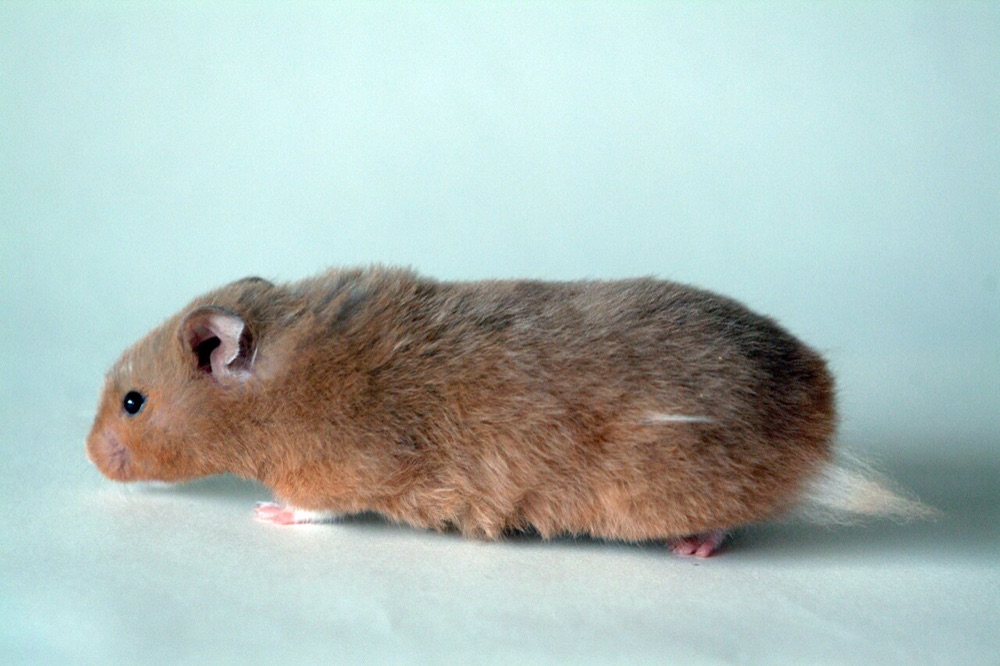
The Syrian, or golden, hamster is the largest common pet hamster and must always live alone. It needs a big single-level enclosure, a solid wheel at least 30 cm across, pellets as its main food and a steady 18 to 21 °C. While you travel, plan an evening sitter visit every day and keep it in the coolest room.
Syrians are prone to wet tail, overgrown teeth, lumps and, in old age, a heart clot that causes fast breathing and blue gums. A sitter who sees any of these calls your vet the same day.

- Origin
- Northern Syria and southern Turkey; every pet line traces to hamsters caught in Syria in 1930Merck Veterinary Manual
- Adult weight
- 0.11 to 0.14 kg (Merck gives 110 to 140 g; Merck's veterinary text says females are heavier than males)Merck Veterinary Manual
- Lifespan
- 1.5 to 3 yearsMerck Veterinary Manual
- Coat
- Golden in the wild form, now bred in many colours, with short-haired, long-haired, rex and satin coats. Long-haired Syrians may need brushing once a week.WikiVet
- Energy
- HighPDSA
- Indian heat
- Struggles in heatPDSA
- Flats
- Suits a flatPDSA
Syrian hamster at a glance
| What | The rule | Source |
|---|---|---|
| Size | The largest common pet hamster: about 6 to 8 inches (15 to 20 cm) long and 110 to 140 g as an adult. | Merck Veterinary Manual |
| Company | None. Syrians are not naturally sociable and should always live on their own; adults fight if they meet. | RSPCA |
| Daily rhythm | Asleep by day and active in the evening and night as a pet, even though wild Syrians were seen mostly in daylight. | Biology Letters (2008)study |
| Wheel | Solid running surface, at least 30 cm across: bigger than the 20 cm PDSA gives for dwarf hamsters. | PDSA |
| Heat tolerance | Low in a cage. PDSA advises a steady 18 to 21 °C and warns a hamster in a hot cage cannot escape the heat. | PDSA |
| Lifespan | About 18 months to 3 years; the VetCompass study found a median age at death of 1.76 years in Syrians. | Journal of Small Animal Practice (2022)study |
Where does the Syrian hamster come from?
The Syrian hamster is a wild species before it is a pet. Its home range is northern Syria and southern Turkey, and a team that followed wild hamsters in southern Turkey found wild golden hamsters solitary and widely spread out, and active above ground mostly in daylight, between about 6 and 8 in the morning and 4 and 7.30 in the evening, with almost no activity at midday or at night. That surprised them, because laboratory Syrians do more than 80% of their running at night.
Every pet and laboratory Syrian comes from one small founding group. The Merck Veterinary Manual says most pet hamsters today descend from just three littermates captured in Syria in 1930, and the Biology Letters study describes the laboratory line as descendants of a brother and sister mated that year. From that family the species spread to laboratories and then to homes across the world.
Breeders have since produced many colours and coat types, from the original golden to black, cream, sable and tortoiseshell, in short, long-haired, rex and satin coats, as WikiVet lists. These are varieties within one species, which is why this page talks about the Syrian rather than a breed. In the UK VetCompass study of 16,605 pet hamsters, Syrians were 73.45% of all hamsters seen by vets, far ahead of any dwarf species.
How did the Syrian hamster come to India?
No source we found records when Syrian hamsters first reached India or how many are kept here. What the law does say is that hamsters are pet animals: the Prevention of Cruelty to Animals (Pet Shop) Rules, 2018 name the hamster in their definition of a pet animal, so a shop selling one must be registered with the State Animal Welfare Board.
In Indian homes the hard part is the climate. PDSA advises a steady 18 to 21 °C, and the India Meteorological Department gives March to June as the main heat wave months. Wild Syrians were hardly seen above ground at midday; a pet Syrian in a cage on a sunny windowsill has nowhere to go, so its cage belongs in the coolest inner room of the flat.
What care does a Syrian hamster need?
The three things that shape a good day for this breed.
Exercise
A Syrian needs a large single-level enclosure (PDSA cites at least 100 x 50 cm of floor) and a solid wheel at least 30 cm across, bigger than the 20 cm PDSA gives for dwarfs. PDSA
Grooming
Syrians groom themselves and may use a sand bath. The RSPCA says long-haired varieties may need weekly brushing, and the front teeth should be checked regularly for overgrowth. RSPCA
Training
Tame slowly in the evening. Merck says a Syrian living alone is not normally aggressive but can be provoked if startled, woken or roughly handled, and that scooping it up in a small container can be easier than picking it up by hand. Merck Veterinary Manual
What should a Syrian hamster eat?
Merck's veterinary text says captive hamsters should eat a complete, balanced pelleted diet made for hamsters, and that generic seed mixes should be avoided because hamsters pick out the seeds and leave the pellets. Wild Syrians are omnivores, eating green plants, seeds, fruit and some animal food, so PDSA's small daily portion of washed vegetables and an occasional protein treat such as a piece of boiled egg fit the species. Grapes and rhubarb can be poisonous to rodents, the RSPCA says.
Merck recommends a stainless steel sipper tube near the floor and warns against glass water tubes for Syrians, because they readily bite through glass. Never add sugar, mithai or sweet biscuits. How much to feed depends on the hamster's age, size and body condition: ask your vet rather than follow a fixed amount.
Meals a day: young hamster after weaning, pellets always available, with fresh food introduced slowly; adult, pellets topped up daily, plus a small daily portion of fresh food.
Which illnesses is the Syrian hamster prone to, and how are they treated?
The conditions veterinary studies and breed surveys most often report in the Syrian hamster. Knowing the early signs means a vet sees it sooner.
See your vet first. This is general information from veterinary sources, not a diagnosis. Only a vet who has examined your pet can say what is wrong and prescribe treatment, and this page never gives a dose. Do not give your pet human medicine. If your pet seems very unwell, go to a 24-hour vet: find one in your city.
Wet tail (proliferative ileitis)
See a vet soonDiarrhoea with a wet, soiled tail. Merck's veterinary text names the bacterium Lawsonia intracellularis as the cause of proliferative ileitis. In the VetCompass study wet tail affected 9.08% of Syrians and was the most common recorded cause of death in pet hamsters. Merck Veterinary Manual
Signs to watch for
- Wet or soiled fur round the tail
- Low energy
- Poor appetite
- Weight loss
How a vet treats it
A vet examines the hamster and may take a faecal sample. Merck says treatment centres on correcting dehydration and salt imbalance, antibiotics chosen by the vet, and syringe feeding; the sick hamster is kept away from healthy ones. Never give an antibiotic the vet has not prescribed: Merck warns some antibiotics are deadly to hamsters.
Prevention
Avoid sudden diet changes and stress, and keep the cage clean and dry.
Heart failure from a blood clot (atrial thrombosis)
See a vet soonMerck says older Syrian hamsters can develop blood clots in the heart. Its veterinary text gives an incidence of up to 70% in ageing Syrians, on average at a younger age in females (13.5 months) than in males (21.5 months). Merck Veterinary Manual
Signs to watch for
- Fast breathing
- An uneven heartbeat
- A bluish tint to the skin or gums
How a vet treats it
There is no effective cure, Merck says, though a vet can help manage the condition for a short time. Without treatment, death usually follows within a week once these signs appear, so see a vet the same day.
Overgrown front teeth
See a vet soonA hamster's front teeth grow all its life. Overgrown incisors were among the most common problems in the VetCompass study, and Syrians had higher odds of dental disorders than other hamsters. Journal of Small Animal Practice (2022)study
Signs to watch for
- Drooling
- Dropping food or not eating
- Weight loss
- Teeth that look long or crooked
How a vet treats it
A vet examines the mouth and trims overgrown teeth; Merck says this is a job for the vet, not the owner.
Prevention
Give gnawing blocks, untreated wood and hay, and check the teeth regularly.
Lumps and tumours
See a vet soonThe RSPCA says tumours are fairly common in hamsters. Merck's veterinary text says lymphoma is the most common cancer of the blood-forming system in older Syrians and that adrenal gland tumours commonly occur in the species; abdominal masses were the second most common cause of death in the VetCompass study. RSPCA
Signs to watch for
- Any new lump
- A swollen belly
- Weight loss
- Patchy hair loss or sore skin
How a vet treats it
Have any lump checked as soon as possible. Merck says some tumours can be treated with surgery, medicine or both if caught early enough.
Heatstroke
Emergency: go to a vet nowPDSA warns that a hamster in a hot cage cannot escape the heat and can develop heatstroke. In an Indian summer this is the most avoidable emergency for a Syrian. PDSA
Signs to watch for
- Fast, short breathing
- Drooling
- Weakness
- Collapse
How a vet treats it
Move the cage somewhere cooler and call the vet straight away; the vet decides on cooling and any fluids.
Prevention
A steady 18 to 21 °C, out of direct sun, with a plan for power cuts.
Is the Syrian hamster a breed?
No. It is a species, and the golden, black, cream, long-haired and satin Syrians in shops are varieties of that one species.
Shops sell Syrians under many names and colours, but they are all one animal. WikiVet lists the Syrian's coat types as short-haired, long-haired, rex and satin, in colours from golden and cinnamon to black, cream, sable and tortoiseshell. Care is the same for all of them, with one addition for long coats: the RSPCA says long-haired hamsters may need weekly brushing, and a sitter on a long trip should know where the soft brush is and whether the hamster will accept it.
What separates a Syrian from the dwarf hamsters is size and temperament. It is several times the weight of a dwarf, needs a bigger wheel and enclosure, and is strictly solitary: the RSPCA says Syrian and Chinese hamsters should always live on their own, while some dwarfs can share. Merck's veterinary text notes that a Syrian living alone is not normally aggressive, but can be provoked if suddenly startled, woken or roughly handled, which is why a sitter never reaches in for a sleeping one.
How does a Syrian hamster cope with Indian heat?
Badly in a closed, sunny room. In the wild a Syrian escapes midday heat by staying underground; in a cage it cannot.
A study of wild golden hamsters in southern Turkey found them above ground mostly between about 6 and 8 in the morning and 4 and 7.30 in the evening, with almost no activity at midday, in a May when the air reached 36 °C. A pet Syrian in a shut flat in April or May has no burrow to retreat to. PDSA's steady 18 to 21 °C is the target, and the cage belongs in the coolest inner room, away from west-facing windows, the kitchen wall and the balcony door.
Heat stress in a big, furry Syrian shows as fast, short breathing, drooling, weakness or collapse. PDSA says to move a hamster in that state somewhere cooler and call the vet straight away. In the monsoon the risk shifts to damp: wet bedding under a dripping bottle and fresh food that spoils fast. Merck's veterinary text warns against glass water tubes for Syrians, which readily bite through glass; a stainless steel spout is safer, and the bedding under it should stay dry.
| What | The rule | Source |
|---|---|---|
| Room temperature | A thermometer by the cage; aim for 18 to 21 °C and report readings above that to the owner. | PDSA |
| Bottle | A stainless steel spout near the floor, tapped to see water comes out, with dry bedding beneath. | Merck Veterinary Manual |
| Fresh food | Yesterday's vegetables removed before they spoil; no wet or soft food left in the cage. | RSPCA |
| The hamster | Breathing calmly when awake; any panting, drooling or weakness means a call to the vet. | PDSA |
What should a sitter check at each Syrian hamster visit?
Come in the evening, look before touching, and compare everything with the owner's note of what normal looks like.
- Is the hamster awake and moving at its usual time? A Syrian still curled up long after dusk deserves a closer look from outside the cage. PDSA
- Has it used the wheel? A quiet wheel and untouched food together point to a hamster that is unwell. RSPCA
- Is the fur round the tail dry? Wet tail affected about 9% of Syrians in the VetCompass study. Journal of Small Animal Practice (2022)study
- Are the front teeth even and the hamster eating hard pellets? Syrians had higher odds of dental problems than other hamsters. Journal of Small Animal Practice (2022)study
- Is breathing quiet at rest, with no bluish tint to the skin or gums? Older Syrians can develop a heart clot. Merck Veterinary Manual
- Any new lump, swollen belly or patch of hair loss? Note it in the log and tell the owner the same day. Merck Veterinary Manual
- Are the cheek pouches emptying? Full pouches are normal, but Merck lists impacted cheek pouches among the things a vet checks for, so a swelling that does not go down is one for the vet. Merck Veterinary Manual
- Are the lid, door clips and any playpen secure? Hamsters are escape artists. Merck Veterinary Manual
Which signs in a Syrian need the vet the same day?
Hamsters hide illness and decline fast. The sitter calls the vet first, then the owner, and gives no medicine the vet has not prescribed.
If Fast breathing, an uneven heartbeat or a bluish tint to the skin or gums, usually in a Syrian over a year old.
Possible atrial thrombosis. Merck says death usually follows within a week once signs show, so go to the vet the same day. Merck Veterinary Manual
If Wet, soiled fur round the tail, low energy, not eating.
Wet tail. See the vet promptly: it can cause dehydration and sudden death. PDSA
If Diarrhoea starting a few days after a course of antibiotics.
Call the vet who prescribed them at once. Merck warns some antibiotics upset the gut bacteria of hamsters and can be deadly. Merck Veterinary Manual
If Drooling, dropping food or weight loss.
Often overgrown teeth. Book the vet; never clip a hamster's teeth at home. Merck Veterinary Manual
If Cold, limp and hard to wake in an air-conditioned room or a cold night.
Warm the room gradually and call the vet. Merck notes Syrians do not fatten before hibernating and will starve if they do not wake to eat. Merck Veterinary Manual
If An eye bulging from its socket after a fall or rough handling.
An emergency. Go to the vet quickly for the best chance of saving the eye. Merck Veterinary Manual
What do people get wrong about Syrian hamsters?
You may have read
Two Syrians from the same litter will be company for each other.
Myth
What the sources say
Syrians should always live on their own. Adults fight if they meet, and injuries can be serious or fatal. RSPCA
You may have read
A seed mix is the natural food for a hamster.
Myth
What the sources say
Merck says to avoid generic seed mixes because hamsters pick out the seeds and ignore the pellets. Pellets come first. Merck Veterinary Manual
You may have read
Syrians are nocturnal by nature.
Myth
What the sources say
Wild golden hamsters were active mostly in daylight. Pets are active at night, so a sitter still plans evening visits. Biology Letters (2008)study
You may have read
A big Syrian can manage with a small wheel.
Myth
What the sources say
PDSA gives at least 30 cm for a Syrian's wheel, against 20 cm for dwarfs. PDSA
You may have read
Females and males live equally long.
Myth
What the sources say
In the VetCompass study male hamsters lived longer, a median of 2.00 years against 1.67 for females. Journal of Small Animal Practice (2022)study
Which kind of care suits a Syrian hamster while you travel?
For a healthy adult Syrian, drop-in visits in your home are usually enough: one visit every evening for water, pellets, a small portion of vegetables, a spot clean every few days and a look at the hamster while it is awake. The RSPCA advises keeping a hamster in its familiar cage with its usual food and not moving it unless you must, and a Syrian's hoard and nest are part of that.
Choose overnight pet sitting for a long trip, a heat wave or an older Syrian, because heart and kidney problems come with age and a hamster that stays still for a day may be seriously ill. For a Syrian already on medicine, special-needs care keeps the vet's instructions followed and logged as written. If the hamster has to move to a sitter's home, it goes in its own cage, unchanged, to a room with no cats, dogs or other hamsters.
Petym is not taking bookings yet; it opens city by city once sitters pass its checks. When it does, there is a free meet and greet before the first booking, ideally in the evening so the sitter sees the hamster awake. The sitter follows your written plan, logs each visit and sends a photo every day, and in an emergency calls you and takes the hamster to the nearest 24-hour vet on the city's list.
Breeds with similar care needs to the Syrian hamster
Going away soon? Plan your pet’s care first.
Petym's bookings open for dogs and cats first. For every other pet, the free going-away checklist covers food, water, heat and what to leave written down before you travel.

Questions owners ask
Can two Syrian hamsters live together?
- No. The RSPCA says Syrian hamsters are not naturally sociable and should always live on their own, and PDSA says adults fight if they meet, which can lead to injury or death. Even littermates that seem fine when young must be separated. A Syrian does not get lonely living alone.
How long do Syrian hamsters live?
- Merck gives 18 months to 3 years. In the UK VetCompass study of more than 16,000 pet hamsters, Syrians died at a median age of 1.76 years, and males outlived females. A short life is normal for the species, so plan for close care in the last months.
What size wheel does a Syrian hamster need?
- PDSA says at least 30 cm across for a Syrian, with a solid running surface rather than bars or slats. Dwarf hamsters can use a smaller wheel of at least 20 cm.
Is a Syrian hamster safe in Indian summer without AC?
- Only in a cool, shaded room. PDSA advises a steady 18 to 21 °C and warns that a hamster in a hot cage cannot escape the heat. Keep the cage in the coolest inner room, away from sun and the balcony, and plan for power cuts. Very cold AC is also a risk.
Do long-haired Syrian hamsters need grooming?
- A little. The RSPCA says long-haired varieties may need weekly brushing with a soft brush. Short-haired Syrians groom themselves and may use a sand bath. Check under the tail of a long-haired Syrian at every visit, because a soiled rear end can be a sign of wet tail.
Why is my old Syrian hamster breathing fast?
- It can be a heart problem. Merck says older Syrians can develop a blood clot in the heart, causing fast breathing, an uneven heartbeat and a bluish tint to the skin or gums, and untreated hamsters usually die within a week of signs. See a vet the same day.
How often should a sitter visit a Syrian hamster?
- Once every evening for a healthy adult in a cool room, when the hamster is awake. The RSPCA advises a responsible person looks after a hamster while you are away, because hamsters decline quickly when unwell. Choose a sitter who stays for long trips, heat waves or an older hamster.
Keep reading
- Hamster sitting while you're awayThe general plan for any hamster.
- Hamster care guide for India
- Roborovski hamster careThe smallest and fastest pet hamster.
- Chinese hamster careAnother hamster that must live alone.
- Summer pet care in India
- Drop-in visits or overnight sitting
- What to leave for your pet sitter
Services that help
Free tools for this
Words on this page, explained
Keep exploring
Sources
Each source was opened and read on the date shown. How Petym checks its sources
- Merck Veterinary Manual: Description and physical characteristics of hamsters (full review September 2026) (opens in a new tab)
- WikiVet: Hamster breeds (WikiNormals) (opens in a new tab)
- PDSA: Hamsters as pets (opens in a new tab)
- Ministry of Environment, Forest and Climate Change (Gazette copy on AWBI's site): Prevention of Cruelty to Animals (Pet Shop) Rules, 2018: G.S.R. 844(E), 6 September 2018 (opens in a new tab)
- India Meteorological Department: FAQ on heat wave (opens in a new tab)
- RSPCA: Hamster health (opens in a new tab)
Show all 14 sourcesShow fewer
- Merck Veterinary Manual: Hamsters (Exotic and Laboratory Animals, veterinary professional version) (opens in a new tab)
- RSPCA: Hamster diet (opens in a new tab)
- Merck Veterinary Manual: Disorders and diseases of hamsters (full review September 2026) (opens in a new tab)
- Merck Veterinary Manual: Routine health care of hamsters (full review September 2026) (opens in a new tab)
- RSPCA: Hamster company (opens in a new tab)
- RSPCA: Exploring pet sitting options (opens in a new tab)
- Biology Letters (2008): Golden hamsters are nocturnal in captivity but diurnal in nature (opens in a new tab)
- Journal of Small Animal Practice (2022): Demography, disorders and mortality of pet hamsters under primary veterinary care in the United Kingdom in 2016 (opens in a new tab)