Campbell's dwarf hamster care in India: food, water and cage mates
Updated By PetymFacts checked against official sources on
Quick answer
Campbell's dwarf hamster is a small, striped species from the steppes of Mongolia and north-east China, often sold in India as a Russian dwarf. PDSA says Russian dwarfs are particularly prone to diabetes, so feed pellets without sugary extras, watch how fast the water goes, and keep the cage at a steady 18 to 21 °C.
While you are away, a sitter visits every evening, measures the water used, checks any cage mate for bite wounds and calls your vet for heavy drinking, a wet cage, wet tail or weight loss.

- Origin
- Steppes and deserts of Inner Mongolia and north-east China, and parts of Mongolia's Altai and TuvaAnimal Diversity Web, University of Michigan Museum of Zoology
- Adult weight
- 0.035 to 0.05 kg (Merck's 35 to 50 g is for Russian dwarf hamsters; the VetCompass study found a median of 46 g in UK pet Campbell's, and males are larger than females)Merck Veterinary Manual
- Lifespan
- 2 to 2.5 yearsAnimal Diversity Web, University of Michigan Museum of Zoology
- Coat
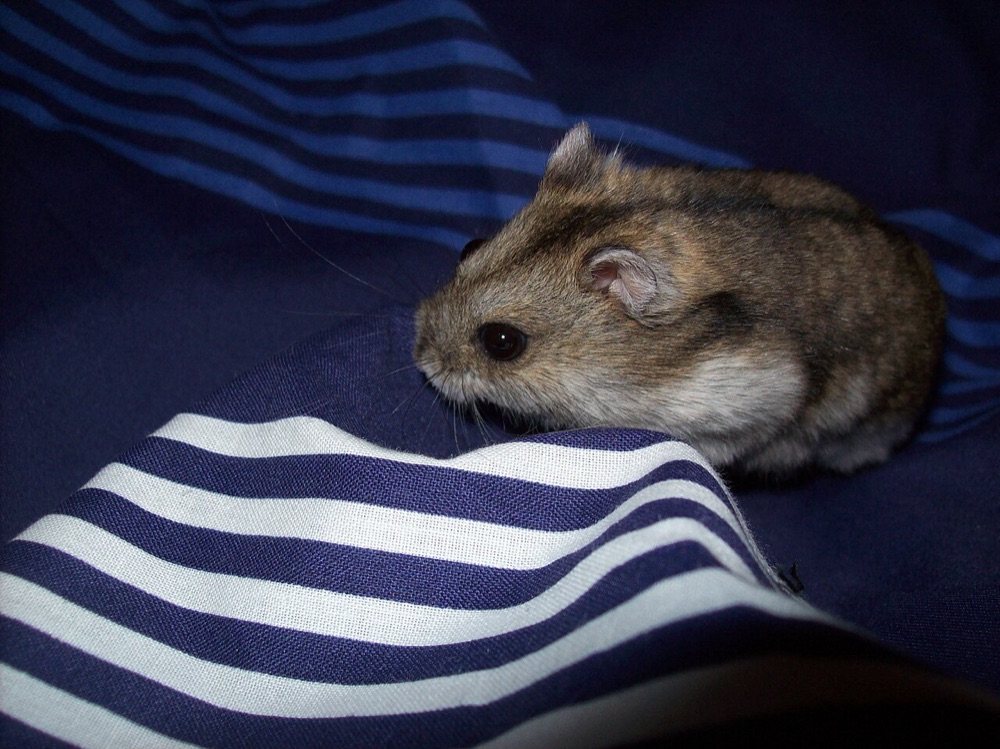
- Woody brown above with a clear charcoal stripe from the ears to the tail, and buff to light grey below.Animal Diversity Web, University of Michigan Museum of Zoology
- Energy
- HighPDSA
- Indian heat
- Struggles in heatPDSA
- Flats
- Suits a flatPDSA
Campbell's dwarf hamster at a glance
| What | The rule | Source |
|---|---|---|
| Size | About 10 cm long, with males larger than females. | Animal Diversity Web, University of Michigan Museum of Zoology |
| Lifespan | Typically 2 to 2.5 years in captivity. | Animal Diversity Web, University of Michigan Museum of Zoology |
| Diabetes risk | Higher than most hamsters: PDSA says Russian dwarfs are particularly prone to diabetes. | PDSA |
| Company | Can sometimes live in a pair or trio, but does not need company and many pairs fall out later. | RSPCA |
| Wheel | Solid surface, at least 20 cm across. | PDSA |
| Heat tolerance | Low in a cage. PDSA advises a steady 18 to 21 °C. | PDSA |
Where does the Campbell's dwarf hamster come from?
Campbell's dwarf hamster is a species of its own, Phodopus campbelli, not a breed. Animal Diversity Web describes it as a native of the steppes and deserts of Inner Mongolia and north-eastern China, also found in parts of Mongolia's Altai Mountains and the Tuva region. It lives in burrow systems with four to six main tunnels, and some populations on the Mongolian Plateau move into burrows dug by jirds rather than dig their own.
In the wild it eats seeds, nuts and plants, with insects and other small invertebrates now and then. It is generally classed as solitary, though captive animals often tolerate others sharing their space, and males help at the birth, which overturned an older idea that only females cared for the young.
Pet shops often sell Campbell's and winter whites together as Russian dwarf hamsters. The UK VetCompass study shows how loose the naming is: it treated Russian dwarf as another name for the Djungarian (winter white), recorded Campbell's separately, and logged 4.96% of hamsters only as dwarf with no species. The two species look alike and have been crossed in captivity; a review in Genes and Genetic Systems describes the hybrids between them, whose males are sterile.
How did the Campbell's dwarf hamster come to India?
No source we found records when Campbell's dwarf hamsters reached India or how common they are here. The name Russian dwarf is used loosely, as the VetCompass study shows, so a hamster sold under that name in India could be a Campbell's, a winter white or a cross of the two. Ask the shop, and tell your vet what you were told.
Hamsters are pet animals under the Pet Shop Rules, 2018, which require the seller to be registered with the State Animal Welfare Board and ban the sale of underage animals. In an Indian flat, the cage needs the steady 18 to 21 °C PDSA advises, away from sun and from the cold blast of an air conditioner.
What care does a Campbell's dwarf hamster need?
The three things that shape a good day for this breed.
Exercise
Runs a long way each night. PDSA gives at least 20 cm as the wheel size for dwarf hamsters, with a large single-level enclosure and deep bedding for the tunnels this species digs in the wild. PDSA
Grooming
Self-grooming, with a sand bath if offered. The RSPCA says to check the front teeth regularly, and warns that hamsters can lose condition quickly when unwell, so look at body shape at every clean. RSPCA
Training
Tame gently in the evening. Merck says dwarf hamsters are more difficult to handle and restrain than Syrians, so let the hamster walk onto an open hand and keep handling low over a soft surface. Merck Veterinary Manual
What should a Campbell's dwarf hamster eat?
PDSA says Russian dwarf hamsters are particularly prone to diabetes, so diet matters more for a Campbell's than for most hamsters. Feed a complete hamster pellet as the base, because Merck's veterinary text says generic seed mixes let hamsters pick out the seeds and leave the pellets. PDSA warns that muesli-style mixes lead to dental problems and obesity, and that sugar can lead to obesity and diabetes.
Add a small daily portion of washed vegetables and the odd protein treat such as a piece of boiled egg. Keep sweet fruit to a rare taste, and give no mithai, biscuits, honey sticks or yoghurt drops. Grapes and rhubarb can be poisonous to rodents. Your vet can advise on amounts and on any change if your hamster is overweight.
Meals a day: young hamster after weaning, pellets always available, with fresh food introduced slowly; adult, pellets topped up daily, plus a small daily portion of low-sugar vegetables.
Which illnesses is the Campbell's dwarf hamster prone to, and how are they treated?
The conditions veterinary studies and breed surveys most often report in the Campbell's dwarf hamster. Knowing the early signs means a vet sees it sooner.
See your vet first. This is general information from veterinary sources, not a diagnosis. Only a vet who has examined your pet can say what is wrong and prescribe treatment, and this page never gives a dose. Do not give your pet human medicine. If your pet seems very unwell, go to a 24-hour vet: find one in your city.
Diabetes and other causes of heavy drinking
See a vet soonPDSA says Russian dwarf hamsters, the group that includes Campbell's, are particularly prone to diabetes. Drinking and urinating more can also mean kidney disease, so a vet has to find the cause. PDSA
Signs to watch for
- Drinking more: the bottle empties faster
- Urinating more, so the cage is wetter
- Weight loss
How a vet treats it
Merck says a vet may use blood tests, urine tests or imaging to look for the cause and suggest treatment. Follow the vet's diet plan exactly; never use a human diabetes medicine or test kit on your own.
Prevention
Pellets as the base, no sugary foods, and a healthy weight.
Bite injuries from a cage mate
See a vet soonDwarfs can sometimes share a cage, but the RSPCA says many pairs fall out later even if they got on at first. Bite injuries from other hamsters were among the most common problems in the VetCompass study. RSPCA
Signs to watch for
- Wounds on the rump or face
- Chasing, squealing or one hamster kept from food
- A hot, painful swelling
How a vet treats it
A vet cleans and checks the wound. PDSA says a hot, red swelling is likely an abscess, which may need draining.
Prevention
Separate the hamsters for good at the first fight; PDSA says domesticated Russian dwarfs should not be housed together.
Wet tail and diarrhoea
See a vet soonThe most common single disorder in UK pet hamsters, and the leading recorded cause of death. Journal of Small Animal Practice (2022)study
Signs to watch for
- Wet or soiled fur round the tail
- Low energy
- Poor appetite
- Weight loss
How a vet treats it
Merck says treatment might include fluids and antibiotics, with the sick hamster kept away from healthy ones. Only the vet chooses the antibiotic.
Lumps and tumours
See a vet soonMerck's veterinary text says Djungarian hamsters show a rate of tumours five times that of Syrians. Campbell's are a close relative that has been crossed with them in captivity, and the RSPCA says tumours are fairly common in hamsters generally. Merck Veterinary Manual
Signs to watch for
- Any new lump
- A swollen belly
- Weight loss
How a vet treats it
Merck says some tumours can be treated with surgery, medicine or both if caught early enough, so have any lump checked as soon as possible.
Heatstroke
Emergency: go to a vet nowA hamster in a hot cage cannot escape the heat, PDSA warns. PDSA
Signs to watch for
- Fast, short breathing
- Drooling
- Weakness
- Collapse
How a vet treats it
Move the cage somewhere cooler and call the vet straight away.
Prevention
A steady 18 to 21 °C in the coolest room, with a plan for power cuts.
Campbell's or winter white: how can you tell them apart?
Often you cannot be sure. They are two species that look alike, both are sold as Russian dwarfs, and they have been crossed in captivity.
Campbell's dwarf hamster (Phodopus campbelli) and the winter white (Phodopus sungorus) are separate species, not breeds of one hamster. A review in Genes and Genetic Systems describes the hybrids between them, whose males are sterile, which shows how closely related they are. The UK VetCompass study, which mapped species against the National Hamster Council's handbook, used Russian dwarf as another name for the winter white, and recorded 4.96% of all hamsters only as dwarf, species unknown.
If you are not sure which you have, say so to your vet and your sitter. The care is the same in almost every way, and the health risks this page covers apply to both.
| What | The rule | Source |
|---|---|---|
| Wild home | Campbell's: steppes and deserts of Inner Mongolia and north-east China. Winter white: steppes of East Kazakhstan and south-west Siberia. | Animal Diversity Web, University of Michigan Museum of Zoology |
| Back stripe | Campbell's: a clear charcoal stripe from the ears to the tail. Winter white: a black stripe down the back. | Animal Diversity Web, University of Michigan Museum of Zoology |
| Body colour | Campbell's: woody brown above, buff to light grey below. Winter white: dark greyish brown in summer. | Scandinavian Journal of Laboratory Animal Science (2015)study |
| Winter coat | Winter whites turn more or less white in short days; that colour change is the best way to tell the species. | Scandinavian Journal of Laboratory Animal Science (2015)study |
What should a Campbell's eat while you are away?
The same food as always, with nothing sweet added. A diabetes-prone dwarf is the worst hamster to spoil with treats.
Do
- Leave the usual hamster pellets for the whole trip and a few days more. Merck says pellets beat seed mixes, which let hamsters pick out the seeds. Merck Veterinary Manual
- Leave a written list of the vegetables it already eats, and the size of a daily portion shown in a photo. PDSA
- Ask the sitter to scatter food in the bedding so the hamster forages. RSPCA
- Mark the water level on the bottle each visit, so a change in drinking shows up. Merck Veterinary Manual
Don’t
- Don't leave muesli-style mixes, honey sticks or yoghurt drops. PDSA says sugar can lead to obesity and diabetes, especially in Russian dwarfs. PDSA
- Don't let anyone share mithai, biscuits, sweet fruit or bits of roti with sugar or ghee.
- Don't change the food just before you leave; the RSPCA warns sudden diet changes upset the stomach. RSPCA
- Don't leave grapes or rhubarb, which can be poisonous to rodents. RSPCA
How many Campbell's hamsters do vets see?
Few, by name. The largest study of pet hamsters shows how often dwarfs go unidentified.
16,605
pet hamsters in the UK VetCompass study Journal of Small Animal Practice (2022)study
0.31 %
recorded as Campbell's Russian dwarfs Journal of Small Animal Practice (2022)study
4.96 %
recorded only as dwarf, species not given Journal of Small Animal Practice (2022)study
46 g
median adult weight of the Campbell's in the study Journal of Small Animal Practice (2022)study
When should a sitter call the vet about a Campbell's?
Call the vet first, then the owner. Give no medicine the vet has not prescribed for this hamster.
If The water level drops much faster than usual, or the bedding is suddenly much wetter.
Book the vet soon. Extra thirst and urination can mean diabetes or kidney disease, and Merck says a vet uses blood and urine tests to find out. Merck Veterinary Manual
If Wet or soiled fur round the tail, low energy, not eating.
See the vet promptly: wet tail can cause dehydration and sudden death. PDSA
If Bite wounds, or one hamster chased away from food in a pair.
Separate them if the owner agreed to, and call the vet about any wound or hot swelling. RSPCA
If A new lump anywhere on the body.
Tell the owner and book the vet. Merck says some tumours can be treated if caught early enough. Merck Veterinary Manual
If Fast breathing, drooling or collapse on a hot day.
Move the cage somewhere cooler and call the vet straight away. PDSA
What if two Campbell's share a cage?
In the wild Campbell's is generally classed as solitary, though Animal Diversity Web notes that captive animals tolerate others in their territory. The RSPCA names Campbell's among the dwarfs that can sometimes live in pairs or trios with the right care, and warns that many fall out later even if they got on at first. PDSA advises that pet Russian dwarfs should not be housed together at all, because dominance issues and fights often happen.
If you keep a pair, the sitter needs to know which hamster is which and how they normally behave. A sitter checks both at every visit for bites on the rump and face, and for one that is losing weight or kept from the food and wheel. Leave a spare enclosure ready, write down whether the sitter may separate them, and never add a new hamster to an existing pair.
What should you leave for a Campbell's hamster sitter?
- Enough of the usual pellets for the trip and a few days more, and no sugary treats in the cupboard. PDSA
- A note of how much water the hamster usually drinks in a day, and a marker for the bottle.
- Photos of each hamster in a pair, and how to tell them apart.
- A spare bottle, a bag of the usual bedding and a room thermometer.
- Your vet's number, a vet who sees hamsters, and the nearest 24-hour vet. RSPCA
- Which room stays coolest, and what to do in a power cut. PDSA
- Any medicine with the vet's written instructions, given exactly as written. RSPCA
Which kind of care suits a Campbell's while you travel?
An evening drop-in visit every day suits a healthy Campbell's in a cool room, kept in its familiar cage with its usual food, as the RSPCA advises. Overnight pet sitting is safer for long trips, a heat wave or a pair that has started to squabble. A Campbell's already diagnosed with diabetes or another illness by the vet needs special-needs care, with the vet's plan followed and logged as written.
Petym is not taking bookings yet and opens city by city once its sitters pass the checks. Before the first booking there is a free meet and greet, where you show the sitter the water mark, the food and the hamster awake in the evening. The sitter logs every visit and sends a photo each day; in an emergency they call you and take the hamster to the nearest 24-hour vet on the city's list.
Breeds with similar care needs to the Campbell's dwarf hamster
Going away soon? Plan your pet’s care first.
Petym's bookings open for dogs and cats first. For every other pet, the free going-away checklist covers food, water, heat and what to leave written down before you travel.

Questions owners ask
Is a Campbell's hamster the same as a Russian dwarf?
- Partly. Russian dwarf is a loose shop name used for both Campbell's and winter white dwarf hamsters, which are separate species that look alike and have been crossed in captivity. The UK VetCompass study used Russian dwarf for the winter white and listed Campbell's separately.
Are Campbell's dwarf hamsters prone to diabetes?
- Yes. PDSA says Russian dwarf hamsters are particularly prone to diabetes and warns that sugar can lead to obesity and diabetes. Feed hamster pellets as the base, keep sweet fruit and treats out, and see a vet if your hamster drinks or urinates more than usual.
How long do Campbell's dwarf hamsters live?
- Animal Diversity Web gives a typical captive lifespan of 2 to 2.5 years. In the UK VetCompass study, non-Syrian hamsters died at a median of 1.68 years. Good food, a cool room and early vet visits for changes in drinking or weight all help.
Can two Campbell's hamsters live together?
- Sometimes, but it is risky. The RSPCA says dwarfs such as Campbell's can live in pairs or trios with the right care, but many fall out later. PDSA advises not housing pet Russian dwarfs together. If you keep a pair, have a spare enclosure ready for a split.
How hot is too hot for a Campbell's hamster?
- PDSA advises a steady 18 to 21 °C and warns that a hamster in a hot cage cannot escape the heat. In an Indian summer, keep the cage in the coolest inner room out of the sun, and plan for power cuts. Fast breathing, drooling or collapse means calling the vet.
What should a sitter watch for in a Campbell's hamster?
- How fast the water goes, a wetter cage than usual, wet fur round the tail, weight loss, new lumps and bite wounds if there is a cage mate. Each of these is a reason to call the vet. The sitter compares everything with the owner's written note of normal.
Keep reading
- Hamster sitting while you're awayThe general plan for any hamster.
- Winter white hamster careThe look-alike Russian dwarf.
- Roborovski hamster care
- Hamster care guide for India
- What to leave for your pet sitter
- Signs your pet needs a vet now
Services that help
Free tools for this
Words on this page, explained
Keep exploring
Sources
Each source was opened and read on the date shown. How Petym checks its sources
- Animal Diversity Web, University of Michigan Museum of Zoology: Phodopus campbelli (Campbell's hamster) (opens in a new tab)
- Merck Veterinary Manual: Description and physical characteristics of hamsters (full review September 2026) (opens in a new tab)
- PDSA: Hamsters as pets (opens in a new tab)
- Ministry of Environment, Forest and Climate Change (Gazette copy on AWBI's site): Prevention of Cruelty to Animals (Pet Shop) Rules, 2018: G.S.R. 844(E), 6 September 2018 (opens in a new tab)
- RSPCA: Hamster health (opens in a new tab)
- Merck Veterinary Manual: Hamsters (Exotic and Laboratory Animals, veterinary professional version) (opens in a new tab)
Show all 13 sourcesShow fewer
- RSPCA: Hamster diet (opens in a new tab)
- Merck Veterinary Manual: Disorders and diseases of hamsters (full review September 2026) (opens in a new tab)
- RSPCA: Hamster company (opens in a new tab)
- RSPCA: Exploring pet sitting options (opens in a new tab)
- Journal of Small Animal Practice (2022): Demography, disorders and mortality of pet hamsters under primary veterinary care in the United Kingdom in 2016 (opens in a new tab)
- Genes and Genetic Systems (2016), abstract read: Interspecific hybrids of dwarf hamsters and Phasianidae birds as animal models for studying the genetic and developmental basis of hybrid incompatibility (opens in a new tab)
- Scandinavian Journal of Laboratory Animal Science (2015): Blood cell morphology of Djungarian hamster (Phodopus sungorus) (PDF) (opens in a new tab)