Peruvian guinea pig care in India: grooming, heat and sitters
Updated By PetymFacts checked against official sources on
Quick answer
A Peruvian is a long-haired guinea pig whose coat keeps growing, falling forward over the face and back over the rump. It needs brushing every day, a daily check that its rear end is clean, and a cool room through the Indian summer. While you are away, plan two sitter visits a day, with time set aside for the coat.
Long coats trap heat, urine and droppings. PDSA says long-haired guinea pigs need extra help in hot weather, and the RSPCA warns that a soiled rear in warm weather invites flystrike, which can develop within hours and needs a vet immediately.
- Origin
- Named for Peru, the likely source of the first guinea pigs taken to Europe; standardised in England in 1888Scientific Reports (2020), Lord and othersstudy
- Adult weight
- 0.8 to 1 kg (Merck's figure for adult guinea pigs of any breed, about 815 to 1,000 g; no Peruvian-specific weight in the sources we read)Merck Veterinary Manual
- Lifespan
- 5 to 8 yearsMerck Veterinary Manual
- Coat
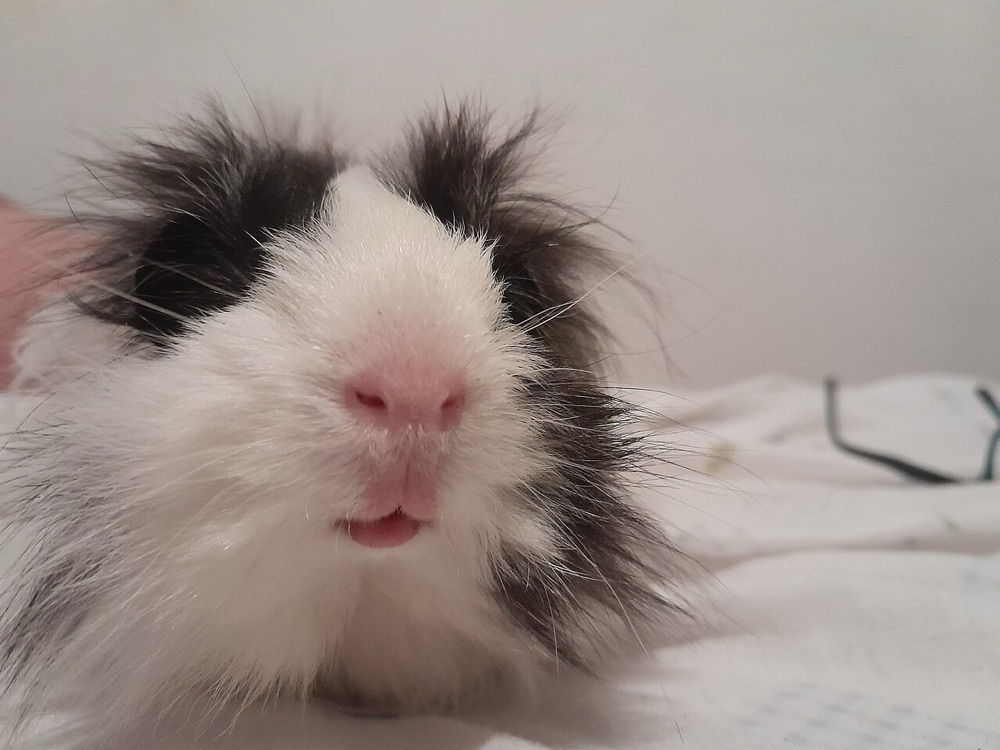
- Long, soft and silky, growing from a central parting, with two rump rosettes; the frontal falls over the face and the sweep over the rear. WikiVet says most Peruvians grow hair up to 50 cm long.British Cavy Council
- Energy
- ModeratePDSA
- Indian heat
- Struggles in heatPDSA
- Flats
- Suits a flatPDSA
Peruvian guinea pig at a glance
| What | The rule | Source |
|---|---|---|
| Coat | Long, soft and silky, growing from a central parting along the spine, with two rosettes on the rump. Hair falls forward over the head as a frontal and back over the rear as a sweep. | British Cavy Council |
| Coat length | Most have continuously growing hair that can reach up to 50 cm. | WikiVet (veterinary education wiki) |
| Growth rate | The British Cavy Council's guideline for show coats is about 1 inch (2.5 cm) a month of age. | British Cavy Council |
| Grooming | Daily. PDSA and the RSPCA both say long-coated guinea pigs need brushing every day to remove knots and tangles. | RSPCA |
| Adult weight | Around 815 to 1,000 g for guinea pigs in general (Merck Veterinary Manual). | Merck Veterinary Manual |
| Lifespan | 5 to 8 years for guinea pigs. | Merck Veterinary Manual |
| Heat | Poor. PDSA says long-haired guinea pigs need extra care to cope with heat; the RSPCA's heatstroke line for all guinea pigs is 26 °C. | PDSA |
Where does the Peruvian guinea pig come from?
Guinea pigs were domesticated in South America long before Europeans arrived. Ancient DNA from archaeological guinea pigs in Peru, Bolivia, Colombia, the Caribbean, Belgium and the United States, published in 2020, indicates that Peru was the probable source of the earliest guinea pigs carried to Europe and the south-eastern United States as exotic pets. The sources we read do not say whether the long-haired Peruvian itself came from Peru or was developed later in Europe.
The Peruvian is one of the three founding breeds of the British cavy fancy. Its first standard was adopted by the newly formed National Cavy Club in 1888, alongside the Abyssinian and the Short Hair, according to a British Cavy Council article. A breeder writing for the Council notes that the Peruvian is the Abyssinian's nearest relative, differing in several genes besides coat length.
Today's British Cavy Council standard judges the Peruvian mostly on its coat: a frontal and chops that form a curtain at the front, even shoulders, sides and sweep, and a soft, silky, dense texture. It notes that the undercoat stops at 6 to 7 inches while the top coat keeps growing, so very long coats can look thin. The American Rabbit Breeders Association, which keeps cavy standards in the United States, recognises 13 cavy breeds.
How did the Peruvian guinea pig come to India?
How and when Peruvian guinea pigs reached India is not documented in any source we found, and there are no published counts of how many are kept here. Sales are regulated: the Prevention of Cruelty to Animals (Pet Shop) Rules, 2018 list the guinea pig as a pet animal, so sellers must be registered with the State Animal Welfare Board and must not sell un-weaned or underage animals.
In an Indian home the Peruvian is an indoor pet whose coat sets the rhythm of care. PDSA says long-haired guinea pigs need extra help to cope with heat, and the RSPCA warns that flystrike is a risk in warm weather, which in much of India covers most of the year and peaks in the humid monsoon.
What care does a Peruvian guinea pig need?
The three things that shape a good day for this breed.
Exercise
Room to wander and forage on clean, dry bedding every day; PDSA asks for lots of space, tunnels and overhead cover. A clean floor matters more for a Peruvian, whose sweep drags over whatever it walks on. PDSA
Grooming
Every day. The RSPCA advises daily grooming for long-haired breeds, and PDSA says long or thick coats need a daily brush to remove knots and tangles. Check the rear end at each session, twice a day in warm weather. RSPCA
Training
Get your Peruvian used to brushing and to being lifted, low and close with the chest and hind legs supported, from the start. Merck says long-haired breeds need regular brushing to prevent matting, so a calm grooming routine is the main skill to teach. Merck Veterinary Manual
What should a Peruvian guinea pig eat?
Feed a Peruvian like any guinea pig, with one eye on the coat. Grass hay should be in front of it all day and night; PDSA says hay and grass make up 85 to 90% of the diet. Each day, give fresh leafy greens and herbs and a fresh portion of grass-based pellets, which the RSPCA says should be eaten by their best-before date.
Vitamin C cannot be made by the body, so daily fresh food is not optional, and Merck lists a rough coat among the signs of deficiency. Keep fruit to rare, very small treats because it is high in sugar, and leave out onion, garlic, potato and iceberg lettuce. Growing, pregnant, nursing or underweight guinea pigs may need a larger pellet portion, the RSPCA says; your vet can advise.
Meals a day: any age, hay and water on tap, day and night; adult, greens and fresh pellets every day; growing, pregnant or underweight, the daily routine plus the larger pellet portion your vet suggests.
Which illnesses is the Peruvian guinea pig prone to, and how are they treated?
The conditions veterinary studies and breed surveys most often report in the Peruvian guinea pig. Knowing the early signs means a vet sees it sooner.
See your vet first. This is general information from veterinary sources, not a diagnosis. Only a vet who has examined your pet can say what is wrong and prescribe treatment, and this page never gives a dose. Do not give your pet human medicine. If your pet seems very unwell, go to a 24-hour vet: find one in your city.
Flystrike
Emergency: go to a vet nowA painful and sometimes fatal condition in which flies lay eggs on an animal and the maggots feed on its flesh. The RSPCA says dirty rear ends and dirty fur raise the risk, which is why a Peruvian's sweep needs checking. RSPCA
Signs to watch for
- Fly eggs or maggots in the fur, most often around the rear
- A dirty or wet rear end, which is what draws the flies
How a vet treats it
The RSPCA's advice is to ask a vet for help immediately, because flystrike can develop in a matter of hours. The vet examines and treats the guinea pig at the clinic.
Prevention
In warm weather, check the whole body, especially the rear, at least twice a day; clean any dirt at once with warm water and dry thoroughly; clean toilet areas daily.
Heatstroke
Emergency: go to a vet nowGuinea pigs overheat easily, and PDSA says long-haired breeds need extra help in hot weather. The RSPCA gives 26 °C as the point where heatstroke becomes a risk. PDSA
Signs to watch for
- Short, quick breaths or struggling to breathe
- Drooling
- Sleepiness
- Collapse or fits
How a vet treats it
PDSA says to give first aid and call the vet immediately; the vet assesses and treats the guinea pig at the clinic.
Prevention
A shaded, cool room, daily brushing to remove loose fur, a wrapped frozen bottle outside the cage, cool tiles, and wooden rather than plastic hides.
Skin disease under a long coat
See a vet soonMites, lice, infections and fungal ringworm can all affect a guinea pig's skin. PDSA says skin problems can be very uncomfortable or painful and tend to get worse over time, and a long coat makes them harder to see. PDSA
Signs to watch for
- Scratching
- Bald patches, scabs or lumps under the coat
- Crusty or scaly skin
How a vet treats it
A vet examines the skin and hair, sometimes under a microscope or by testing plucked hairs. Merck names antiparasitic medicine for mites and topical antifungals for ringworm, with the whole group often treated.
Prevention
Part the coat and look at the skin during daily brushing, and see a vet at the first sign of itching or hair loss.
Sore feet (pododermatitis)
See a vet soonInflamed, sometimes infected feet, common in guinea pigs. Merck says wire floors and abrasive or soiled bedding contribute. Merck Veterinary Manual
Signs to watch for
- Reddened soles
- Callus-like swellings
- Ulcers or infected sores
How a vet treats it
A vet may X-ray the feet to check bones and joints. Mild cases get topical treatment, bandages, pain relief and vitamin C; severe ones need antibiotics chosen from a culture.
Prevention
Solid floors, soft bedding changed when wet, and a look at the feet during grooming.
Is a Peruvian guinea pig right for a home in India?
It can be, if someone has time to brush it every day of the year, including the days you travel.
The Peruvian's coat is the point of the breed. The British Cavy Council standard wants hair of even length from a parting along the spine, falling forward to cover the head and back over the rear, with the shoulders and sides continuing the line to make a curtain all round. A pet Peruvian kept full-length is a daily commitment.
The RSPCA's buying advice warns that some breeds, such as long-haired ones, have features that can cause suffering, and suggests talking to a vet if you are unsure. In India the reasons are easy to see: a thick coat in a city where summer passes 40 °C, and a sweep that can soak up urine and droppings in the humid monsoon. None of this rules the breed out, but it shapes every part of its care.
If a full-length coat is more than your household can keep up with, ask your vet or an experienced groomer whether a shorter coat would suit your Peruvian, especially around the rear. That is a decision to make with a professional, not something to hand to a sitter with a pair of scissors.
What do the words for a Peruvian's coat mean?
Useful when you write the grooming notes for your sitter, so you both mean the same part of the coat.
- Parting
- The line along the spine from which the coat falls to either side. British Cavy Council
- Frontal
- Hair that grows forward from the shoulders and falls over the face. British Cavy Council
- Chops
- The hair at the sides of the face, which meets the frontal to form a curtain at the front. British Cavy Council
- Sweep
- The long hair covering the hindquarters. It is the part most likely to get soiled. British Cavy Council
- Rump rosettes
- The two rosettes on the rump that push hair into the sweep; the Peruvian's version of the Abyssinian's whorls. British Cavy Council
- Undercoat
- The shorter, denser layer near the body. In a Peruvian it stops at about 6 to 7 inches, while the top coat keeps going. British Cavy Council
How should a sitter groom a Peruvian?
Gently, a little at a time, every day. Grooming is also the sitter's best health check.
- Brush every day with the brush and comb the owner uses, working out knots and tangles a section at a time. PDSA
- Use a comb to ease tangles rather than pulling; in a moult, brush to lift the loose fur out. PDSA
- Lift the sweep and check the rear end for dirt, wet fur or droppings caught in the coat, twice a day in warm weather. RSPCA
- If the rear is dirty, clean it straight away with warm water as the owner has shown you, and dry it thoroughly. RSPCA
- Feel the skin under the coat for lumps, scabs or bald patches; a healthy coat has none. PDSA
- Look at the feet and nails, which long hair can hide, and at the eyes under the frontal. PDSA
- Never cut out a mat or trim the coat unless the owner has asked and shown you how. Leave mats close to the skin for a vet or groomer. RSPCA
How does a Peruvian cope with Indian summers and the monsoon?
Badly, unless the home is set up for it. The RSPCA gives 17 to 20 °C as the ideal room and 26 °C as the point where heatstroke becomes a risk. PDSA's summer advice singles out long-haired guinea pigs as needing extra care, and recommends brushing daily to remove loose fur, a frozen bottle wrapped in a towel just outside the cage, and stone or ceramic tiles in a shaded spot. In Delhi, Ahmedabad or Chennai that means an inner room with curtains drawn, and a fan or cooler on the inverter.
The monsoon brings humidity that keeps a long coat damp. The RSPCA's flystrike advice is that dirty rear ends and generally dirty fur put pets at risk, that even clean, well-kept pets can get it, and that it can happen in a matter of hours. For a Peruvian in July, a sitter who comes once a day may be too seldom; two visits, each with a look under the sweep, is the safer plan.
Pellets lose vitamin C with heat, light and moisture, Merck says, so keep the bag sealed in a cool cupboard through both seasons, and tell the sitter to close it after every use.
Which Peruvian problems should a sitter act on straight away?
Call the vet first and the owner second. Do not use any spray, powder or medicine the owner has not left with the vet's instructions.
If Fly eggs or maggots anywhere in the coat, most often under the sweep.
Flystrike: ask a vet for help immediately. The RSPCA says it can happen in a matter of hours. RSPCA
If Fast, short breaths, drooling, sleepiness, collapse or fits in a hot room.
Heatstroke: give first aid and call the vet immediately, as PDSA advises. Never put the guinea pig in cold water. PDSA
If Not eating, or few or no droppings.
Call the vet the same day. The RSPCA asks for an immediate vet visit for changes in eating or droppings. RSPCA
If A mat pulling on the skin, sore red skin under the coat, or constant scratching.
See a vet soon. PDSA says skin problems in guinea pigs can be painful and tend to get worse over time. PDSA
If Diarrhoea, which soaks into a long coat quickly.
See the vet the same day, and keep the rear clean and dry while you wait. PDSA
What should a Peruvian eat while you travel?
The same food, in the same pattern. PDSA puts hay and grass at 85 to 90% of the diet and says to change food slowly over two to four weeks, because a sudden change can stop a guinea pig eating. Leave enough hay and the same pellets for the whole trip, and a written list of vegetables your Peruvian already takes.
Fruit is high in sugar, PDSA says, so keep it to very small treat portions once every week or two. The RSPCA lists parsley, celery, bell peppers, cucumber and gem or romaine lettuce as everyday vegetables, and iceberg lettuce, potato, garlic and avocado as foods to avoid.
How should the enclosure be set up for a long-haired guinea pig?
Do
- Plenty of space, overhead cover, tunnels and a deep layer of soft, dust-free hay, as PDSA advises for every guinea pig. PDSA
- Solid floors with soft bedding changed when wet; Merck says soiled or abrasive bedding contributes to sore feet. Merck Veterinary Manual
- Spot cleaning every day and a deeper clean each week, keeping hides in their usual places. RSPCA
- Fly screens on windows near the enclosure in the monsoon (Petym's advice).
Which Petym service suits a Peruvian?
If A short trip in cool weather, with the coat kept short by a professional
Drop-in visits twice a day, each with brushing and a rear-end check. Drop-in visits
If Summer, the monsoon, or a full-length coat
Two longer visits a day as a minimum; ask for the second in the evening, when flies and heat have built up. Drop-in visits or overnight sitting?
If A week or more, or a heat wave on the forecast
Overnight pet sitting: someone in the home keeps the room cool through power cuts and sees the coat many times a day. Overnight sitting RSPCA
How will a Petym sitter care for a Peruvian?
Petym is still pre-launch and not taking bookings in any city. Once a city opens, a booking starts with a free meet and greet at your home: show the sitter your brushing routine, how you lift the sweep, and where the warm water and towels are.
You book and pay through Petym, and the sitter is paid after the booking. The sitter follows your written plan, logs each feed, grooming session and weigh-in, and sends a photo every day of the booking. If your Peruvian is unwell, they call you and take it to the nearest 24-hour vet on the city's list. Sitters have their identity checked with PAN and complete pet first-aid training before the first booking.
Breeds with similar care needs to the Peruvian guinea pig
Going away soon? Plan your pet’s care first.
Petym's bookings open for dogs and cats first. For every other pet, the free going-away checklist covers food, water, heat and what to leave written down before you travel.
Questions owners ask
How often should a Peruvian guinea pig be brushed?
- Every day. PDSA says guinea pigs with a long or very thick coat need a daily brush to remove knots and tangles, and the RSPCA advises daily grooming for long-haired breeds. Use a comb gently on tangles, and check the skin and rear end while you brush.
How long does a Peruvian guinea pig's hair grow?
- WikiVet says most Peruvians have continuously growing hair that can reach up to 50 cm. The British Cavy Council's guideline for show coats is about 2.5 cm (1 inch) of growth a month of age. If that is more coat than you can manage, ask your vet or a groomer about keeping it shorter.
Can a Peruvian guinea pig survive Indian summers?
- Only with a cool indoor room and daily care. The RSPCA says guinea pigs risk heatstroke above 26 °C, and PDSA says long-haired guinea pigs need extra help in heat: daily brushing to remove loose fur, a frozen bottle outside the cage, cool tiles and shade.
What is flystrike and why does it matter for Peruvians?
- The RSPCA describes flystrike as a painful and sometimes fatal condition in which flies lay eggs on an animal and the maggots that hatch eat its flesh. The RSPCA says dirty rear ends and dirty fur raise the risk, and it can happen in a matter of hours. A long sweep can trap droppings, so check twice a day in warm weather.
Should I shave my Peruvian guinea pig for summer?
- Ask your vet or an experienced groomer first. A shorter coat, especially around the rear, can make daily care easier, but cutting near the skin needs a steady, practised hand. A sitter should never trim a Peruvian unless you have asked and shown them how.
What is the difference between a Peruvian and a Silkie guinea pig?
- Both are long-haired. WikiVet says a Peruvian's frontal hair can completely cover the head, while a Silkie's hair flows backwards and never covers the head. The British Cavy Council standard gives the Peruvian two rump rosettes and a central parting; the Sheltie, or Silkie, has no rosettes.
How often should a sitter visit a Peruvian guinea pig?
- Twice a day for most trips. Fresh vegetables and pellets each day cover vitamin C, and two visits allow a morning and evening brush and rear-end check, which matters most in heat and humidity. For a week or longer, an overnight sitter is the steadier plan.
Keep reading
- Guinea pig sitting while you're awayHow often to visit any guinea pig.
- Silkie guinea pig careThe other long-haired breed, with hair swept back from the face.
- Abyssinian guinea pig careShort and rosetted, and the Peruvian's closest relative.
- Guinea pig care guide for India
- Monsoon pet care
- Summer pet care in India
- The meet and greet checklist
Services that help
Free tools for this
Words on this page, explained
Keep exploring
Sources
Each source was opened and read on the date shown. How Petym checks its sources
- Merck Veterinary Manual: Description and physical characteristics of guinea pigs (full review October 2025) (opens in a new tab)
- British Cavy Council: Breed standards for full and guide standard cavies (web.archive.org copy captured 5 November 2024) (opens in a new tab)
- PDSA: Guinea pigs as pets (opens in a new tab)
- PDSA: Keeping your guinea pigs cool in the summer: dos and don'ts (opens in a new tab)
- British Cavy Council: The Abyssinian cavy, by Simon Neesam, 2002 (web.archive.org copy captured 16 July 2024) (opens in a new tab)
- American Rabbit Breeders Association: Recognized breeds (cavies) (opens in a new tab)
Show all 21 sourcesShow fewer
- Ministry of Environment, Forest and Climate Change (Gazette copy on AWBI's site): Prevention of Cruelty to Animals (Pet Shop) Rules, 2018: G.S.R. 844(E), 6 September 2018 (opens in a new tab)
- RSPCA: Flystrike (opens in a new tab)
- RSPCA: Guinea pig health (opens in a new tab)
- Merck Veterinary Manual: Routine health care of guinea pigs (full review October 2025) (opens in a new tab)
- PDSA: Your guinea pig's diet (opens in a new tab)
- RSPCA: Guinea pig diet (opens in a new tab)
- Merck Veterinary Manual: Nutritional problems of guinea pigs (pet owner version) (opens in a new tab)
- RSPCA: Guinea pig environment (opens in a new tab)
- PDSA: Guinea pig health (opens in a new tab)
- Merck Veterinary Manual: Infectious diseases of guinea pigs (professional version) (opens in a new tab)
- Merck Veterinary Manual: Noninfectious diseases of guinea pigs (professional version) (opens in a new tab)
- WikiVet (veterinary education wiki): Guinea pig breeds: WikiNormals (opens in a new tab)
- RSPCA: Exploring pet sitting options (opens in a new tab)
- PDSA: The ideal home for your guinea pig (opens in a new tab)
- Scientific Reports (2020), Lord and others: Ancient DNA of guinea pigs (Cavia spp.) indicates a probable new center of domestication and pathways of global distribution (abstract read) (opens in a new tab)