Abyssinian guinea pig care in India: coat, skin and summer
Updated By PetymFacts checked against official sources on
Quick answer
An Abyssinian is a short, rough-coated guinea pig whose hair grows in rosettes and ridges. It needs the same daily vitamin C, hay and company as any guinea pig, a brush once or twice a week, and a cool room in an Indian summer. While you travel, a sitter should visit at least once a day, twice in hot weather.
The coat hides the skin, so the sitter parts the rosettes to look for scratching, scabs or bald patches, which can mean mites or ringworm. Any change in eating or droppings is a reason to call the vet the same day.
- Origin
- A fancy breed standardised in England in 1888; guinea pigs were domesticated in South AmericaBritish Cavy Council
- Adult weight
- 0.8 to 1 kg (Merck gives about 815 to 1,000 g for adult guinea pigs in general; the breed standard asks for good size for age but sets no weight)Merck Veterinary Manual
- Lifespan
- 5 to 8 yearsMerck Veterinary Manual
- Coat
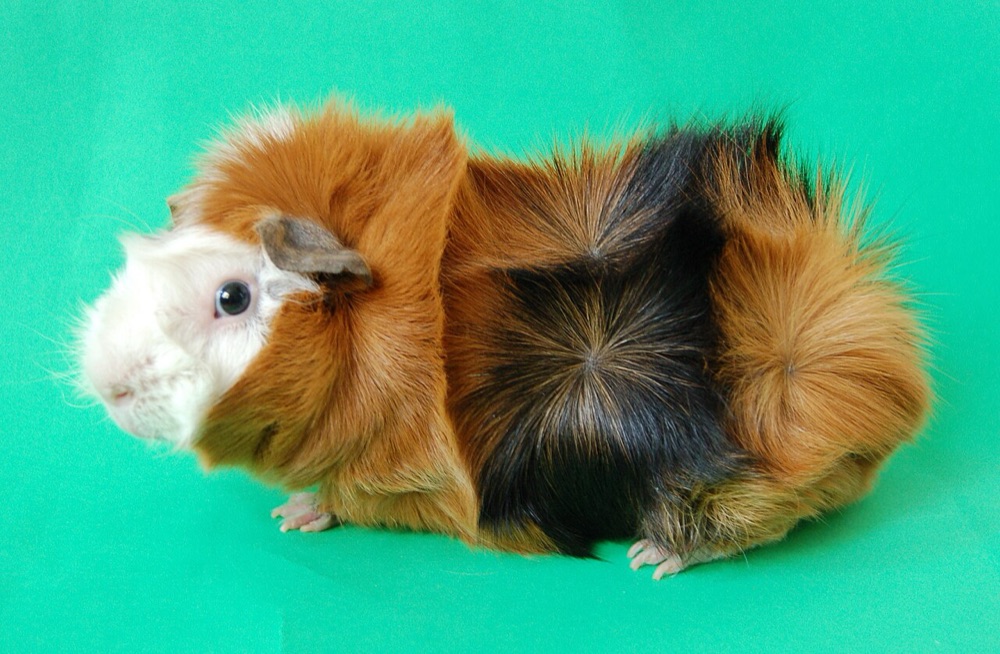
- Short, harsh and dense, set in rosettes that radiate from pinpoint centres and form straight ridges along and across the body, with a mane and moustache on the head. The standard caps coat length at 4 cm.British Cavy Council
- Energy
- ModerateBritish Cavy Council
- Indian heat
- Struggles in heatRSPCA
- Flats
- Suits a flatPDSA
Abyssinian guinea pig at a glance
| What | The rule | Source |
|---|---|---|
| Coat | Rough and short-haired, set in rosettes that radiate from pinpoint centres, with ridges along and across the body. The British Cavy Council standard caps coat length at 1.5 inches (4 cm). | British Cavy Council |
| Body | Short, cobby and thick-set, with good width across the shoulders and plenty of firm flesh. | British Cavy Council |
| Adult weight | The Merck Veterinary Manual gives about 815 to 1,000 g for guinea pigs in general; no breed society we read gives a separate weight for the Abyssinian. | Merck Veterinary Manual |
| Lifespan | 5 to 8 years for guinea pigs, according to the Merck Veterinary Manual. | Merck Veterinary Manual |
| Grooming | Short-haired guinea pigs enjoy a brush once or twice a week, PDSA says; check the skin under the rosettes at the same time. | PDSA |
| Heat | Low tolerance, like every guinea pig. The RSPCA puts the heatstroke risk above 26 °C and the ideal room at 17 to 20 °C. | RSPCA |
| Company | Lives in a group, ideally of three or more guinea pigs. Keep the group together for the whole trip. | PDSA |
Where does the Abyssinian guinea pig come from?
Every pet guinea pig descends from animals domesticated in South America. A 2020 ancient DNA study in Scientific Reports says people ate wild guinea pigs as early as 10,000 years ago, points to a separate centre of domestication in the eastern Colombian Highlands, and identifies Peru as the probable source of the first guinea pigs carried to Europe in the exotic pet trade.
The Abyssinian is one of the original breeds of the cavy fancy in Britain. A British Cavy Council article by the breeder Simon Neesam says Victorian books mention a rosetted guinea pig, and that the first Abyssinian standard, together with those for the Short Hair and the Peruvian, was adopted by the newly formed National Cavy Club in 1888 and printed in The Rabbit Keeper and Show Reporter on 7 June that year. Its supporting text asked for a cavy large and broad at the shoulders, with fur rough, wiry, well rosetted and well furnished about the head.
Neesam adds that the breed's genetic make-up is easily upset by other genes, so breeders have largely kept it apart from outcrosses. The standard was last revised in 1992, and today's British Cavy Council standard still judges the Abyssinian mostly on its ridges, rosettes and harsh coat. The sources we read do not explain the name.
How did the Abyssinian guinea pig come to India?
No source we found records when Abyssinian guinea pigs first reached India, or how many live here. What is documented is how they may be sold: the Prevention of Cruelty to Animals (Pet Shop) Rules, 2018 list the guinea pig as a pet animal, require every pet shop to be registered with the State Animal Welfare Board, and forbid the sale of un-weaned or underage animals.
In Indian homes the Abyssinian lives indoors as a family pet. Its hardest season is summer: the RSPCA puts the heatstroke risk for guinea pigs above 26 °C, and the India Meteorological Department says heat waves on the plains come mainly between March and June.
What care does a Abyssinian guinea pig need?
The three things that shape a good day for this breed.
Exercise
Daily room to run, explore and forage, with tunnels and hides. PDSA says guinea pigs need lots of space to explore and burrow; supervised floor time in a room with cables tucked away and no cat or dog suits a lively Abyssinian. PDSA
Grooming
A soft brush once or twice a week, which PDSA says short-haired guinea pigs enjoy, working with each rosette. Check the skin under the coat for scratching or bald patches, and the nails for length. PDSA
Training
Handle with confidence: a British Cavy Council breeder says Abyssinians struggle mainly when picked up nervously. Lift with one hand under the body and the other steadying the chest, low and close, never on its back. British Cavy Council
What should a Abyssinian guinea pig eat?
An Abyssinian eats what every guinea pig eats. PDSA puts hay and grass at 85 to 90% of the diet, always available, because guinea pigs graze day and night and chewing hay wears down teeth that never stop growing. Add fresh leafy vegetables and herbs every day and a fresh portion of grass-based guinea pig pellets, which the RSPCA says should be given new each day rather than topped up.
Guinea pigs cannot make vitamin C, so it has to come from that daily food. Merck notes that the vitamin C in pellets degrades with heat, light and moisture, so store the bag sealed and away from the stove in an Indian kitchen. Fruit is an occasional treat in very small amounts, and onion, garlic, potato and iceberg lettuce are off the list. The RSPCA says growing, pregnant, nursing or underweight guinea pigs may need more pellets; your vet can tell you how much.
Meals a day: every age, hay and water available all day and night; adult, fresh vegetables and a fresh portion of pellets every day; growing, pregnant or underweight, the same daily pattern, with the larger pellet portion your vet advises.
Which illnesses is the Abyssinian guinea pig prone to, and how are they treated?
The conditions veterinary studies and breed surveys most often report in the Abyssinian guinea pig. Knowing the early signs means a vet sees it sooner.
See your vet first. This is general information from veterinary sources, not a diagnosis. Only a vet who has examined your pet can say what is wrong and prescribe treatment, and this page never gives a dose. Do not give your pet human medicine. If your pet seems very unwell, go to a 24-hour vet: find one in your city.
Skin mites and lice
See a vet soonSarcoptic mange mites (Trixacarus caviae) cause severe itching, and lice spread by direct contact between guinea pigs. A dense, rosetted coat can hide both until hair loss shows. Merck Veterinary Manual
Signs to watch for
- Severe scratching, sometimes so violent it looks like a seizure
- Hair loss and crusty skin, mostly with heavy lice
How a vet treats it
A vet confirms mites or lice by looking at skin scrapings or hairs under a microscope. Merck says antiparasitic medicine prescribed by the vet is effective; the vet decides which product is safe for a guinea pig, and every guinea pig in the group may need treating.
Prevention
Check the skin under the rosettes during each brushing and see a vet early for any itching. Never use a dog or cat flea product.
Ringworm (dermatophytosis)
See a vet soonA fungal skin infection, most often caused by Trichophyton species. Other guinea pigs in the home can carry it without showing signs. Merck Veterinary Manual
Signs to watch for
- Round patches of hair loss with a red, crusted rim
- Scaly skin on the face, feet or back
How a vet treats it
A vet confirms it by testing hairs plucked from the edge of a patch. Merck says treatment is with antifungal medicine applied to the skin, and recommends treating every guinea pig in the household, since some carry it without signs.
Prevention
Wash hands after handling, keep bedding clean and dry in the monsoon, and see a vet at the first bald patch.
Vitamin C deficiency (scurvy)
See a vet soonGuinea pigs cannot make vitamin C. Without enough in the diet, collagen weakens, causing bleeding into joints and tissues and loosening the teeth. Merck Veterinary Manual
Signs to watch for
- Poor appetite or difficulty picking up food
- A rough coat
- Lameness or swollen joints
- Weight loss, diarrhoea or slow-healing wounds
How a vet treats it
A vet diagnoses it from the history and signs. Merck says treatment combines correcting the diet, vitamin C given by mouth or by injection as the vet directs, and pain relief.
Prevention
Fresh vegetables and fresh, in-date guinea pig pellets every day. Merck lists rabbit pellets and old pellets among the usual causes.
Dental disease
See a vet soonA guinea pig's 20 teeth grow throughout life. Too little hay, poor genetics or vitamin C deficiency can leave them misaligned and overgrown. Merck Veterinary Manual
Signs to watch for
- Drooling ("slobbers")
- Eating less or dropping food
- Weight loss
- Bleeding from the mouth
How a vet treats it
A vet examines the mouth and may take skull X-rays or a CT scan. Merck says overgrown teeth are reduced and reshaped under general anaesthetic, and badly diseased teeth may be removed; some guinea pigs need repeat trims.
Prevention
Unlimited hay to chew and a yearly check by a vet who sees guinea pigs.
Heatstroke
Emergency: go to a vet nowGuinea pigs overheat easily. The RSPCA puts the risk above 26 °C, a temperature most Indian cities pass for months each year. PDSA
Signs to watch for
- Short, quick breaths
- Drooling
- Sleepiness or lethargy
- Collapse or fits
How a vet treats it
PDSA says to give first aid and call the vet immediately. The vet examines the guinea pig and decides on treatment at the clinic.
Prevention
A cool, shaded room, a frozen bottle outside the cage, cool tiles, water changed often and a plan for power cuts.
What makes an Abyssinian different from other guinea pigs?
Its coat. Everything else about caring for it, from vitamin C to heat, is the same as for any guinea pig.
The British Cavy Council describes the Abyssinian as a rough-coated, short-haired cavy in which a set arrangement of rosettes creates ridges running both along and across the body. A well-made Abyssinian has a centre ridge along the spine, side ridges, a collar ridge over the shoulders and a back ridge over the hips, with rosettes on the saddle, sides, hips and rump. The head carries a mane and a moustache, formed where hair growing forward from the jaw meets hair on the nose.
That coat is harsh to the touch and dense, which is what makes the ridges stand up. It also traps dust, hay and bedding, and it hides the skin underneath. For an owner in India this matters most in two seasons: the monsoon, when damp bedding and humidity sit in the coat, and summer, when a dense coat adds to the heat load on an animal that already copes badly above the mid-twenties.
Breeders describe the Abyssinian as a spirited guinea pig. Simon Neesam, writing for the British Cavy Council after more than 21 years with the breed, says Abyssinians are lively but not vicious, and that they struggle mainly when not handled with confidence. A sitter should pick one up the way PDSA advises for any guinea pig: low and close to the body, supporting the chest and the back legs, and never turned on its back.
How does an Abyssinian cope with Indian heat and the monsoon?
Not well without help. Heat is the biggest danger to any guinea pig in an Indian summer, and a dense coat does not help.
The RSPCA says guinea pigs are happiest at 17 to 20 °C and are at risk of heatstroke above 26 °C. The India Meteorological Department declares a heat wave on the plains when the maximum reaches 40 °C, mostly between March and June. A closed flat in Jaipur, Nagpur or Hyderabad in May can pass the guinea pig limit long before noon, and a power cut takes the fan away.
Before you leave, move the enclosure into the room that stays coolest, away from west-facing windows and the kitchen. PDSA's heat advice for guinea pigs is a frozen water bottle wrapped in a towel placed just outside the cage, ceramic or stone tiles under a box as a cool spot, and water changed often. Show the sitter where the inverter is and which fan it runs.
In the monsoon, Mumbai, Kochi and Kolkata bring weeks of humidity. Hay goes mouldy in an open bag, and damp shavings work into the ridges of an Abyssinian's coat. Ask the sitter to remove wet bedding at every visit, keep the hay bag closed, and look at the rear end daily: the RSPCA warns that a soiled rear in warm weather attracts flies.
| What | The rule | Source |
|---|---|---|
| March to June | Coolest room, curtains shut, frozen bottles swapped at each visit, two visits a day. | PDSA |
| June to September | Dry bedding, hay in a closed bag, daily check under the tail for soiling. | RSPCA |
| Diwali and fireworks | An inner room before dusk, extra hay to burrow in, and an appetite check the next morning. | RSPCA (England and Wales) |
| North Indian winter | Keep the room above 15 °C, out of draughts and away from the direct blast of a heater. | RSPCA |
What should a sitter check in an Abyssinian's coat and skin?
Part the rosettes and look at the skin. In a rough coat, scratching and bald patches are easy to miss from above.
- Scratching: a guinea pig scratching so hard it looks like a fit can have sarcoptic mange mites, which the Merck Veterinary Manual says cause severe itching. Call the vet. Merck Veterinary Manual
- Round, scaly patches on the face, feet or back, with hair loss in the centre: signs of ringworm, a fungal infection other guinea pigs can carry without signs. Merck Veterinary Manual
- Crusts, thin hair or lice in the coat. Heavy lice can cause hair loss and crusty skin. Merck Veterinary Manual
- A rough, dull coat together with a poor appetite or a limp, which can be a sign of vitamin C deficiency. Merck Veterinary Manual
- Hay seeds and shavings caught in the ridges: brush them out gently with a soft brush, following the owner's routine. British Cavy Council
- Nails that are too long or curling under, which PDSA lists in the daily check. PDSA
- A clean, dry rear end at every visit in warm or humid weather. RSPCA
What should an Abyssinian's sitter treat as urgent?
A sitter does not diagnose. They see what has changed and call the vet first, then you. Never give a guinea pig a medicine meant for a person or another animal.
If Eating less, leaving the vegetables, or fewer and smaller droppings.
Call the vet the same day. The RSPCA asks owners to contact a vet immediately for any change in eating or droppings. RSPCA
If Short, quick breaths, drooling, sleepiness, collapse or fits on a hot day.
Heatstroke: move the guinea pig somewhere cool and call the vet immediately, as PDSA advises. Do not plunge it into cold water. PDSA
If Intense scratching, open sores or patches of missing hair.
See a vet soon. Skin problems in guinea pigs tend to get worse over time, PDSA says, and mites and ringworm need a vet's diagnosis. PDSA
If Sneezing, discharge from the eyes or nose, or laboured breathing.
Call the vet. Merck lists pneumonia, usually bacterial, as a leading cause of death in guinea pigs, especially young ones. Merck Veterinary Manual
If Diarrhoea after starting a medicine the vet prescribed.
Stop and call the vet at once: many common antibiotics upset a guinea pig's gut bacteria. Merck Veterinary Manual
How should an Abyssinian be fed while you are away?
Exactly as it is fed now. PDSA says hay and grass should make up 85 to 90% of a guinea pig's diet and be there day and night. Guinea pigs cannot make vitamin C, so fresh vegetables and a fresh portion of guinea pig pellets every day are not optional. Merck adds that the vitamin C in pellets breaks down with heat, light and moisture, which is a real problem in an Indian kitchen in May or a humid flat in July: keep the bag sealed and somewhere cool and dark.
Write the vegetable list for the sitter using what your Abyssinian already eats. The RSPCA lists parsley, celery, bell peppers, cucumber and romaine as foods to give often. Keep onion, garlic and potato away: PDSA lists them among foods guinea pigs must not eat, and they are in most Indian kitchens. Do not switch food before a trip; PDSA advises changing a guinea pig's diet over two to four weeks.
A harsh, glossy coat depends on good food as much as brushing. A rough coat in a guinea pig that is also eating less can be a sign of vitamin C deficiency, so ask the sitter to tell you if the coat looks dull or the guinea pig seems stiff.
How should an Abyssinian live in an Indian flat?
Indoors, in a room that does not catch afternoon sun. PDSA says guinea pigs need lots of space to explore, burrow and forage, with overhead cover, tunnels and a deep layer of soft, dust-free hay. A balcony is the wrong place in an Indian city: it heats up, it catches driving rain in the monsoon, and it brings crows and cats close.
Hides matter for a breed that is lively and easily startled by sitters it does not know. Give one hide per guinea pig, plus a spare, so nobody is pushed out. In a housing society, check that pets are allowed under your lease or bye-laws before you bring a group home; Petym's page on pets in housing societies explains what the rules in India say.
The Prevention of Cruelty to Animals (Pet Shop) Rules, 2018 name the guinea pig as a pet animal, so any shop or website selling an Abyssinian must be registered with the State Animal Welfare Board and give you a receipt. Ask to see the certificate.
What does a sitter do on an Abyssinian visit?
One visit a day can cover a single day for a healthy group in mild weather. For anything longer, or in heat, two visits a day.
Do
- Count the group and watch each guinea pig come to the vegetables before touching anything else. RSPCA
- Refill hay in large piles, empty and refill every bottle and bowl, and give a fresh portion of pellets. RSPCA
- Weigh each guinea pig on the days the owner sets; PDSA says weight loss can be a sign of illness. PDSA
- Spot clean daily and keep the weekly deep clean to the owner's day. RSPCA
- Send the daily photo update with a note of who ate, the room temperature and anything that looked different.
Don’t
- Don't bathe an Abyssinian or use any coat product the owner has not left and shown you.
- Don't put any drops or medicine in the water. PDSA advises against vitamin C drops in drinking water. PDSA
- Don't let a cat or dog into the room, even a calm one. PDSA
- Don't separate one guinea pig from the group to take it home; the RSPCA says guinea pigs should not live alone. RSPCA
Which Petym service suits an Abyssinian?
Usually visits at home. Guinea pigs startle easily, and a car ride across an Indian city in summer adds heat to stress.
If A healthy group, a trip of a few days, mild or cool weather
Drop-in visits, once or twice a day, with a skin check on the coat every few days. Drop-in visits
If A week or more, a heat wave forecast, or frequent power cuts
Overnight pet sitting, so someone keeps the room cool and sees the group many times a day. Overnight sitting RSPCA
If An Abyssinian on treatment for mites, ringworm or another illness
Special-needs care, with the vet's written plan followed and logged. Special-needs care
How does a Petym sitter look after an Abyssinian?
Petym is not taking bookings yet; it opens city by city once its sitters have passed its checks. When it does, the first step is a free meet and greet at your home, where the sitter meets each guinea pig, learns which is which, and sees how you check the coat. You book and pay through Petym, and the sitter is paid after the booking.
During the booking the sitter follows your written plan, logs every feed and weigh-in, and sends a photo every day. If an Abyssinian stops eating or something else is wrong, the sitter calls you and takes it to the nearest 24-hour vet on the city's list. Every sitter has an identity check with PAN, pet first-aid training before the first booking and a named 24-hour vet within reach.
Breeds with similar care needs to the Abyssinian guinea pig
Going away soon? Plan your pet’s care first.
Petym's bookings open for dogs and cats first. For every other pet, the free going-away checklist covers food, water, heat and what to leave written down before you travel.
Questions owners ask
How often should an Abyssinian guinea pig be brushed?
- Once or twice a week suits most Abyssinians, since PDSA says short-haired guinea pigs enjoy a brush that often. Use a soft brush, work with the lie of each rosette, and use the session to look at the skin for scratching, scabs or bald patches that need a vet.
Can an Abyssinian guinea pig live in Indian heat?
- Only indoors in a cool room. The RSPCA says guinea pigs are at risk of heatstroke above 26 °C and most comfortable at 17 to 20 °C. Plan summer around shade, a frozen bottle outside the cage, cool tiles, fresh water and a backup for power cuts.
Do Abyssinian guinea pigs bite?
- Not usually. A British Cavy Council article by a long-time breeder calls the myth that Abyssinians bite rubbish, describing them as spirited rather than vicious. Like any guinea pig they struggle if handled nervously, so pick them up low and close, supporting the chest and back legs.
Why is my Abyssinian scratching so much?
- Mites, lice and ringworm are common causes of itching and hair loss in guinea pigs, according to the Merck Veterinary Manual. Severe scratching can look like a fit. Do not use a dog or cat product: a vet needs to examine the skin and decide on treatment.
How long can I leave my Abyssinian guinea pig alone?
- Not overnight without a check. Guinea pigs need vitamin C from fresh food daily, and one that stops eating needs a vet the same day. The RSPCA advises a responsible person caring for them in your home, so plan at least one visit a day and two in hot weather.
Is the Abyssinian guinea pig from Abyssinia?
- The sources we read do not say. What is recorded is that the Abyssinian was one of the original fancy breeds: its first standard was adopted by the newly formed National Cavy Club in England in 1888, alongside the Short Hair and the Peruvian.
Is it legal to buy an Abyssinian guinea pig in India?
- Yes. The Prevention of Cruelty to Animals (Pet Shop) Rules, 2018 list the guinea pig as a pet animal and require any seller to be registered with the State Animal Welfare Board, give a receipt and never sell underage animals. Ask the shop for its certificate.
Keep reading
- Guinea pig sitting while you're awayVisits, heat and greens for any guinea pig.
- Guinea pig care guide for IndiaGetting started: space, diet and vitamin C.
- Peruvian guinea pig careThe long-haired relative with rosettes on the rump.
- Teddy guinea pig careAnother rough-coated breed, with a short, dense coat.
- Summer pet care in India
- Pets in housing societies
- Drop-in visits or overnight sitting
Services that help
Free tools for this
Words on this page, explained
Keep exploring
Sources
Each source was opened and read on the date shown. How Petym checks its sources
- British Cavy Council: The Abyssinian cavy, by Simon Neesam, 2002 (web.archive.org copy captured 16 July 2024) (opens in a new tab)
- Merck Veterinary Manual: Description and physical characteristics of guinea pigs (full review October 2025) (opens in a new tab)
- British Cavy Council: Breed standards for full and guide standard cavies (web.archive.org copy captured 5 November 2024) (opens in a new tab)
- RSPCA: Guinea pig environment (opens in a new tab)
- PDSA: Guinea pigs as pets (opens in a new tab)
- Ministry of Environment, Forest and Climate Change (Gazette copy on AWBI's site): Prevention of Cruelty to Animals (Pet Shop) Rules, 2018: G.S.R. 844(E), 6 September 2018 (opens in a new tab)
Show all 20 sourcesShow fewer
- India Meteorological Department: FAQ on heat wave (opens in a new tab)
- PDSA: Guinea pig health (opens in a new tab)
- PDSA: Your guinea pig's diet (opens in a new tab)
- RSPCA: Guinea pig diet (opens in a new tab)
- Merck Veterinary Manual: Nutritional problems of guinea pigs (pet owner version) (opens in a new tab)
- Merck Veterinary Manual: Infectious diseases of guinea pigs (professional version) (opens in a new tab)
- Merck Veterinary Manual: Noninfectious diseases of guinea pigs (professional version) (opens in a new tab)
- Merck Veterinary Manual: Disorders and diseases of guinea pigs (full review October 2025) (opens in a new tab)
- PDSA: Keeping your guinea pigs cool in the summer: dos and don'ts (opens in a new tab)
- PDSA: The ideal home for your guinea pig (opens in a new tab)
- RSPCA: Guinea pig health (opens in a new tab)
- RSPCA: Exploring pet sitting options (opens in a new tab)
- RSPCA (England and Wales): Fireworks and pets (opens in a new tab)
- Scientific Reports (2020), Lord and others: Ancient DNA of guinea pigs (Cavia spp.) indicates a probable new center of domestication and pathways of global distribution (abstract read) (opens in a new tab)