American guinea pig care in India: food, teeth and the heat
Updated By PetymFacts checked against official sources on
Quick answer
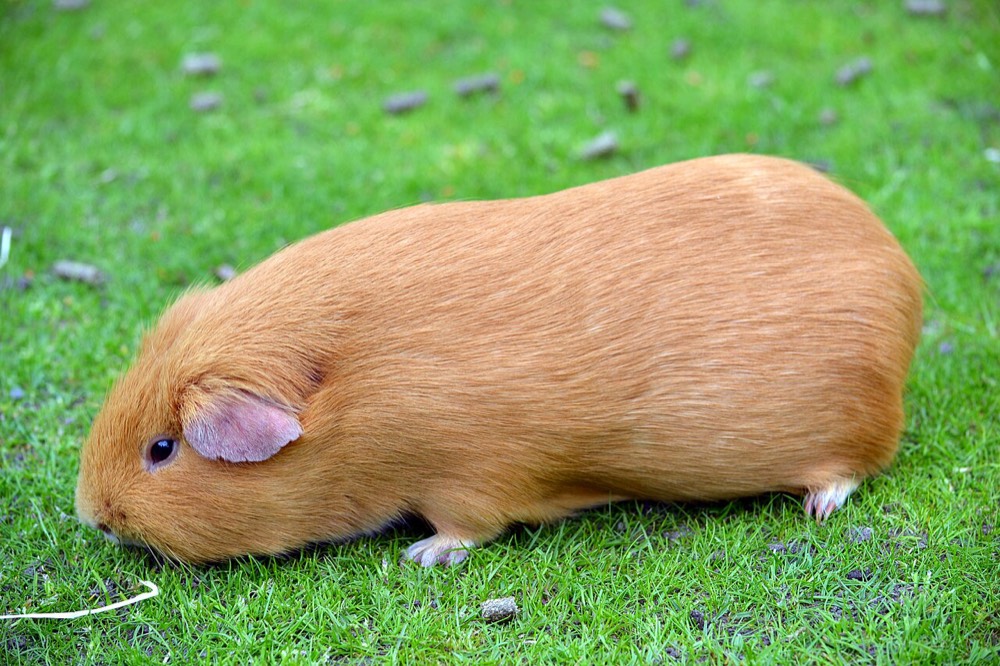
The American is the smooth, short-haired guinea pig most families picture, called the English in Britain. Its coat needs only a weekly brush, so care centres on hay all day, fresh vegetables for vitamin C, a cool indoor room and regular weigh-ins. Plan a sitter's visit every day you are away, and two on hot days.
Because the coat is easy, problems show up elsewhere first: in the teeth, the weight and the urine. A sitter weighs each guinea pig on set days and calls the vet for weight loss, drooling or blood in the urine.

- Origin
- Domesticated in South America; the smooth Short Hair was standardised in England in 1888British Cavy Council
- Adult weight
- 0.8 to 1 kg (Merck's figure for adult guinea pigs, about 815 to 1,000 g; the British Cavy Council's judging notes put the usual upper weight for an 8-month-old Self at about 37 oz (about 1.05 kg))Merck Veterinary Manual
- Lifespan
- 5 to 8 yearsMerck Veterinary Manual
- Coat
- Smooth, short and sleek, usually with no parting. The British Cavy Council's English Self standard asks for a soft, silky, glossy coat in one even colour, groomed free of guard hairs.WikiVet (veterinary education wiki)
- Energy
- ModeratePDSA
- Indian heat
- Struggles in heatRSPCA
- Flats
- Suits a flatPDSA
American guinea pig at a glance
| What | The rule | Source |
|---|---|---|
| Other names | Short-haired, English or American, according to WikiVet's breed list; the British Cavy Council shows solid-coloured ones as English Selfs. | WikiVet (veterinary education wiki) |
| Coat | Smooth, consistently short and sleek, usually with no parting. | WikiVet (veterinary education wiki) |
| Shape | A short, broad, cobby body with deep shoulders and a Roman nose; seen from above, the standard likens it to a brick with rounded corners. | British Cavy Council |
| Adult weight | About 815 to 1,000 g for guinea pigs in general, per the Merck Veterinary Manual. | Merck Veterinary Manual |
| Lifespan | 5 to 8 years. | Merck Veterinary Manual |
| Grooming | Light: PDSA says short-haired guinea pigs enjoy a brush once or twice a week. | PDSA |
| Room temperature | 17 to 20 °C is ideal; above 26 °C risks heatstroke and below 15 °C risks chilling, the RSPCA says. | RSPCA |
Where does the American guinea pig come from?
The domestic guinea pig, Cavia porcellus, does not exist in the wild, the Merck Veterinary Manual says; its wild relatives graze the grassy plains of South America. Ancient DNA from archaeological guinea pigs, published in Scientific Reports in 2020, shows people hunted wild guinea pigs for food as early as 10,000 years ago, and that Peru was the likely source of the first domestic guinea pigs taken to Europe and the south-eastern United States as exotic pets.
The smooth, short-haired guinea pig is the oldest-looking of the fancy breeds. A British Cavy Council article records that the first standards for the Short Hair, the Abyssinian and the Peruvian were adopted by the newly formed National Cavy Club in England in 1888. In Britain today the solid-coloured smooth cavy is shown as the English Self, judged on a Roman nose, large drooping ears, a short, broad, cobby body and a lustrous coat of even colour.
In North America the same coat type carries the name American. The American Rabbit Breeders Association recognises 13 breeds of cavy, with standards kept with the American Cavy Breeders Association, and WikiVet's breed list, drawn from that association, describes the short-haired American as smooth, sleek and usually unparted.
How did the American guinea pig come to India?
We found no record of when smooth-haired guinea pigs were first brought to India, or of how many are kept as pets. The legal position is clearer. The Prevention of Cruelty to Animals (Pet Shop) Rules, 2018 count the guinea pig as a pet animal, so a shop or website selling one must hold a State Animal Welfare Board certificate, give a receipt, and keep guinea pigs on a solid floor away from cats and dogs.
In India the American lives as an indoor pet in flats and houses. The Animal Welfare Board of India's 2026 heat circular asks everyone in charge of animals to give shade and fresh water through the hot months, which for a guinea pig means a cool inner room from March to June.
What care does a American guinea pig need?
The three things that shape a good day for this breed.
Exercise
Space to run, burrow and forage every day. PDSA describes guinea pigs as friendly, sociable and entertaining, needing lots of room to explore, with tunnels and overhead cover; a large floor enclosure beats a small raised hutch. PDSA
Grooming
Easy: PDSA says short-haired guinea pigs enjoy a brush once or twice a week. Check nails at the same time, since PDSA lists overlong or curling nails in its health checks. PDSA
Training
Guinea pigs are prey animals and many dislike being picked up, PDSA says. Teach yours to come for vegetables, and when you lift one, scoop it low and close, supporting chest and hind legs. PDSA
What should a American guinea pig eat?
Hay comes first. Guinea pigs are natural grazers that eat through the day and night, and PDSA's vets say hay and grass should be 85 to 90% of what they eat, offered without limit. That constant chewing is what keeps the ever-growing teeth worn down. Each day add a mix of fresh vegetables and herbs and a fresh helping of grass-based guinea pig pellets, and keep clean water in more than one bottle or bowl.
Fresh produce is also where the vitamin C comes from, because a guinea pig's body cannot make it. Merck links bladder stones to low water and produce intake, so an American on a dry, pellet-heavy diet is at more risk. Leave fruit for rare treats. Merck says pregnant females need more vitamin C than other guinea pigs, and the RSPCA says growing or underweight guinea pigs may need more pellets: let your vet set those amounts.
Meals a day: all ages, unlimited hay and fresh water; adult, vegetables and fresh pellets once a day, every day; young, pregnant or thin, the same routine with extra pellets or vitamin C as your vet directs.
Which illnesses is the American guinea pig prone to, and how are they treated?
The conditions veterinary studies and breed surveys most often report in the American guinea pig. Knowing the early signs means a vet sees it sooner.
See your vet first. This is general information from veterinary sources, not a diagnosis. Only a vet who has examined your pet can say what is wrong and prescribe treatment, and this page never gives a dose. Do not give your pet human medicine. If your pet seems very unwell, go to a 24-hour vet: find one in your city.
Overgrown or misaligned teeth
See a vet soonGuinea pig incisors, premolars and molars grow throughout life. Merck links overgrowth to too little fibre, poor nutrition, genetics and vitamin C deficiency. Merck Veterinary Manual
Signs to watch for
- Eating less, or wanting food but not managing to eat it
- Drooling and a wet chin
- Weight loss
- Less active than usual
How a vet treats it
Diagnosis needs a thorough look inside the mouth, usually with X-rays or a CT scan. Under general anaesthetic a vet shortens the crowns and restores a proper chewing angle, and may remove badly diseased teeth. Some guinea pigs need trims again and again.
Prevention
Hay without limit, and a routine check by a vet experienced with guinea pigs at least once a year.
Bladder stones (urolithiasis)
See a vet soonCommon in guinea pigs: calcium carbonate and other crystals come out of the urine and form stones. Merck says females may be more at risk and more likely to have stones low in the urinary tract. Merck Veterinary Manual
Signs to watch for
- Blood in the urine
- Eating less or seeming quiet with no obvious cause
- Signs of a slow gut, such as fewer droppings
How a vet treats it
A vet examines the guinea pig and uses imaging and a urine test. Treatment may be medical or surgical; larger stones need an operation to remove them from the bladder.
Prevention
Stones often come back. Merck says prevention centres on getting the guinea pig to drink more water and eat more fresh produce.
Vitamin C deficiency
See a vet soonWithout daily vitamin C a guinea pig cannot make healthy collagen. Merck lists old pellets, rabbit pellets and pellets without a stable form of the vitamin among the usual causes. Merck Veterinary Manual
Signs to watch for
- Loss of appetite
- A rough coat
- Swollen joints or lameness
- Weight loss or diarrhoea
How a vet treats it
A vet diagnoses it from the diet history and the signs, then corrects the diet and gives vitamin C by mouth or by injection, with pain relief, as the vet directs.
Prevention
Fresh vegetables every day and guinea pig pellets used before their best-before date, stored away from heat and damp.
Pneumonia and respiratory infection
See a vet soonUsually bacterial, and a leading cause of death in guinea pigs, especially young ones. Merck notes that Bordetella can be carried by healthy-looking dogs and rabbits. Merck Veterinary Manual
Signs to watch for
- Discharge or redness around the eyes or nose
- Sneezing
- Difficulty breathing
- Weight loss
How a vet treats it
A vet diagnoses it with an examination, chest X-rays and lab tests. Treatment may include fluids, syringe feeding, oxygen, vitamin C and antibiotics chosen as safe for guinea pigs. If an antibiotic causes diarrhoea, stop and call the vet at once.
Prevention
Keep any guinea pig with signs apart from the group and clean shared cages thoroughly.
Sore feet (pododermatitis)
See a vet soonCommon in guinea pigs and able to affect all four feet. Merck says pressure from wire floors, or abrasive or soiled bedding, plays a part. Merck Veterinary Manual
Signs to watch for
- Red skin on the soles
- Callus-like swellings
- Open sores or signs of infection
How a vet treats it
A vet may take X-rays to check the bone and joints. Mild cases are treated with topical treatment, bandages, pain relief and vitamin C; severe cases need antibiotics chosen after a culture.
Prevention
Solid floors, soft bedding, and wet or soiled bedding changed promptly, especially in the monsoon.
Is an American guinea pig easier to care for than other breeds?
Its coat is easier. Its diet, company, space and heat needs are exactly the same as any other guinea pig's.
WikiVet describes the short-haired guinea pig, often called English or American, as having a smooth, consistently short coat, sleek, with a Roman nose. The British Cavy Council's English Self standard asks for a soft, silky coat, short and groomed free of guard hairs, on a short, broad body with very deep shoulders. There are no rosettes to trap bedding and no long sweep to tangle, so an American needs far less coat care than an Abyssinian, Peruvian or Silkie.
That makes it a good breed to leave with a sitter, but only if the owner does not mistake an easy coat for an easy animal. Guinea pigs of every breed cannot make vitamin C, live in groups, startle easily, and go downhill quickly once they stop eating. PDSA calls regular weighing the best way to check that a guinea pig is eating properly, and that matters more than how the coat looks.
How should Americans be housed in an Indian flat?
Keep them inside, in a room that stays cool in the afternoon and has no direct sun on the enclosure. PDSA says guinea pigs need lots of space to explore, burrow and forage, with places to hide overhead, tunnels and a deep layer of soft, dust-free hay. A bigger enclosure on the floor of a bedroom serves a group better than a small hutch on a balcony that bakes in April and floods in July.
A smooth coat gives little protection against a hard floor. The Merck Veterinary Manual says pressure from wire flooring, or abrasive or soiled bedding, can cause sore feet (pododermatitis), so give solid flooring covered in soft bedding and change it when wet. In a housing society, check your lease or the society's bye-laws before the group arrives; Petym's rules pages cover pets in housing societies and in rented homes.
What changes for an American through the Indian year?
What the sitter adjusts, season by season.
| The risk | What the sitter does | |
|---|---|---|
| Summer (March to June) PDSA | Heatstroke once the room passes the mid-twenties | Two visits, early and late; frozen bottle outside the cage; cool tiles; water changed at each visit |
| Monsoon (June to September) Merck Veterinary Manual | Damp bedding, mouldy hay, pellets losing vitamin C in the humidity | Wet bedding out, hay and pellets in closed containers, a check under the tail |
| Festivals (Diwali) RSPCA (England and Wales) | Fireworks frighten small pets | An inner room before dark, extra hay to burrow in, appetite checked next morning |
| Winter (north India) RSPCA | Chilling below 15 °C in an unheated flat | Extra hay, no draughts, no heater blowing straight at the enclosure |
The India Meteorological Department declares a heat wave on the plains when the maximum reaches 40 °C, mostly between March and June.
What does a sitter's visit to American guinea pigs look like?
At the door
Note the room temperature on the thermometer you left. In summer, if it is already warm, start cooling before anything else.
First look
Count the group. Every guinea pig should be up, moving and breathing quietly, and should come to the rustle of the vegetable bag.
Food and water
Hay piled high, the day's washed vegetables from your list, a fresh portion of pellets, and each bottle and bowl emptied and refilled. RSPCA
Droppings
Plenty of firm, dry droppings is normal. Fewer, smaller or none, or diarrhoea, means a call to the vet. RSPCA
Weigh-in day
Each guinea pig on the kitchen scales, the weight written in the log against the normal figure you left. PDSA
Quick brush
Once or twice a week, a soft brush down the back, looking at the skin, nails and front teeth as you go. PDSA
Before leaving
Spot clean, swap the frozen bottle, check the latch, and send the photo update with notes on who ate.
Which signs in an American mean calling the vet?
First the vet, then you. A sitter never gives a guinea pig a human medicine, or one prescribed for another pet.
If Weight down from the normal figure on the care sheet, or a guinea pig eating less than its cage mates.
Call the vet the same day. PDSA says weight loss can be a sign of illness, and the RSPCA treats a change in eating as urgent. PDSA
If Wet chin, drooling, dropping food or chewing oddly.
Book a vet visit: Merck lists drooling, weight loss and mouth bleeding as signs of dental disease. Merck Veterinary Manual
If Blood in the urine, or a guinea pig that is quiet and off its food with no clear cause.
See a vet promptly. Merck says bladder stones are common in guinea pigs and often show first as blood in the urine. Merck Veterinary Manual
If Fast, shallow breathing, drooling, sleepiness or collapse in a warm room.
Heatstroke is an emergency. Move the guinea pig somewhere cool and call the vet immediately. PDSA
If Sneezing, crusty eyes or a runny nose.
Call the vet and keep that guinea pig's bowls and bottle separate; Merck advises keeping animals with signs apart. Merck Veterinary Manual
What should Americans eat while you are away?
Leave enough of the same hay and pellets for the whole trip and a few days more. PDSA says hay and grass make up 85 to 90% of a guinea pig's diet, and that changing food quickly can cause a tummy upset and stop a guinea pig eating, which is very serious. A trip is the worst time to try a new brand.
Vitamin C has to arrive every day, from fresh vegetables and herbs and from pellets given fresh rather than topped up. The RSPCA lists parsley, celery, bell peppers, cucumber, gem and romaine lettuce as foods to give often, with broccoli, spinach, kale and carrot as occasional extras. Write the list in the words your sitter will use at the sabziwala.
Merck says the prevention of bladder stones focuses on more water and more fresh produce. So in a hot Indian summer, the sitter should keep every bottle full and cool and not cut back the vegetables to save effort.
What do people get wrong about leaving short-haired guinea pigs?
You may have read
A short coat means an American copes better with the heat.
Myth
What the sources say
Every guinea pig is at risk of heatstroke above 26 °C, the RSPCA says. Coat length does not change the plan: a cool room, shade and water. RSPCA
You may have read
One big bowl of pellets covers a long weekend.
Myth
What the sources say
Merck notes that vitamin C in pellets degrades with heat, light and moisture, and guinea pigs need it daily. Someone has to bring fresh food every day. Merck Veterinary Manual
You may have read
Guinea pigs need vaccinations before a sitter can look after them.
Myth
What the sources say
The Merck Veterinary Manual says guinea pigs don't need vaccinations. A yearly check by a vet who knows guinea pigs is what matters. Merck Veterinary Manual
You may have read
A lone American is fine for a week.
Myth
What the sources say
The RSPCA says guinea pigs should not live alone, and PDSA recommends groups of three or more. Keep the group together. PDSA
Which Petym service suits American guinea pigs?
If One or two days in mild weather, healthy adults
Drop-in visits: one a day can do, with fresh vegetables, pellets and water and a look at each animal. Drop-in visits
If Longer trips, or any day the room gets warm
Two drop-in visits a day, timed for early morning and evening. Drop-in visits or overnight sitting?
If A week or more, or a forecast heat wave
Overnight pet sitting: the RSPCA says someone staying in your home usually works best for small animals. Overnight sitting RSPCA
What will a Petym sitter do for American guinea pigs?
Petym has not opened for bookings yet. It is launching city by city, and a city opens once its sitters have passed Petym's checks: identity verified with PAN, pet first-aid training before the first booking, and a named 24-hour vet within reach.
Before any booking you get a free meet and greet, where you can show the sitter the scales, the vegetable list and how your group likes to be handled. You book and pay through Petym and the sitter is paid after the booking. Each day of the booking you get a photo update, and every feed and weigh-in is logged against your plan. If a guinea pig is unwell, the sitter calls you and takes it to the nearest 24-hour vet on the city's list.
Breeds with similar care needs to the American guinea pig
Going away soon? Plan your pet’s care first.
Petym's bookings open for dogs and cats first. For every other pet, the free going-away checklist covers food, water, heat and what to leave written down before you travel.
Questions owners ask
What is the difference between an American and an English guinea pig?
- They are the same smooth, short-haired guinea pig under two names. WikiVet lists the short-haired guinea pig as often called English or American, with a smooth, consistently short, sleek coat and a Roman nose. In Britain, solid-coloured ones are shown as English Selfs.
How long do American guinea pigs live?
- The Merck Veterinary Manual gives 5 to 8 years for guinea pigs. A long life depends on daily vitamin C, unlimited hay for the teeth, a cool room in summer, the company of other guinea pigs and a yearly check with a vet who treats guinea pigs.
Do American guinea pigs need grooming?
- Very little. PDSA says short-haired guinea pigs enjoy a brush once or twice a week. Use the time to check the nails, which should not be too long or curling under, and the skin for bald patches or scratching that might need a vet.
How often should a sitter visit American guinea pigs?
- Once a day can cover one day for healthy adults in mild weather. For longer trips or warm days, two visits keep vegetables fresh, water cool and appetite checked morning and evening. For a week or more, a sitter staying in the home is steadier.
Why should a sitter weigh my guinea pigs?
- PDSA says weighing regularly is the best way to check a guinea pig is eating properly, and weight loss can be a sign of illness. Leave kitchen scales and each guinea pig's normal weight, and ask the sitter to weigh them on set days and call the vet for any drop.
What are the signs of bladder stones in a guinea pig?
- Blood in the urine is the most common sign, according to the Merck Veterinary Manual, but some guinea pigs just eat less or seem quiet. Females may be more at risk. A vet diagnoses stones with an examination, imaging such as X-rays, and a urine test.
Can American guinea pigs live on a balcony in India?
- It is not a safe place. The RSPCA puts the heatstroke risk above 26 °C, and a balcony in an Indian city passes that for much of the year, then takes monsoon rain. Keep them indoors in a cool room with shade, water and a plan for power cuts.
Keep reading
- Guinea pig sitting while you're awayThe general plan for any guinea pig.
- Guinea pig care guide for India
- Abyssinian guinea pig careThe rough-coated breed with rosettes.
- Teddy guinea pig careA short coat that stands on end.
- What to leave for your pet sitter
- Pets in rented homes
- Signs your pet needs a vet now
Services that help
Free tools for this
Words on this page, explained
Keep exploring
Sources
Each source was opened and read on the date shown. How Petym checks its sources
- British Cavy Council: The Abyssinian cavy, by Simon Neesam, 2002 (web.archive.org copy captured 16 July 2024) (opens in a new tab)
- Merck Veterinary Manual: Description and physical characteristics of guinea pigs (full review October 2025) (opens in a new tab)
- WikiVet (veterinary education wiki): Guinea pig breeds: WikiNormals (opens in a new tab)
- PDSA: Guinea pigs as pets (opens in a new tab)
- RSPCA: Guinea pig environment (opens in a new tab)
- British Cavy Council: Breed standards for full and guide standard cavies (web.archive.org copy captured 5 November 2024) (opens in a new tab)
Show all 23 sourcesShow fewer
- American Rabbit Breeders Association: Recognized breeds (cavies) (opens in a new tab)
- Ministry of Environment, Forest and Climate Change (Gazette copy on AWBI's site): Prevention of Cruelty to Animals (Pet Shop) Rules, 2018: G.S.R. 844(E), 6 September 2018 (opens in a new tab)
- Animal Welfare Board of India: Request to ensure care and protection of animals from direct heat during extreme hot weather (4 May 2026) (opens in a new tab)
- PDSA: Guinea pig health (opens in a new tab)
- PDSA: Your guinea pig's diet (opens in a new tab)
- Merck Veterinary Manual: Noninfectious diseases of guinea pigs (professional version) (opens in a new tab)
- Merck Veterinary Manual: Nutritional problems of guinea pigs (pet owner version) (opens in a new tab)
- RSPCA: Guinea pig diet (opens in a new tab)
- Merck Veterinary Manual: Routine health care of guinea pigs (full review October 2025) (opens in a new tab)
- Merck Veterinary Manual: Disorders and diseases of guinea pigs (full review October 2025) (opens in a new tab)
- Merck Veterinary Manual: Infectious diseases of guinea pigs (professional version) (opens in a new tab)
- India Meteorological Department: FAQ on heat wave (opens in a new tab)
- RSPCA: Exploring pet sitting options (opens in a new tab)
- PDSA: Keeping your guinea pigs cool in the summer: dos and don'ts (opens in a new tab)
- RSPCA (England and Wales): Fireworks and pets (opens in a new tab)
- RSPCA: Guinea pig health (opens in a new tab)
- Scientific Reports (2020), Lord and others: Ancient DNA of guinea pigs (Cavia spp.) indicates a probable new center of domestication and pathways of global distribution (abstract read) (opens in a new tab)