Cockatiel care in India: heat, egg laying and time alone
Updated By PetymFacts checked against official sources on
Quick answer
Cockatiels are Australian parrots that are legal to keep in India, and a healthy one can stay at home while you travel if a sitter visits at least twice a day. Each visit needs fresh water and food, a check of droppings and feathers, the usual light and cover routine, and some company.
Hens often lay egg after egg, which can end in egg binding, a vet emergency. Cockatiels also get Giardia, which can make them itch and scream, and fatty skin masses. Keep the bird in a shaded room in summer, keep its day length as the owner set it, and call the vet early.

- Origin
- Mainland AustraliaAnimal Diversity Web, University of Michigan Museum of Zoology
- Adult weight
- 0.08 to 0.09 kg (Animal Diversity Web gives an average of 80 to 90 g)Animal Diversity Web, University of Michigan Museum of Zoology
- Adult length
- 25 to 35 cmAnimal Diversity Web, University of Michigan Museum of Zoology
- Lifespan
- 10 to 25 yearsAnimal Diversity Web, University of Michigan Museum of Zoology
- Coat
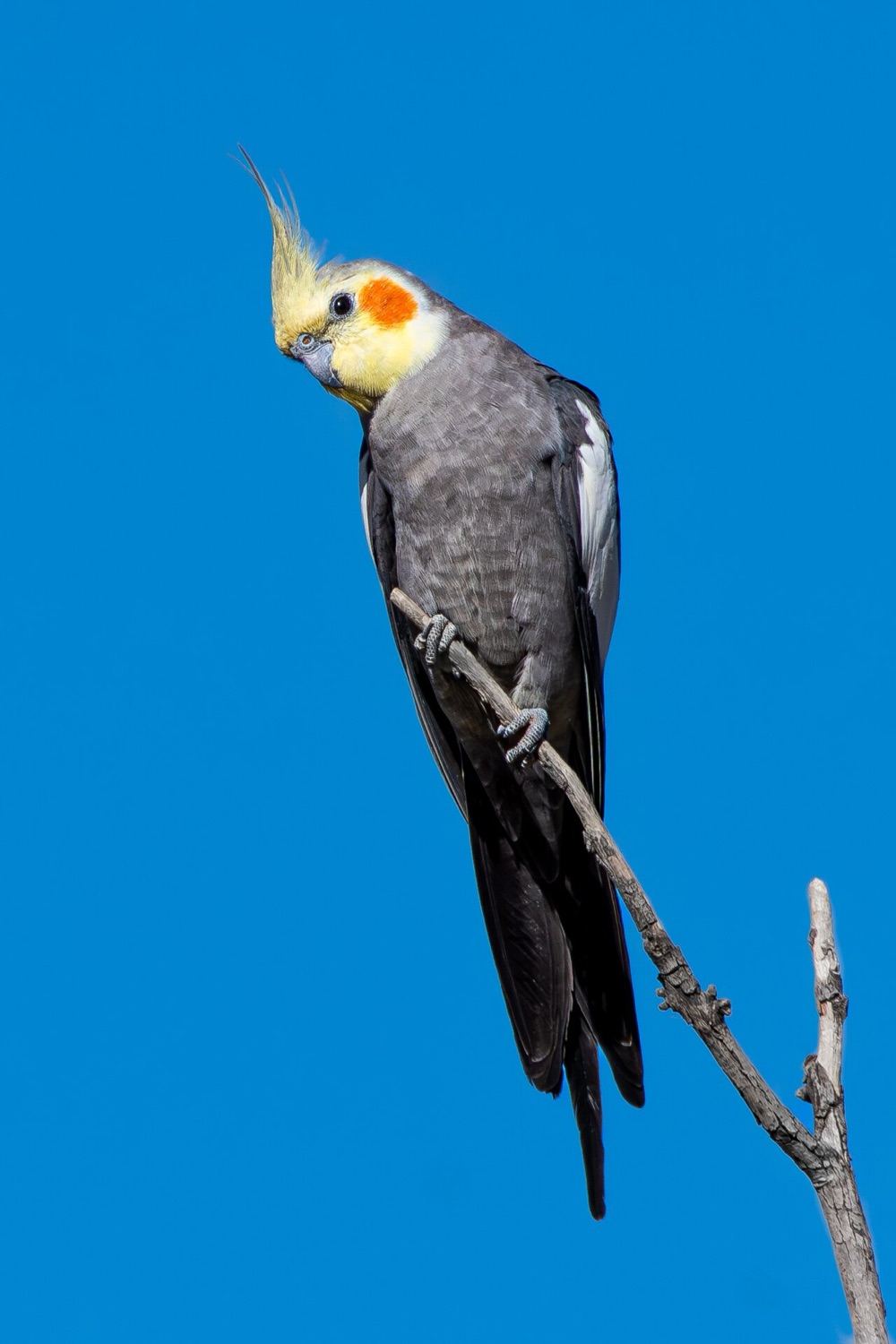
- Plumage: grey with a yellow face and crest and an orange cheek patch, brighter in males. Selective breeding has produced dozens of colour mutations, mostly mixes of pale yellow, grey and white.Animal Diversity Web, University of Michigan Museum of Zoology
- Energy
- ModerateMerck Veterinary Manual
- Indian heat
- Copes with careAnimal Diversity Web, University of Michigan Museum of Zoology
- Flats
- Suits a flatMerck Veterinary Manual
Cockatiel at a glance
| What | The rule | Source |
|---|---|---|
| Where it comes from | The Australian mainland, in open inland country near water. | Animal Diversity Web, University of Michigan Museum of Zoology |
| Size | 25 to 35 cm long, much of it tail, and about 80 to 90 g. | Animal Diversity Web, University of Michigan Museum of Zoology |
| Lifespan | Up to 20 years in Merck's table. Animal Diversity Web says captive cockatiels can live up to 25 years. | Merck Veterinary Manual |
| Legal status in India | Named in Schedule IV of the Wild Life (Protection) Act as not included in the CITES appendices, and not a native bird. | Gazette of India (copy hosted by PRS Legislative Research) |
| Male or female | Males have bright orange cheek patches bordered in white; females have duller cheeks without the white border. | Animal Diversity Web, University of Michigan Museum of Zoology |
| Noise | Vocal, but relatively quiet compared with macaws or cockatoos, with lively personalities. | Merck Veterinary Manual |
| Company | Very social: wild flocks can run to several thousand birds. | Animal Diversity Web, University of Michigan Museum of Zoology |
| Heat | Wild birds face nights of 4.5 °C and days above 43 °C, but a caged bird cannot seek shade. Pet birds from tropical and subtropical habitats are kept at 12 to 26 °C. | Animal Diversity Web, University of Michigan Museum of Zoology |
Where does the Cockatiel come from?
The cockatiel, Nymphicus hollandicus, is native to the Australian mainland. Animal Diversity Web describes it as a bird of open inland country, especially open woodland and savanna near waterholes, that feeds almost entirely on the ground, mainly on seeds, and lives in flocks that can reach several thousand birds. It is nomadic in the north of its range and migrates with the seasons in the south.
Pairs are monogamous and breed about once a year, usually after heavy spring rain, laying clutches of around five eggs. The sexes look different: males have bright orange cheek patches bordered in white, while females have duller cheeks without the white border.
Cockatiels are the second most popular pet bird after budgerigars, according to Animal Diversity Web, and selective breeding has produced dozens of colour mutations. Merck's table of popular pet birds notes that the rarer mutations might be more fragile, and gives cockatiels a lifespan of up to 20 years.
How did the Cockatiel come to India?
No source we found records when cockatiels were first brought to India. They are documented in Indian homes and shops today: a 2013 Madras Veterinary College study of pet birds around Chennai sampled droppings from 50 cockatiels, as well as budgerigars and lovebirds, and found Capillaria worm eggs in 18% and Ascaridia in 10% of the cockatiel samples.
The cockatiel is one of the four parrots Schedule IV of the Wild Life (Protection) Act names as not included in the CITES appendices, in the Gazette of 20 December 2022, and it is not native, so owners may keep it. In India its main challenges are the summer heat in a closed flat and the long evenings of room light that can keep a hen laying.
What care does a Cockatiel need?
The three things that shape a good day for this breed.
Exercise
Moderate. Daily time out of the cage with room to fly, supervised, in a room with ceiling fans off and windows and doors shut, since Merck lists fans and open windows among common causes of injury. Small pieces of food hidden around the cage give a ground-foraging bird something to do. Merck Veterinary Manual
Grooming
Cockatiels preen themselves. Merck says normal moulting is a slow, gradual process, so sudden or patchy feather loss is a reason to see a vet. Leave nail and beak trims to the vet. Merck Veterinary Manual
Training
Calm handling, stepping on and off a hand or stick, at the bird's pace. Merck's vet text warns that over-handling and an overly close bond with the owner can push hens into early egg laying. Merck Veterinary Manual
What should a Cockatiel eat?
Wild cockatiels eat mainly seeds picked up from the ground, with some fruit and small insects. For pet birds, Merck advises pellets or crumbles as the base, because a bird cannot pick out only the tasty parts, with small amounts of fresh vegetables and fruit every day and seed as an occasional food only, since it is high in fat. That matters more for cockatiels than most: Merck's vet text says chronic egg layers are typically on a high-fat, high-calorie diet and that treatment includes a move to a portion-controlled pellet diet.
Remove fresh food before it spoils, which in an Indian summer can be within hours, and wash bowls daily in hot, soapy water. Never give avocado. The RSPCA warns that seed-only diets can cause obesity, fatty liver and vitamin A and calcium deficiency, so any change from seed should be gradual and guided by an avian vet, who will also tell you how much pellet to offer.
Meals a day: young bird, newly home, the food it was weaned on, moved slowly to pellets with an avian vet's advice; adult, pellets available through the day, fresh vegetables once a day; hen that lays often, the portion-controlled pellet diet your vet sets.
Which illnesses is the Cockatiel prone to, and how are they treated?
The conditions veterinary studies and breed surveys most often report in the Cockatiel. Knowing the early signs means a vet sees it sooner.
See your vet first. This is general information from veterinary sources, not a diagnosis. Only a vet who has examined your pet can say what is wrong and prescribe treatment, and this page never gives a dose. Do not give your pet human medicine. If your pet seems very unwell, go to a 24-hour vet: find one in your city.
Chronic egg laying
See a vet soonA hen lays repeat clutches or more eggs than normal. Merck's vet text says it is common in small birds and especially in cockatiels, linked to high-fat diets, more than 12 hours of daylight, and housing with other birds or a close bond with the owner. Merck Veterinary Manual
Signs to watch for
- Eggs laid again and again, with or without a mate
- Screaming or feather damage in an over-stimulated hen
How a vet treats it
A vet bases the diagnosis on the bird's history. Merck describes cutting the day to 8 hours of light, a pellet diet, removing nest boxes, toys and any mate, and changing handling; calcium and a GnRH agonist hormone injection may be needed, and surgery to remove the oviduct if these fail.
Prevention
A steady light and cover routine, a pellet-based diet and no nest box unless your vet advises one.
Egg binding
Emergency: go to a vet nowA hen cannot pass an egg. Merck names cockatiels first among the birds commonly affected, and says these hens are usually chronic layers, often short of calcium. Merck Veterinary Manual
Signs to watch for
- Sitting on the cage floor
- Weakness and low energy
- Straining
- Blood in the droppings
How a vet treats it
Egg-bound birds often present as emergencies. A vet takes X-rays to find the egg, may give fluids and calcium, warmth and humidity and lubricate the vent; if the egg does not pass, it is removed under general anaesthetic.
Giardia
See a vet soonA gut parasite that Merck says is particularly common in cockatiels. In cockatiels especially, it can cause itching that leads to screaming. Merck Veterinary Manual
Signs to watch for
- Itching
- Screaming that is new or getting worse
How a vet treats it
A vet diagnoses the infection and usually prescribes an antiparasitic medicine given by mouth. Merck says thorough disinfection of the cage and surroundings is critical to clear the infective cysts.
Prevention
Clean water, clean bowls and regular cage disinfection.
Psittacosis (chlamydiosis)
See a vet soonA bacterial infection that can spread from birds to people. Merck names cockatiels among birds that can carry it without obvious illness, and says some cockatiels develop eye problems. Merck Veterinary Manual
Signs to watch for
- Often none in a carrier
- Runny or swollen eyes
- General signs of illness such as fluffed feathers
How a vet treats it
Merck says birds diagnosed with psittacosis are treated with prolonged antibiotic therapy, and that all new birds should be tested before joining a household flock.
Prevention
Test new birds, clean droppings regularly, and wash hands after handling birds.
Xanthomas and pituitary tumours
See a vet soonMerck says xanthomas, yellow fatty masses under the skin, are common in cockatiels and budgies, and that pituitary tumours in the brain occur most often in budgies and cockatiels. Merck Veterinary Manual
Signs to watch for
- A yellow, fatty patch on the wing tips, breastbone or chest
- A mass that ulcerates or bleeds
- Nervous signs such as blindness or seizures with a pituitary tumour
How a vet treats it
A vet examines the bird. For xanthomas, Merck says a better diet with enough provitamin A such as beta-carotene may help, and surgical removal is an option in advanced cases.
Avian gastric yeast (macrorhabdosis)
See a vet soonA stomach yeast infection that Merck says is more common in small pet birds, cockatiels among them, and spreads between birds in close contact. Merck Veterinary Manual
Signs to watch for
- Ongoing weight loss
- Bringing up food
- Weakness
- Diarrhoea
How a vet treats it
A vet examines fresh droppings under the microscope and may prescribe specific antifungal medicines.
Is it legal to keep a cockatiel in India?
Yes. The cockatiel is one of four parrots the Act names as outside its CITES lists, and we read that text in the Gazette on 22 October 2026.
Schedule IV of the Wild Life (Protection) Act, as rewritten by the 2022 amendment and published in the Gazette of India on 20 December 2022, reproduces the CITES appendices. Its entry for all parrots excludes Agapornis roseicollis, Melopsittacus undulatus, Nymphicus hollandicus and Psittacula krameri, 'which are not included in the Appendices'. Nymphicus hollandicus is the cockatiel. It is native to Australia, so it is not in the Schedules I and II that protect Indian wildlife.
That is not true of every bird sold beside it. The rose-ringed parakeet, the fourth bird in that exclusion, is native to India and listed in Schedule II, along with the mynas and munias, so it cannot be kept. Buy a cockatiel only from a pet shop registered with the State Animal Welfare Board, which the Pet Shop Rules, 2018 require of every seller, and ask for a receipt that names the species.
Why do cockatiel hens keep laying eggs, and what should a sitter do?
Chronic egg laying is the cockatiel's signature problem, and a sitter can make it better or worse.
Merck's veterinary text says excessive egg laying is common in small birds such as budgerigars and lovebirds, and especially in cockatiels. Affected hens are typically on a high-fat, high-calorie diet, are often housed with or near other birds or are closely bonded to their owner, and often have more than 12 hours of daylight a day. Merck adds that egg-bound hens are usually chronic layers, and that egg binding often arrives at the vet as an emergency.
When a vet treats it, Merck describes shortening the bird's day to 8 hours of light, moving it onto a pellet diet, removing nest boxes, toys and any mate it bonds with, and changing how the owner handles it. The vet may add calcium and a hormone injection (a GnRH agonist) to reduce reproductive hormones, and if these fail, surgery to remove the oviduct may be needed. All of this is the vet's call, not the owner's or the sitter's.
For a sitter, the practical side is simple: keep the cover and lights-off times exactly as the owner writes them, so the bird's day does not stretch into a long evening of television and room lights. Do not add a nest box or let the hen nest in a box or drawer during out-of-cage time. Log any egg laid, with the date, and photograph it. A hen sitting on the cage floor, straining or passing blood is an emergency.
What does a sitter's cockatiel visit look like?
Two visits a day keep food fresh and give a sociable bird company at both ends of its day.
Arrive
Room temperature first, then watch from a distance: crest, posture, breathing, feet gripping the perch. A cockatiel sitting on the floor is a warning sign. Merck Veterinary Manual
Water and food
Fresh water, pellets as the owner measures them, a little washed vegetable, and yesterday's fresh food thrown out. Merck Veterinary Manual
Droppings and floor
Compare droppings with the owner's photo, check the paper for eggs, and change it. Merck Veterinary Manual
Company
Talk to the bird and, if the owner allows, supervised time out of the cage with fans off and windows shut. Keep handling to what the owner allows: Merck links over-handling to early egg laying. Merck Veterinary Manual
Evening
Cover on and lights off at the owner's time, so the day stays as long as the vet or owner set it. Merck Veterinary Manual
Before leaving
Doors latched, the room shaded, the visit logged with any eggs, and the daily photo update sent.
Which cockatiel health problems should a sitter know about?
These are the problems the Merck Veterinary Manual links to cockatiels. Notice, note and call the vet; never treat.
If A hen on the cage floor, weak, straining, or with bloody droppings.
Possible egg binding, which Merck's vet text says often presents as an emergency. Keep her warm and quiet in a covered carrier and go to the vet now. Merck Veterinary Manual
If A new egg every day or two, or a hen guarding a corner of the cage.
Log it and tell the owner; mention it to the vet at the next contact. Do not remove eggs unless the owner's plan says to. Merck Veterinary Manual
If Screaming, scratching or picking at the feathers. Merck says Giardia is particularly common in cockatiels and can cause itching that leads to screaming.
Call the vet the same day; it needs a vet's diagnosis and an antiparasitic medicine the vet chooses. Merck Veterinary Manual
If Runny, swollen or half-closed eyes. Merck says some cockatiels with psittacosis develop eye problems.
Call the vet, wash your hands after handling the bird, and keep it apart from other birds until the vet has seen it. Merck Veterinary Manual
If A yellow, fatty patch on the wing tips, breastbone or chest. Xanthomas are common in cockatiels and budgies.
Photograph it and tell the owner; see the vet sooner if it ulcerates or bleeds. Merck Veterinary Manual
If Panting or wings held out from the body on a hot day.
The bird is probably too hot: move it to a shaded, cooler room with air moving and call the vet. Merck Veterinary Manual
How does a cockatiel cope with Indian heat?
Wild cockatiels live through a hard climate: Animal Diversity Web records nights as low as 4.5 °C and summer heat above 43 °C, and notes they must keep their body temperature above 38 °C. They manage it by moving: foraging on the ground, roosting in trees and favouring woodland near waterholes. A caged bird has none of those choices, which is why the RSPCA keeps pet birds from tropical and subtropical habitats at 12 to 26 °C, out of direct sun and draughts.
From March to June, keep the cage in the coolest shaded room of the flat, never on a balcony or beside a west-facing window, with water topped up at each visit. Air should move in the room without a fan or cooler blowing straight at the cage. The India Meteorological Department declares a heat wave in the plains from 40 °C, and on those days a sitter staying in the home can keep the fan running through power cuts.
In the monsoon, bring any balcony cage indoors. Merck says wild birds can pass roundworms to parrots kept outdoors, and around Chennai, Madras Veterinary College found Capillaria worm eggs in 18% of cockatiel dropping samples from shops and homes. Ask your avian vet whether your bird needs dropping tests.
Cockatiel care plan to leave with your sitter
What to write down before you go, so the bird's day does not change.
Do
- Write the exact cover-on and lights-off times, and ask the sitter to keep them every evening. Merck Veterinary Manual
- Leave the usual pellets for the whole trip and a list of vegetables the bird already eats. Merck Veterinary Manual
- Say whether the bird is a hen, how often she lays, and what your vet has told you to do with eggs. Merck Veterinary Manual
- Leave your avian vet's number, the nearest 24-hour vet and a carrier the bird is used to.
- Show the sitter the flight room rules at the meet and greet: fans off, windows shut, open water covered. Merck Veterinary Manual
Don’t
- Don't leave a nest box in the cage while you are away unless your vet advises it. Merck Veterinary Manual
- Don't switch the bird to a new food just before you leave; any change should be slow and vet-guided. RSPCA
- Don't ask the sitter to give sunflower seed or other fatty treats to make up for your absence. Merck Veterinary Manual
- Don't leave the cage near the kitchen, where nonstick pan fumes can kill a bird. MSD Veterinary Manual
What do people get wrong about cockatiels?
You may have read
A cockatiel is a short-lived bird.
Myth
What the sources say
Merck gives up to 20 years, and Animal Diversity Web up to 25 years in captivity, so a cockatiel bought as a child's pet can outlast school and college. Merck Veterinary Manual
You may have read
Egg laying without a mate is harmless.
Myth
What the sources say
Merck says chronic laying is common in cockatiels and that egg-bound hens are usually chronic layers. Egg binding is often an emergency. Merck Veterinary Manual
You may have read
A cockatiel that screams is just bored.
Myth
What the sources say
Sometimes. But Merck says Giardia, common in cockatiels, can cause itching that leads to screaming, so a vet check comes first. Merck Veterinary Manual
You may have read
Rare colours are just as hardy.
Myth
What the sources say
Merck's table notes that rarer colour mutations might be more fragile. Merck Veterinary Manual
Which Petym service suits a cockatiel?
If A healthy cockatiel or pair, a trip of a few days to two weeks
Drop-in visits twice a day, with the light routine kept. Drop-in visits
If A hen that lays often, a heatwave, or a trip longer than two weeks
Overnight pet sitting, so the evening routine, the cooling and company stay steady. Overnight sitting
If A bird on medicine or recovering from egg binding
Special-needs care, with the vet's plan followed and logged. Special-needs care
If Deciding between visits and a stay
Compare the two for your trip length. Drop-in visits or overnight sitting?
Breeds with similar care needs to the Cockatiel
Going away soon? Plan your pet’s care first.
Petym's bookings open for dogs and cats first. For every other pet, the free going-away checklist covers food, water, heat and what to leave written down before you travel.


Questions owners ask
Is a cockatiel legal to keep in India?
- Yes. Schedule IV of the Wild Life (Protection) Act, as amended in 2022, names Nymphicus hollandicus, the cockatiel, as not included in the CITES appendices, and it is not a native bird. Buy from a pet shop registered with your State Animal Welfare Board and keep the receipt.
How long do cockatiels live?
- Merck's table gives up to 20 years, and Animal Diversity Web says captive cockatiels can live up to 25 years, with wild birds living 10 to 14. Plan for a pet that may be with you for two decades, including care every time you travel.
Why does my cockatiel keep laying eggs?
- Merck says chronic egg laying is especially common in cockatiels, linked to high-fat diets, long days of more than 12 hours of light, and close bonds with other birds or the owner. A vet may shorten the day, change the diet, remove nest boxes and sometimes use hormone treatment.
Can I leave my cockatiel alone for a weekend?
- Not without visits. A cockatiel needs fresh food and water daily, and in Indian heat fresh food spoils within hours. A sitter visiting twice a day keeps the bird fed, checks for eggs and signs of illness, and keeps the cover and light routine that matters for hens.
Why is my cockatiel screaming?
- Cockatiels are vocal, and loneliness or boredom can cause screaming. But Merck says Giardia, a gut parasite particularly common in cockatiels, can cause itching that leads to screaming. If the screaming is new or comes with scratching or feather damage, see an avian vet first.
How hot is too hot for a cockatiel?
- Wild cockatiels face days above 43 °C, but they can move to shade and water; a caged bird cannot. The RSPCA keeps pet birds from tropical and subtropical habitats at 12 to 26 °C. A cockatiel panting or holding its wings out is too hot and needs a cooler room and a vet's advice.
How can I tell a male cockatiel from a female?
- In normal grey birds, Animal Diversity Web says males have bright orange cheek patches bordered in white, and females duller, burnt-orange patches without the white border. Colour mutations can make this harder; an avian vet can confirm the sex if you need to know.
Keep reading
- Bird sitting while you're awayVisits, fumes and heat for any pet bird.
- Which birds are legal pets in India?
- Is it legal to keep a parrot in India?
- Budgerigar care in IndiaThe other Australian parrot named outside the lists.
- Peach-faced lovebird care
- Signs your pet needs a vet now
- Summer pet care in India
- What to leave for your pet sitter
Services that help
Free tools for this
Words on this page, explained
Keep exploring
Other dog breeds
Sources
Each source was opened and read on the date shown. How Petym checks its sources
- Animal Diversity Web, University of Michigan Museum of Zoology: Nymphicus hollandicus: cockatiel (Newmyer, 2011) (opens in a new tab)
- Merck Veterinary Manual: Table: Popular pet birds (opens in a new tab)
- Gazette of India (copy hosted by PRS Legislative Research): The Wild Life (Protection) Amendment Act, 2022 (No. 18 of 2022), published 20 December 2022 (opens in a new tab)
- Merck Veterinary Manual: Reproductive diseases of pet birds (professional version, last updated May 2026) (opens in a new tab)
- Merck Veterinary Manual: Household Hazards for Pet Birds (opens in a new tab)
- Merck Veterinary Manual: Skin and feather disorders of pet birds (pet owner version, full review May 2026) (opens in a new tab)
Show all 19 sourcesShow fewer
- Merck Veterinary Manual: Feeding a pet bird (full review April 2025) (opens in a new tab)
- RSPCA: Bird diet (opens in a new tab)
- Merck Veterinary Manual: Reproductive disorders of pet birds (pet owner version, full review May 2026) (opens in a new tab)
- Merck Veterinary Manual: Digestive disorders of pet birds (pet owner version, full review May 2026) (opens in a new tab)
- Merck Veterinary Manual: Disorders affecting multiple body systems of pet birds (psittacosis, polyomavirus) (opens in a new tab)
- Merck Veterinary Manual: Illness in Pet Birds (opens in a new tab)
- Merck Veterinary Manual: Cancers and tumors of pet birds (pet owner version, full review May 2026) (opens in a new tab)
- Ministry of Environment, Forest and Climate Change (Gazette copy on AWBI's site): Prevention of Cruelty to Animals (Pet Shop) Rules, 2018: G.S.R. 844(E), 6 September 2018 (opens in a new tab)
- Merck Veterinary Manual: Introduction to disorders and diseases of pet birds (opens in a new tab)
- MSD Veterinary Manual: Toxicoses of Pet Birds (updated May 2026) (opens in a new tab)
- RSPCA: Bird environment (opens in a new tab)
- India Meteorological Department: FAQ on heat wave (opens in a new tab)
- International Journal of Veterinary Science (2013), Madras Veterinary College: Prevalence of endoparasites in captive psittacine birds belonging to pet shops and private residences in and around Chennai (opens in a new tab)