Peach-faced lovebird care in India: the law, the heat and a sitter's visit
Updated By PetymFacts checked against official sources on
Quick answer
The peach-faced lovebird is the only lovebird the Wild Life (Protection) Act names as outside its CITES lists, so it is legal to keep in India without registration. Other lovebirds, such as Fischer's and masked lovebirds, are Schedule IV species that must be registered. A pair needs a sitter at least twice a day while you travel.
Each visit needs clean water, because wild peach-faced lovebirds drink several times a day, fresh food, a look at the feathers and droppings, and no nest box. Hens can become egg bound, an emergency, and lovebirds are among the parrots that still get beak and feather disease. Call the vet early for any change.

- Origin
- South-western Africa: Namibia, south-west Angola and north-west South AfricaAnimal Diversity Web, University of Michigan Museum of Zoology
- Adult weight
- 0.048 to 0.061 kg (48 to 61 g; females are usually a little heavier)Animal Diversity Web, University of Michigan Museum of Zoology
- Adult length
- 15 cm (about 15 cm)Animal Diversity Web, University of Michigan Museum of Zoology
- Lifespan
- 15 to 25 yearsAnimal Diversity Web, University of Michigan Museum of Zoology
- Coat
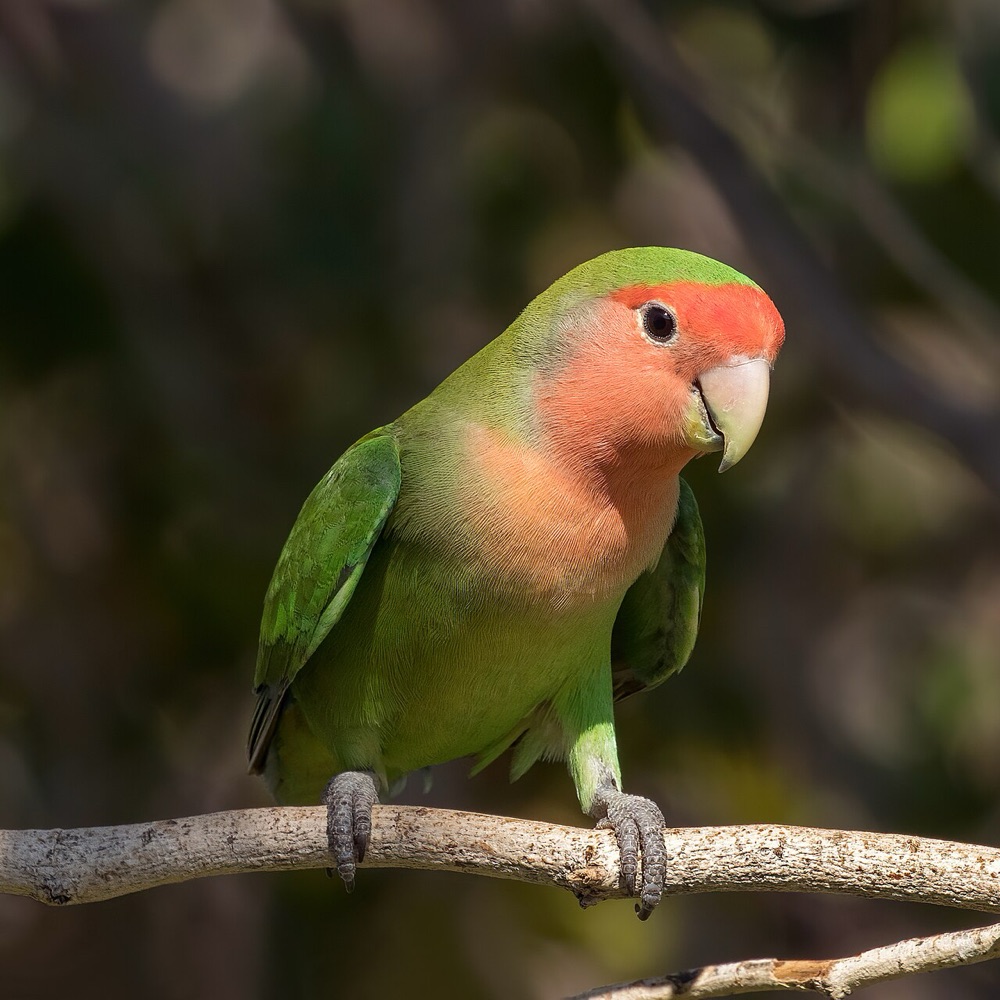
- Plumage: mainly green with a rosy pink face and throat; females look very like males, only slightly duller.Animal Diversity Web, University of Michigan Museum of Zoology
- Indian heat
- Copes with careAnimal Diversity Web, University of Michigan Museum of Zoology
- Flats
- Suits a flatMerck Veterinary Manual
Peach-faced lovebird at a glance
| What | The rule | Source |
|---|---|---|
| Where it comes from | South-western Africa: north-west South Africa, western Namibia and south-west Angola, in dry country near permanent water. | Animal Diversity Web, University of Michigan Museum of Zoology |
| Size | About 15 cm long and 48 to 61 g; females are usually a little heavier. | Animal Diversity Web, University of Michigan Museum of Zoology |
| Lifespan | 15 to 25 years in captivity, according to Animal Diversity Web; Merck gives up to 20 years for lovebirds. | Animal Diversity Web, University of Michigan Museum of Zoology |
| Legal status in India | The only lovebird named in Schedule IV of the Wild Life (Protection) Act as not included in the CITES appendices. | Gazette of India (copy hosted by PRS Legislative Research) |
| Male or female | Hard to tell by eye: females are very similar to males, only slightly duller. | Animal Diversity Web, University of Michigan Museum of Zoology |
| Temperament | Sweet voices and not usually loud, but Merck notes lovebirds can be moody in the breeding season. | Merck Veterinary Manual |
| Water | Wild birds drink several times a day to cope with a hot, arid home. | Animal Diversity Web, University of Michigan Museum of Zoology |
| Company | Very social: wild birds move in flocks of 5 to 20, and up to about 100 when grass seed ripens. | Animal Diversity Web, University of Michigan Museum of Zoology |
Where does the Peach-faced lovebird come from?
The peach-faced lovebird, also called the rosy-faced lovebird, is Agapornis roseicollis, a small parrot of south-western Africa. Animal Diversity Web places its range across north-west South Africa, western Namibia and south-west Angola, in dry country from desert edges to sparsely wooded land, up to about 1,500 m, always near permanent standing water.
Wild birds travel in flocks of 5 to 20, gathering in groups of around a hundred when grass seed ripens, and eat mainly seeds, especially of native trees such as Albizia and Acacia, along with flowers. They often roost and nest in the large communal nests of sociable weavers and sparrow-weavers. In captivity a hen builds her own nest, carrying strips of bark tucked into the feathers of her rump.
The species has a long history in aviculture: Animal Diversity Web dates the first record of it in captivity to 1869. Merck's table of popular pet birds lists it among the four or five lovebird species commonly kept, along with the black-masked, blue-masked and Fischer's lovebirds.
How did the Peach-faced lovebird come to India?
No source we found records when peach-faced lovebirds first reached India. They are documented in Indian homes and pet shops: a 2013 Madras Veterinary College study around Chennai sampled droppings from 50 lovebirds, called African lovebirds in the paper, alongside budgerigars and cockatiels, and found Capillaria worm eggs in 22% and Ascaridia in 12% of the lovebird samples.
The law treats lovebirds differently by species. The Gazette of 20 December 2022 names Agapornis roseicollis in Schedule IV as not included in the CITES appendices, while the other lovebirds fall within the general parrot entry of Appendix II. Under the Living Animal Species (Reporting and Registration) Rules, 2024, those other species must be registered with the state; the peach-faced lovebird, on our reading, need not be.
What care does a Peach-faced lovebird need?
The three things that shape a good day for this breed.
Exercise
High. Wild lovebirds move in flocks and drink several times a day. Give daily supervised flight in a room with ceiling fans off and windows and doors shut, which Merck lists among the common causes of injury to pet birds. Merck Veterinary Manual
Grooming
Lovebirds preen themselves. Watch the head and back: Merck lists feather loss in places a bird cannot reach as a sign of beak and feather disease, so bare patches there need a vet. Merck Veterinary Manual
Training
Patient, calm handling at the bird's pace. Merck notes lovebirds can be moody in the breeding season, so expect a hen guarding a nest to be less willing to step up. Merck Veterinary Manual
What should a Peach-faced lovebird eat?
Wild peach-faced lovebirds eat mainly seeds and some flowers, and drink several times a day. For pet birds, Merck advises pellets or crumbles as the base, food available all day, small amounts of fresh vegetables and fruit daily, and seed as an occasional food only because it is high in fat. The RSPCA warns that seed-only diets can lead to obesity, fatty liver and vitamin A and calcium deficiency, and calcium matters for hens: Merck's vet text links egg binding to chronic laying and calcium deficiency.
In an Indian summer, fresh food spoils within hours and seed husks foul water quickly, so wash bowls daily in hot, soapy water and give two water sources. Never give avocado. Any move from seed to pellets should be slow and guided by an avian vet, who will also say how much to offer.
Meals a day: young bird, newly home, the food it was weaned on, changed slowly with an avian vet's advice; adult, pellets available through the day, fresh vegetables once a day, water refilled at every visit.
Which illnesses is the Peach-faced lovebird prone to, and how are they treated?
The conditions veterinary studies and breed surveys most often report in the Peach-faced lovebird. Knowing the early signs means a vet sees it sooner.
See your vet first. This is general information from veterinary sources, not a diagnosis. Only a vet who has examined your pet can say what is wrong and prescribe treatment, and this page never gives a dose. Do not give your pet human medicine. If your pet seems very unwell, go to a 24-hour vet: find one in your city.
Psittacine beak and feather disease (circovirus)
See a vet soonA viral disease of parrots. Merck says it still occurs in African grey parrots, Eclectus parrots, lovebirds and lorikeets. Merck Veterinary Manual
Signs to watch for
- Feather loss in places the bird cannot reach, such as the top of the head
- Abnormal new pin feathers
- Loss of powder down
How a vet treats it
Merck says there is no cure. Euthanasia is often recommended, though supportive care can improve the quality and length of life; infected birds should be kept apart from others.
Prevention
Merck mentions diagnostic testing to screen birds for infection; ask your vet about testing a new bird before it meets yours.
Egg binding
Emergency: go to a vet nowA hen cannot pass an egg. Merck lists lovebirds among the birds most commonly affected, and its vet text says these hens are usually chronic layers, often with calcium deficiency. Merck Veterinary Manual
Signs to watch for
- Sitting on the cage floor
- Weakness and low energy
- Straining
- Blood in the droppings
How a vet treats it
Egg-bound birds often present as emergencies. A vet takes X-rays to find the egg, may give fluids, calcium, warmth and humidity and lubricate the vent; if the egg does not pass, it is removed under general anaesthetic.
Chronic egg laying
See a vet soonRepeat clutches or more eggs than normal. Merck's vet text says it is common in small birds including lovebirds, linked to high-fat diets, more than 12 hours of daylight and housing near other birds. Merck Veterinary Manual
Signs to watch for
- Eggs laid again and again
- A hen carrying nesting strips in her rump feathers outside the breeding plan
How a vet treats it
A vet may shorten the bird's day to 8 hours of light, move it to a pellet diet and remove nest boxes, toys and any mate; calcium and a GnRH agonist hormone injection may be needed, and surgery if these fail.
Prevention
A steady light routine, a pellet-based diet and no nest box unless you mean to breed.
Avian gastric yeast (macrorhabdosis)
See a vet soonA stomach yeast infection that Merck says is more common in small pet birds such as lovebirds, spreading between birds in close contact. Merck Veterinary Manual
Signs to watch for
- Ongoing weight loss
- Bringing up food
- Weakness
- Diarrhoea
How a vet treats it
A vet examines fresh droppings under the microscope and may prescribe specific antifungal medicines.
Roundworms and other gut parasites
See a vet soonWorms picked up from contaminated food. Around Chennai, Madras Veterinary College found Capillaria in 22% and Ascaridia in 12% of lovebird dropping samples from shops and homes, and Merck says wild birds can pass roundworms to parrots kept outdoors. Merck Veterinary Manual
Signs to watch for
- Weight loss
- Weakness
- Ruffled feathers and poor appetite
How a vet treats it
A vet examines droppings for worm eggs. Merck says vets usually prescribe deworming medicine by mouth, and that in warm climates routine deworming is often recommended for birds in outdoor cages.
Prevention
Keep cages indoors, away from wild birds, and ask your vet about regular dropping tests.
Is it legal to keep a lovebird in India?
It depends on the species. We read the Gazette text on 22 October 2026: the peach-faced lovebird is named as outside the lists, and the other lovebirds are not.
Schedule IV of the Wild Life (Protection) Act, as rewritten by the 2022 amendment and published in the Gazette of India on 20 December 2022, reproduces the CITES appendices. Its Appendix II entry covers all parrots (PSITTACIFORMES spp.) except those in Appendix I and Agapornis roseicollis, Melopsittacus undulatus, Nymphicus hollandicus and Psittacula krameri, 'which are not included in the Appendices'. Agapornis roseicollis is the peach-faced, or rosy-faced, lovebird. It is African, so it is not among the native birds in Schedules I and II either.
Every other lovebird species stays inside that parrot entry, which makes it a Schedule IV species. The Living Animal Species (Reporting and Registration) Rules, 2024, G.S.R. 145(E) of 28 February 2024, require anyone who possesses a living specimen of a Schedule IV species to apply for registration within thirty days of getting it, and to report each birth within seven days. So a Fischer's or masked lovebird bought today must be registered with the state's Management Authority; a peach-faced lovebird does not appear to be covered.
India's own birds are a separate case: the Gazette lists the rose-ringed parakeet, the mynas and the munias in Schedule II, and the Act treats trapping or keeping them as hunting. Buy only from a pet shop registered with the State Animal Welfare Board under the Pet Shop Rules, 2018, and ask for the species name on the receipt.
Is my lovebird a peach-faced lovebird?
Shops often sell every lovebird under one name. The species, not the label, decides what the law asks of you.
If The receipt or the seller names Agapornis roseicollis, peach-faced or rosy-faced lovebird
Named in Schedule IV as outside the appendices. No registration under the 2024 Rules on our reading. Gazette of India (copy hosted by PRS Legislative Research)
If It is sold as a Fischer's, masked, black-cheeked or another lovebird
A Schedule IV species: apply to register it within thirty days of getting it, and report chicks within seven days of hatching. Exotic Bird Registration in India: African Greys and Others Ministry of Environment, Forest and Climate Change
If Nobody can tell you the species
Do not buy until someone can. Ask an avian vet or your state forest department to identify the bird. Which Birds Are Legal Pets in India? Native vs Exotic Gazette of India (copy hosted by PRS Legislative Research)
If The bird is a green parakeet or a myna sold alongside the lovebirds
Probably a protected native bird listed in Schedule II. Do not buy it. Is It Legal to Keep a Parrot in India? The 2022 Law Gazette of India (copy hosted by PRS Legislative Research)
How does a peach-faced lovebird cope with Indian heat?
Better than a cold-climate bird, but only with water and shade it can always reach.
The peach-faced lovebird comes from the dry south-west of Africa, from desert edges to sparsely wooded land, always close to permanent standing water. Animal Diversity Web says wild birds drink several times a day to cope with the hot, arid conditions. That is the key fact for an Indian summer: a lovebird whose water bowl is fouled with seed husks or droppings by midday is in trouble long before the next visit. Leave two water sources, and ask the sitter to wash and refill both at every visit.
Desert origins do not make a caged bird heat proof. The RSPCA keeps pet birds from tropical and subtropical habitats at 12 to 26 °C, out of direct sun, and Merck says a bird that pants or holds its wings away from its body is probably too hot. From March to June, keep the cage in a shaded inner room, never on a balcony or against a west-facing window, with air moving in the room but not blowing straight at the birds.
In the monsoon, bring balcony cages indoors. In a 2013 Madras Veterinary College study of pet birds around Chennai, Capillaria worm eggs turned up in 22% of lovebird dropping samples from shops and homes, and Merck says wild birds can pass roundworms to parrots kept outdoors. Ask your avian vet about dropping tests.
What does a sitter's lovebird visit look like?
Arrive
Room temperature and sun on the cage first. Then watch both birds from a distance: posture, breathing, whether either sits on the floor. Merck Veterinary Manual
Water
Wash and refill every water bowl or bottle; in summer this is the most important job of the visit. Animal Diversity Web, University of Michigan Museum of Zoology
Food
Pellets topped up as the owner measures them, a little washed vegetable, and old fresh food removed. Merck Veterinary Manual
Feathers and floor
Look for bare patches on the head, odd new feathers, and eggs or shredded nesting strips on the cage floor. Merck Veterinary Manual
Hands in the cage
Move slowly and use the owner's routine. Lovebirds can be moody in the breeding season and may guard the cage or a mate. Merck Veterinary Manual
Before leaving
Doors latched and checked, curtains drawn on sunny windows, the visit logged and the daily photo update sent.
Which lovebird health problems should a sitter know about?
These are problems the Merck Veterinary Manual names in lovebirds. The sitter notices and calls; the vet diagnoses and treats.
If A hen on the cage floor, weak, straining or with blood in the droppings.
Possible egg binding, which Merck says commonly affects lovebirds and often presents as an emergency. Keep her warm and quiet in a covered carrier and go to the vet now. Merck Veterinary Manual
If Feather loss on the top of the head or other places the bird cannot reach, or misshapen new feathers.
Possible psittacine beak and feather disease, which still occurs in lovebirds. Keep the bird apart from others if you can and call the vet. Merck Veterinary Manual
If Weight loss, bringing up food, weakness or diarrhoea.
Call the vet the same day. Avian gastric yeast, more common in small birds such as lovebirds, causes these signs. Merck Veterinary Manual
If Eggs laid one after another, or a hen carrying strips of paper or bark tucked into her rump feathers.
She is nesting: wild hens carry nest material this way. Remove nest boxes as the owner directs, log any eggs and tell the owner. Animal Diversity Web, University of Michigan Museum of Zoology
If One bird attacking the other, with blood or missing feathers.
Separate them into two cages if the owner has left a spare, and call the owner and the vet about any wound. RSPCA
If Panting or wings held out from the body on a hot day.
Move the cage to a cooler, shaded room with air moving and call the vet. Merck Veterinary Manual
Peach-faced lovebird sitter checklist
- The species name from the receipt, and the registration certificate if any of your lovebirds is another species. Ministry of Environment, Forest and Climate Change
- How many birds there are, which are pairs, and any bird that must be kept apart. RSPCA
- A second water bowl or bottle for summer, and a note to refill both at every visit. Animal Diversity Web, University of Michigan Museum of Zoology
- Whether nest boxes stay in or out, and what to do with eggs. Merck Veterinary Manual
- A photo of each bird's head and back as normal, so new feather loss stands out. Merck Veterinary Manual
- A spare cage and a carrier, your avian vet's number and the nearest 24-hour vet.
- The cover and lights-off times, and the room that stays coolest in a power cut.
Does a lovebird need a partner?
The name suggests pairs, and the species is genuinely social: wild peach-faced lovebirds live in flocks, roost at night in the communal nests of weaver birds. The RSPCA says most birds do better with the company of other birds, each with its own space to rest, while some hand-reared birds prefer people.
Two birds do not always get on, and the RSPCA advises introducing new birds gradually and watching closely. Merck notes lovebirds can be moody in the breeding season. Keep a spare cage, and tell your sitter how your birds normally behave with each other, so a fight is recognised for what it is.
Which Petym service suits peach-faced lovebirds?
| Suggested care | Why | |
|---|---|---|
| A healthy pair, a few days | Drop-in visits twice a day | Fresh water and food at both ends of the day, and a check for eggs and feather changes |
| A heatwave or a trip over two weeks India Meteorological Department | Overnight pet sitting | Someone at home to keep water clean and the room cool through power cuts |
| A bird on medicine or after egg binding | Special-needs care | The vet's plan followed as written and logged |
| First booking | A free meet and greet | The sitter meets the birds, sees the latches and learns which bird is which |
Breeds with similar care needs to the Peach-faced lovebird
Going away soon? Plan your pet’s care first.
Petym's bookings open for dogs and cats first. For every other pet, the free going-away checklist covers food, water, heat and what to leave written down before you travel.


Questions owners ask
Are lovebirds legal in India?
- The peach-faced lovebird, Agapornis roseicollis, is named in Schedule IV of the Wild Life (Protection) Act as not included in the CITES appendices, so it can be kept. Other lovebirds, such as Fischer's and masked lovebirds, are Schedule IV species, and the 2024 Rules require owners to register them within thirty days.
Do I need to register a peach-faced lovebird?
- Not on our reading. The Living Animal Species Rules, 2024 cover living specimens of species listed in Schedule IV, and the peach-faced lovebird is named there only as not included in the appendices. If you want certainty, write to your state's Chief Wildlife Warden and keep the reply.
How long do peach-faced lovebirds live?
- Animal Diversity Web gives 15 to 25 years in captivity, and Merck's table gives up to 20 years for lovebirds. That is far longer than many buyers expect, so plan for care during every trip for a decade or two.
Can I keep just one lovebird?
- You can, but it will rely on you for company. The RSPCA says most birds do better with other birds, and wild peach-faced lovebirds live in flocks. A single lovebird needs daily time with people, and longer sitter visits while you are away.
How do I keep a lovebird cool in summer?
- Keep the cage in a shaded inner room, away from balconies and sunny windows, with air moving but not blowing at the birds. Wild peach-faced lovebirds drink several times a day, so give two clean water sources and refill them at every visit. Panting or wings held out mean the bird is too hot.
Why is my lovebird losing feathers on its head?
- A bird cannot pull out feathers on its own head, so loss there points to something else. Merck lists feather loss in places the bird cannot reach as a sign of psittacine beak and feather disease, which still occurs in lovebirds and has no cure. See an avian vet promptly.
How can I tell a male peach-faced lovebird from a female?
- Usually not by eye. Animal Diversity Web says females are very similar to males and only slightly duller, and slightly heavier on average. A hen may give herself away by carrying nest material in her rump feathers; an avian vet can confirm the sex.
Keep reading
- Bird sitting while you're awayVisits, fumes and heat for any pet bird.
- Exotic bird registration in IndiaFor lovebirds other than the peach-faced.
- Which birds are legal pets in India?
- Budgerigar care in India
- Cockatiel care in India
- Animal cruelty law in India
- Summer pet care in India
- Drop-in visits or overnight sitting
Services that help
Free tools for this
Words on this page, explained
Keep exploring
Other dog breeds
Sources
Each source was opened and read on the date shown. How Petym checks its sources
- Animal Diversity Web, University of Michigan Museum of Zoology: Agapornis roseicollis: rosy-faced lovebird (Vonck, 2005) (opens in a new tab)
- Merck Veterinary Manual: Table: Popular pet birds (opens in a new tab)
- Gazette of India (copy hosted by PRS Legislative Research): The Wild Life (Protection) Amendment Act, 2022 (No. 18 of 2022), published 20 December 2022 (opens in a new tab)
- Ministry of Environment, Forest and Climate Change: Living Animal Species (Reporting and Registration) Rules, 2024: G.S.R. 145(E), 28 February 2024 (Gazette copy) (opens in a new tab)
- Merck Veterinary Manual: Household Hazards for Pet Birds (opens in a new tab)
- Merck Veterinary Manual: Skin and feather disorders of pet birds (pet owner version, full review May 2026) (opens in a new tab)
Show all 19 sourcesShow fewer
- Merck Veterinary Manual: Feeding a pet bird (full review April 2025) (opens in a new tab)
- RSPCA: Bird diet (opens in a new tab)
- Merck Veterinary Manual: Reproductive diseases of pet birds (professional version, last updated May 2026) (opens in a new tab)
- Merck Veterinary Manual: Reproductive disorders of pet birds (pet owner version, full review May 2026) (opens in a new tab)
- Merck Veterinary Manual: Digestive disorders of pet birds (pet owner version, full review May 2026) (opens in a new tab)
- MP Forest Department (copy of the Act, pre-2022 text): The Wild Life (Protection) Act, 1972 (opens in a new tab)
- Ministry of Environment, Forest and Climate Change (Gazette copy on AWBI's site): Prevention of Cruelty to Animals (Pet Shop) Rules, 2018: G.S.R. 844(E), 6 September 2018 (opens in a new tab)
- Merck Veterinary Manual: Introduction to disorders and diseases of pet birds (opens in a new tab)
- Merck Veterinary Manual: Illness in Pet Birds (opens in a new tab)
- RSPCA: Company: living with other birds (opens in a new tab)
- RSPCA: Bird environment (opens in a new tab)
- India Meteorological Department: FAQ on heat wave (opens in a new tab)
- International Journal of Veterinary Science (2013), Madras Veterinary College: Prevalence of endoparasites in captive psittacine birds belonging to pet shops and private residences in and around Chennai (opens in a new tab)