Budgerigar care in India: the law, the heat and a budgie's health
Updated By PetymFacts checked against official sources on
Quick answer
Budgerigars are small Australian parrots that are legal to keep in India: the Wild Life (Protection) Act names them as outside its CITES lists. A pair copes at home while you travel if a sitter visits twice a day for fresh food and water, a look at droppings and feathers, and safe flight with the fans off.
Budgies are prone to fatty lumps, crusty beaks from mites, and egg binding in hens. In Indian heat they need a shaded, airy room and water at every visit. A sitter who sees a lump, a crust, a hen straining or a bird sitting on the cage floor calls the vet the same day.
- Origin
- Mainland Australia; first brought to England in 1840Australian Museum
- Adult weight
- 0.03 kg (an average of about 30 g; Animal Diversity Web gives no range)Animal Diversity Web, University of Michigan Museum of Zoology
- Adult length
- 17 to 18 cmAustralian Museum
- Lifespan
- 5 to 10 yearsMerck Veterinary Manual
- Coat
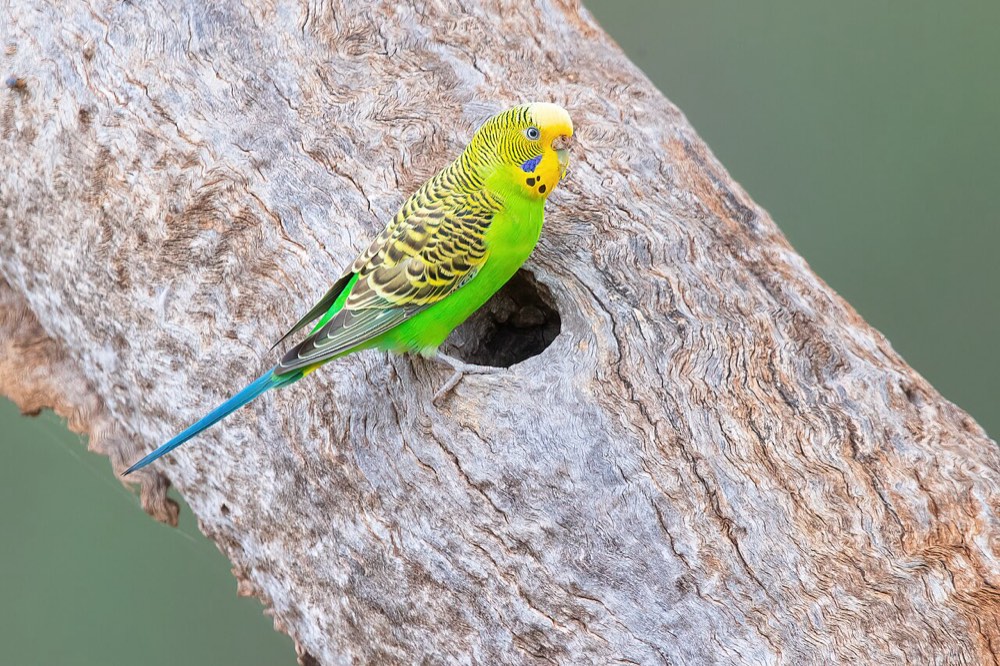
- Plumage: wild birds are green and yellow with black barring above. Captive breeding has produced white, blue, yellow, mauve, olive and grey forms.Australian Museum
- Indian heat
- Copes with careAnimal Diversity Web, University of Michigan Museum of Zoology
- Flats
- Suits a flatMerck Veterinary Manual
Budgerigar at a glance
| What | The rule | Source |
|---|---|---|
| Where it comes from | Mainland Australia, where wild budgies are nomadic and seldom far from water. | Australian Museum |
| Size | 17 to 18 cm long; Animal Diversity Web gives an average weight of about 30 g. | Animal Diversity Web, University of Michigan Museum of Zoology |
| Lifespan | 5 to 10 years in Merck's table; the Royal Veterinary College says 10 to 15 years in captivity. | Merck Veterinary Manual |
| Legal status in India | Named in Schedule IV of the Wild Life (Protection) Act as not included in the CITES appendices, and not a native bird. | Gazette of India (copy hosted by PRS Legislative Research) |
| Male or female | In adults the cere above the beak is blue in males and pink-brown in females, though it varies in some colours and in young birds. | Royal Veterinary College, Beaumont Sainsbury Animal Hospital (Internet Archive copy) |
| Company | A flock bird: the RVC advises pairing it with another bird of the same species. | Royal Veterinary College, Beaumont Sainsbury Animal Hospital (Internet Archive copy) |
| Noise | Not usually loud, which Merck says suits apartment living. Many learn to talk. | Merck Veterinary Manual |
| Heat | Wild budgies avoid foraging in extreme heat and shelter in shade at midday. Pet birds from tropical and subtropical habitats are kept at 12 to 26 °C. | Animal Diversity Web, University of Michigan Museum of Zoology |
Where does the Budgerigar come from?
The budgerigar is a small parrot from mainland Australia. The Australian Museum describes wild budgies as nomadic birds of open country, seldom far from water, moving in flocks of a few birds to a hundred or more and breeding in response to rain. Animal Diversity Web adds that they live mainly in the semi-arid interior, feed on grass and crop seeds, and nest in hollows in fence posts, logs and eucalyptus trees.
The Budgerigar Society credits the naturalist John Gould with introducing the 'small grass parakeet' to England in 1840. The bird became a popular aviary and cage bird, and in February 1925 the first Budgerigar Club was formed at the Grand National Show at Crystal Palace in London. It held its first club show in 1926 and was renamed the Budgerigar Society in 1930, after King George V became its patron.
The wild budgie is green and yellow. Since it was taken into captivity, the Australian Museum says, it has been bred into many colour forms, including pure white, blue, yellow, mauve, olive and grey. These colours are what buyers in India usually see in shops; the wild green bird remains the same species, Melopsittacus undulatus.
How did the Budgerigar come to India?
No source we found records when budgerigars first reached India. What is documented is that they are now kept in Indian pet shops and homes in numbers: a 2013 study from Madras Veterinary College sampled droppings from 150 budgerigars, alongside 50 lovebirds and 50 cockatiels, from pet shops and private homes in and around Chennai, and found worm eggs or coccidia in a large share of them. The authors advised regular dropping checks so infections are treated in time.
The law allows them. The Wild Life (Protection) Act's Schedule IV, as published in the Gazette on 20 December 2022, names the budgerigar among parrots not included in the CITES appendices, while India's own munias, mynas and the rose-ringed parakeet sit in Schedule II as protected wildlife. In Indian homes the budgie's hardest season is the summer, and a cage on a sunny balcony is the commonest risk.
What care does a Budgerigar need?
The three things that shape a good day for this breed.
Exercise
High. The RVC calls daily free flight essential, in a room with windows, doors and chimneys closed, heaters and fans off and poisonous house plants removed. A cage alone, however large, is not enough. Royal Veterinary College, Beaumont Sainsbury Animal Hospital (Internet Archive copy)
Grooming
Budgies groom themselves; owners look after the setting. The RVC advises washed natural branches as perches to keep nails blunt and feet sound, a shallow saucer of water for bathing changed daily, and nail burring at the annual health check. Royal Veterinary College, Beaumont Sainsbury Animal Hospital (Internet Archive copy)
Training
Start young. The RVC says the best time to start training is from about 6 weeks old, that birds over 6 months old often learn poorly, and that budgies started young are easily trained to step onto a finger and go back to the cage. Royal Veterinary College, Beaumont Sainsbury Animal Hospital (Internet Archive copy)
What should a Budgerigar eat?
Wild budgies eat mostly grass seeds. In captivity, the Royal Veterinary College says, seed mixes often give an inadequate balance of nutrients, and good complete pellet diets balance them better. Merck advises food available all day, small amounts of fresh vegetables and fruit every day, and seed only as an occasional part of the diet because it is high in fat; the RSPCA keeps seed to about a tenth and warns that seed-only diets can lead to obesity, fatty liver and vitamin A and calcium deficiency. Fatty lumps, which Merck says are most common in budgies, are one more reason to keep seed small.
Wash and chop vegetables such as carrot, broccoli and peas, and remove leftovers before they spoil, which in an Indian summer can be within hours. Never give avocado, and keep namkeen, sweets and fried snacks away from the cage. Change the diet only slowly and with an avian vet's advice, and keep the amount of pellets to what your vet suggests for your bird's weight.
Meals a day: young bird, newly home, the food it was weaned on, changed slowly with an avian vet's advice; adult, pellets available through the day, with fresh vegetables once a day.
Which illnesses is the Budgerigar prone to, and how are they treated?
The conditions veterinary studies and breed surveys most often report in the Budgerigar. Knowing the early signs means a vet sees it sooner.
See your vet first. This is general information from veterinary sources, not a diagnosis. Only a vet who has examined your pet can say what is wrong and prescribe treatment, and this page never gives a dose. Do not give your pet human medicine. If your pet seems very unwell, go to a 24-hour vet: find one in your city.
Fatty lumps (lipomas) and xanthomas
See a vet soonMerck says lipomas, benign fatty tumours, are most common in budgerigars and usually appear over the breastbone or chest. Xanthomas are yellow fatty masses under the skin, common in budgies and cockatiels, that tend to ulcerate and bleed as they grow. Merck Veterinary Manual
Signs to watch for
- A soft lump on the chest or breastbone
- A yellow, firm patch on the wing tips or chest
- Discomfort if a lump grows large
- Bleeding from the surface of a mass
How a vet treats it
A vet examines the lump. Merck says a lipoma need not be removed unless it is large or causing discomfort; for xanthomas, a better diet with enough provitamin A such as beta-carotene may help, and surgical removal is an option in advanced cases.
Prevention
A pellet-based diet with little seed, and daily flight.
Scaly face and leg mites
See a vet soonMites that burrow into the skin of the face and legs. Merck says they are common in budgerigars and less common in other parrots. Merck Veterinary Manual
Signs to watch for
- White crusts at the corners of the mouth, on the beak, around the nostrils or eyes
- Crusts on the legs
- Little or no itching
How a vet treats it
A vet diagnoses the mites from a skin scraping under the microscope. Merck says the vet will likely prescribe antiparasitic medicine by mouth or injection, with a thorough clean of the cage and removal of wooden perches and toys where mites hide.
Egg binding
Emergency: go to a vet nowA hen cannot pass an egg. Merck lists budgerigars, cockatiels and lovebirds as commonly affected, and its vet text says these hens are usually chronic egg layers, often with calcium deficiency. Merck Veterinary Manual
Signs to watch for
- Sitting on the cage floor
- Weakness and low energy
- Straining
- Blood in the droppings
How a vet treats it
Merck's vet text says egg-bound birds often present as emergencies. A vet usually takes X-rays to see the egg, may give calcium and fluids, lubricate the vent and keep the bird warm and humid; if that fails, the egg is removed under general anaesthetic.
Prevention
A pellet-based diet and no nest box unless you mean to breed; ask your vet about a hen that lays often.
Avian gastric yeast (macrorhabdosis)
See a vet soonA yeast infection of the stomach caused by Macrorhabdus ornithogaster. Merck says it is more common in small pet birds such as budgerigars, and it spreads between birds in close contact. Merck Veterinary Manual
Signs to watch for
- Ongoing weight loss
- Bringing up food
- Weakness
- Diarrhoea
How a vet treats it
A vet examines fresh droppings under the microscope for the yeast. Merck says the vet may prescribe specific antifungal medicines.
Roundworms and other gut parasites
See a vet soonWorms picked up from contaminated food. Merck says wild birds can pass roundworms to parrots kept outdoors. Around Chennai, Madras Veterinary College found Capillaria in 20% and Ascaridia in 11.33% of budgie dropping samples from shops and homes. Merck Veterinary Manual
Signs to watch for
- Weight loss
- Weakness
- Ruffled feathers and poor appetite
How a vet treats it
A vet examines droppings for worm eggs. Merck says vets usually prescribe deworming medicine by mouth, and that in warm climates routine deworming is often recommended for birds in outdoor cages.
Prevention
Bring balcony cages indoors, keep food and water away from wild birds, and ask your vet about regular dropping tests.
Psittacosis (chlamydiosis)
See a vet soonA bacterial infection that can pass from birds to people. Merck says budgies are among the birds that can carry it without obvious illness. Merck Veterinary Manual
Signs to watch for
- Often no signs at all in a carrier budgie
- General signs of illness in a sick bird, such as fluffed feathers and sitting low on the perch
How a vet treats it
Merck says birds diagnosed with psittacosis are treated with prolonged antibiotic therapy. All new birds should be tested before they join a household flock.
Prevention
Test new birds, clean droppings regularly and wash your hands after handling birds or the cage.
Is it legal to keep a budgerigar in India?
Yes. We read the Gazette text ourselves on 22 October 2026, and the budgerigar is named as outside the lists.
The Wild Life (Protection) Amendment Act, 2022, published in the Gazette of India on 20 December 2022, reproduces the CITES appendices as Schedule IV. Its Appendix II entry for parrots (PSITTACIFORMES spp.) excludes Agapornis roseicollis, Melopsittacus undulatus, Nymphicus hollandicus and Psittacula krameri, 'which are not included in the Appendices'. Melopsittacus undulatus is the budgerigar. It is an Australian bird, so it is not among the native species in Schedules I and II either.
Native birds are a different matter. The same Gazette lists India's munias, such as the red munia and the scaly-breasted munia, the rose-ringed parakeet and the mynas in Schedule II. The Act counts capturing or trapping a scheduled wild bird as hunting, which it prohibits. Some shops and markets call budgies 'parakeets', so check the species before you buy, and buy only from a pet shop registered with your State Animal Welfare Board, as the Pet Shop Rules, 2018 require.
How does a budgie cope with Indian heat and the monsoon?
It copes in a cool, shaded room with water always in reach. A cage on a sunny balcony is the risk.
Wild budgies live on the semi-arid plains of inland Australia, but they do not sit out the heat: Animal Diversity Web says they avoid foraging in extremely hot weather and shelter in shade through the hottest part of the day, and the Australian Museum notes that most drinking and feeding happens in the morning. A caged budgie cannot move to shade, so its room has to do that for it. The RSPCA gives 12 to 26 °C for birds from tropical and subtropical habitats, and the India Meteorological Department declares a heat wave in the plains from 40 °C.
Merck says a bird that pants or holds its wings away from its body is probably too hot. With a bird this small, the time between a warm room and real trouble is short, so a sitter should check the room before the bird and move the cage away from any window the sun reaches. Tell the sitter where the inverter is, so a fan keeps the air moving through a power cut.
The monsoon raises a different risk. Many Indian homes keep budgies on balconies and in outdoor aviaries, where wild birds come close. Merck says wild birds can pass roundworms to parrots kept outdoors, and that in warm climates routine deworming is often recommended for birds in outdoor cages. In a 2013 study of droppings from pet shop and home birds around Chennai, Madras Veterinary College found Capillaria worm eggs in 20% of budgie samples and Ascaridia in 11.33%. Ask your avian vet about dropping tests before the rains.
What does a sitter's budgie visit look like?
Two visits a day, morning and late afternoon, follow a budgie's own day: wild flocks do most of their feeding and drinking in the morning.
Arrive
Check the room temperature and the sun on the cage first. Then watch the birds from the door: both on perches, both moving, tails still while breathing. Merck Veterinary Manual
Water
Fresh drinking water, plus the shallow saucer for bathing if the owner uses one. The RVC says to change both daily. Royal Veterinary College, Beaumont Sainsbury Animal Hospital (Internet Archive copy)
Food
Pellets topped up as the owner measures them, small pieces of washed vegetables, old fresh food removed before it spoils in the heat. Merck Veterinary Manual
Look closely
Faces for white crusts at the beak, nostrils or eyes; chests for a soft lump; any hen sitting low or straining. A photo helps the owner compare. Merck Veterinary Manual
Flight time
Only if the owner allows it: windows and doors shut, fans off, open water covered, then supervised flight in that one room. Royal Veterinary College, Beaumont Sainsbury Animal Hospital (Internet Archive copy)
Afternoon visit
Fresh vegetables again, droppings checked against the owner's photo of normal, and the cover or lights-off routine kept so the birds rest at their usual time.
Before leaving
Cage doors latched, curtains drawn on sunny windows, the visit logged and the daily photo update sent.
Budgerigar sitter checklist
Leave this with the care sheet. It covers what is particular to budgies; the general bird list is on Petym's bird page.
- How many birds there are, which is the hen and which the cock (by cere colour), and their names. Royal Veterinary College, Beaumont Sainsbury Animal Hospital (Internet Archive copy)
- A photo of each bird's face and chest as normal, so a new crust or lump stands out.
- The pellets and the vegetables each bird eats, with the seed treat kept small: the RSPCA keeps seed to about a tenth of the diet. RSPCA
- Whether the birds fly free, in which room, and how they are returned to the cage. The RVC says budgies started young are easily trained to perch on a finger. Royal Veterinary College, Beaumont Sainsbury Animal Hospital (Internet Archive copy)
- A note that keys, coins, old paint and lead weights must be out of reach, since the RVC sees heavy metal poisoning in captive birds. Royal Veterinary College, Beaumont Sainsbury Animal Hospital (Internet Archive copy)
- If you leave the birds for long stretches, a radio on low volume, which the RVC suggests for stimulation. Royal Veterinary College, Beaumont Sainsbury Animal Hospital (Internet Archive copy)
- Your avian vet's number, the nearest 24-hour vet, and permission for the sitter to take the birds there.
- No nest box added while you are away, and a note of any eggs already laid.
Which budgie health problems should a sitter know about?
These are the problems the veterinary sources link to budgies in particular. The sitter's job is to notice, write down what they saw and call the vet.
If A soft lump on the breastbone or chest. Merck says fatty lumps (lipomas) are most common in budgies.
Photograph it and tell the owner; book a vet check. Go sooner if it grows quickly, ulcerates or bleeds. Merck Veterinary Manual
If White crusts at the corners of the mouth, on the beak, around the nostrils or eyes, or on the legs. Scaly face and leg mites are common in budgies.
Call the vet. Do not put oil or any cream on the beak; the vet confirms mites with a skin scraping. Merck Veterinary Manual
If A hen sitting on the cage floor, weak, straining, or with blood in her droppings.
Possible egg binding. Merck's vet text says egg-bound birds often arrive as emergencies: keep her warm and quiet in a covered carrier and go to the vet now. Merck Veterinary Manual
If Weight loss you can feel at the breastbone, bringing up food, weakness or loose droppings.
Call the vet the same day. Avian gastric yeast, which is more common in small parrots such as budgies, causes these signs. Merck Veterinary Manual
If Panting, wings held out from the body, or a bird that will not move on a hot afternoon.
Move the cage to the coolest shaded room, keep air moving without blowing straight at the birds, and call the vet. Merck Veterinary Manual
If One bird of a pair sitting fluffed up, eyes closed, while the other is active.
Note when you first saw it, check food and droppings, and call the vet and the owner. Do not wait for the next visit. Merck Veterinary Manual
How should budgies be housed in an Indian flat?
The RVC's advice is a cage as large as possible, used for nights and unsupervised time, with daily free flight in a safe room. Merck's minimum for budgies is 20 by 20 by 30 inches with half-inch bar spacing, and the RSPCA asks for more space for every extra bird. In a flat, that usually means a living room corner away from the kitchen, against a solid wall, out of direct sun and draughts.
The RVC recommends replacing smooth dowel perches with washed natural branches of different thicknesses, which prevent the foot injuries and sharp nails its vets see, and warns against sandpaper perch covers. It also says to buy only cages and toys sold as zinc free, because zinc poisoning is increasingly seen in captive birds, and to check fixings too. Clean the cage at least once a week with a suitable disinfectant.
Fumes matter in Indian homes: the RVC names tobacco smoke, nonstick pans, plug-in fresheners and deodorants as hazards to a bird's airways. Keep agarbatti, mosquito coils and Diwali smoke well away from the birds' room. Ask your housing society about its pet rules before you set up an aviary on a shared terrace.
Budgie care through the Indian year
What changes for the owner and the sitter, season by season.
| Main risk | What to do | |
|---|---|---|
| Summer (March to June) India Meteorological Department | Heat in a closed flat or on a balcony | Cage in the coolest shaded room, water at every visit, a power-cut plan for the fan |
| Monsoon (June to September) Merck Veterinary Manual | Worms from wild birds near outdoor cages; damp food | Bring balcony cages in, ask the vet about dropping tests, change fresh food more often |
| Diwali and Holi Royal Veterinary College, Beaumont Sainsbury Animal Hospital (Internet Archive copy) | Smoke, colour powder and noise | An inner room with windows shut, no colour near the cage, the usual cover routine |
| Winter (north India) RSPCA | Cold nights near open windows | Out of draughts, the cage covered as usual; no heater close to the cage |
What do people get wrong about budgies?
You may have read
Budgies eat seed in the wild, so seed is a complete diet.
Myth
What the sources say
Wild budgies eat grass seeds, but the RVC says captive seed mixes often give an inadequate balance of nutrients, and good pellet diets balance them better. Royal Veterinary College, Beaumont Sainsbury Animal Hospital (Internet Archive copy)
You may have read
Sandpaper perch covers keep the nails short.
Myth
What the sources say
The RVC says they abrade the feet and do not keep nails short; natural branches do the job and prevent foot injuries. Royal Veterinary College, Beaumont Sainsbury Animal Hospital (Internet Archive copy)
You may have read
Any budgie can be taught to talk.
Myth
What the sources say
The RVC says training works best from about 6 weeks old, and training a bird over 6 months old is often unsuccessful. Royal Veterinary College, Beaumont Sainsbury Animal Hospital (Internet Archive copy)
You may have read
A blue cere always means a male.
Myth
What the sources say
Usually, in adults. The RVC notes the colour can vary in certain colour forms and in young birds. Royal Veterinary College, Beaumont Sainsbury Animal Hospital (Internet Archive copy)
Which Petym service suits your budgies?
Budgies keep their cage, routine and flock sounds best at home.
If A healthy pair, a trip of a few days to two weeks
Drop-in visits twice a day for food, water, a health look and flight time. Drop-in visits
If A heatwave, a single hand-tame bird, or a trip of more than two weeks
Overnight pet sitting, so someone keeps the room cool through power cuts and keeps the bird company. Overnight sitting
If A bird on medicine, or a hen with a history of egg binding
Special-needs care, with the vet's plan followed as written and logged. Special-needs care
If You are not sure the sitter knows birds
Use the free meet and greet to show them your birds, the flight room and your normal-droppings photo. The meet and greet checklist
Breeds with similar care needs to the Budgerigar
Going away soon? Plan your pet’s care first.
Petym's bookings open for dogs and cats first. For every other pet, the free going-away checklist covers food, water, heat and what to leave written down before you travel.


Questions owners ask
Is a budgerigar legal to keep in India?
- Yes. Schedule IV of the Wild Life (Protection) Act, as amended in 2022, names Melopsittacus undulatus, the budgerigar, as not included in the CITES appendices, and it is not a native bird in Schedules I or II. Buy from a pet shop registered with your State Animal Welfare Board and check the species.
Can I leave my budgies alone for a weekend?
- Not without visits. A pair needs fresh water and food every day, and in an Indian summer fresh food spoils in hours. A sitter visiting morning and afternoon also looks for the problems budgies get, such as lumps, beak crusts and egg binding, and keeps their flight time safe.
What temperature is too hot for a budgie?
- The RSPCA keeps birds from tropical and subtropical habitats at 12 to 26 °C. Wild budgies shelter in shade through the hottest part of the day. A budgie that pants or holds its wings away from its body is probably too hot: move it somewhere cooler and call your vet.
Why does my budgie have a lump on its chest?
- Merck says fatty lumps called lipomas are most common in budgerigars and usually appear over the breastbone or chest. They are benign, and removal is needed only if the lump is large or causes discomfort. Xanthomas, yellow fatty masses, also occur. Have any new lump checked by an avian vet.
What are the white crusts on my budgie's beak?
- Often scaly face mites, which Merck says are common in budgies. Crusts appear around the mouth, beak, nostrils, eyes or legs. A vet confirms them with a skin scraping and may prescribe antiparasitic medicine, along with a thorough clean of the cage and removal of wooden perches and toys.
Should I keep one budgie or two?
- Two, of the same species, in most homes. The Royal Veterinary College says budgies naturally live in large flocks and that most birds should be paired with another bird of the same species for life. A single hand-tame budgie needs much more of your time, and of a sitter's.
How do I tell a male budgie from a female?
- Look at the cere, the band above the beak around the nostrils. The Royal Veterinary College says it is blue in adult males and pink-brown in adult females. The colour can be misleading in some colour forms and in young birds, so ask an avian vet if you are unsure.
Keep reading
- Bird sitting while you're awayVisits, fumes and heat for any pet bird.
- Budgie care guide for IndiaFirst budgies: setting up, diet and taming.
- Are budgies legal in India?
- Which birds are legal pets in India?
- Cockatiel care in IndiaThe other Australian parrot named outside the lists.
- Peach-faced lovebird care
- Summer pet care in India
- Drop-in visits or overnight sitting
Services that help
Free tools for this
Words on this page, explained
Keep exploring
Other dog breeds
Sources
Each source was opened and read on the date shown. How Petym checks its sources
- Australian Museum: Budgerigar (opens in a new tab)
- Animal Diversity Web, University of Michigan Museum of Zoology: Melopsittacus undulatus: budgerigar (Sims, 2001) (opens in a new tab)
- Merck Veterinary Manual: Table: Popular pet birds (opens in a new tab)
- Royal Veterinary College, Beaumont Sainsbury Animal Hospital (Internet Archive copy): Budgerigar care (RVC Exotics Service client sheet) (opens in a new tab)
- The Budgerigar Society: A brief history (opens in a new tab)
- Gazette of India (copy hosted by PRS Legislative Research): The Wild Life (Protection) Amendment Act, 2022 (No. 18 of 2022), published 20 December 2022 (opens in a new tab)
Show all 23 sourcesShow fewer
- Merck Veterinary Manual: Feeding a pet bird (full review April 2025) (opens in a new tab)
- RSPCA: Bird diet (opens in a new tab)
- Merck Veterinary Manual: Cancers and tumors of pet birds (pet owner version, full review May 2026) (opens in a new tab)
- Merck Veterinary Manual: Household Hazards for Pet Birds (opens in a new tab)
- Merck Veterinary Manual: Skin and feather disorders of pet birds (pet owner version, full review May 2026) (opens in a new tab)
- Merck Veterinary Manual: Reproductive diseases of pet birds (professional version, last updated May 2026) (opens in a new tab)
- Merck Veterinary Manual: Reproductive disorders of pet birds (pet owner version, full review May 2026) (opens in a new tab)
- Merck Veterinary Manual: Digestive disorders of pet birds (pet owner version, full review May 2026) (opens in a new tab)
- Merck Veterinary Manual: Disorders affecting multiple body systems of pet birds (psittacosis, polyomavirus) (opens in a new tab)
- Merck Veterinary Manual: Illness in Pet Birds (opens in a new tab)
- MP Forest Department (copy of the Act, pre-2022 text): The Wild Life (Protection) Act, 1972 (opens in a new tab)
- Ministry of Environment, Forest and Climate Change (Gazette copy on AWBI's site): Prevention of Cruelty to Animals (Pet Shop) Rules, 2018: G.S.R. 844(E), 6 September 2018 (opens in a new tab)
- Merck Veterinary Manual: Introduction to disorders and diseases of pet birds (opens in a new tab)
- Merck Veterinary Manual: Overview of Pet Birds (opens in a new tab)
- RSPCA: Bird environment (opens in a new tab)
- India Meteorological Department: FAQ on heat wave (opens in a new tab)
- International Journal of Veterinary Science (2013), Madras Veterinary College: Prevalence of endoparasites in captive psittacine birds belonging to pet shops and private residences in and around Chennai (opens in a new tab)